Contributors: James Greco, Photos | Chris Noonan and Mace Whisnant, Video
6 – minute read
Enzo Ferrari, the legendary automotive pioneer, once said, “Aerodynamics are for people who can’t build engines.” More than a half-century later, high school students competing in the 2026 SunChase Solar Go-Kart Challenge at Florida Gulf Coast University have to master both. With limited battery power and solar panels supplying crucial energy, success in the annual competition depends on balancing speed, efficiency and engineering design as teams put months of work to the test on FGCU Boulevard.
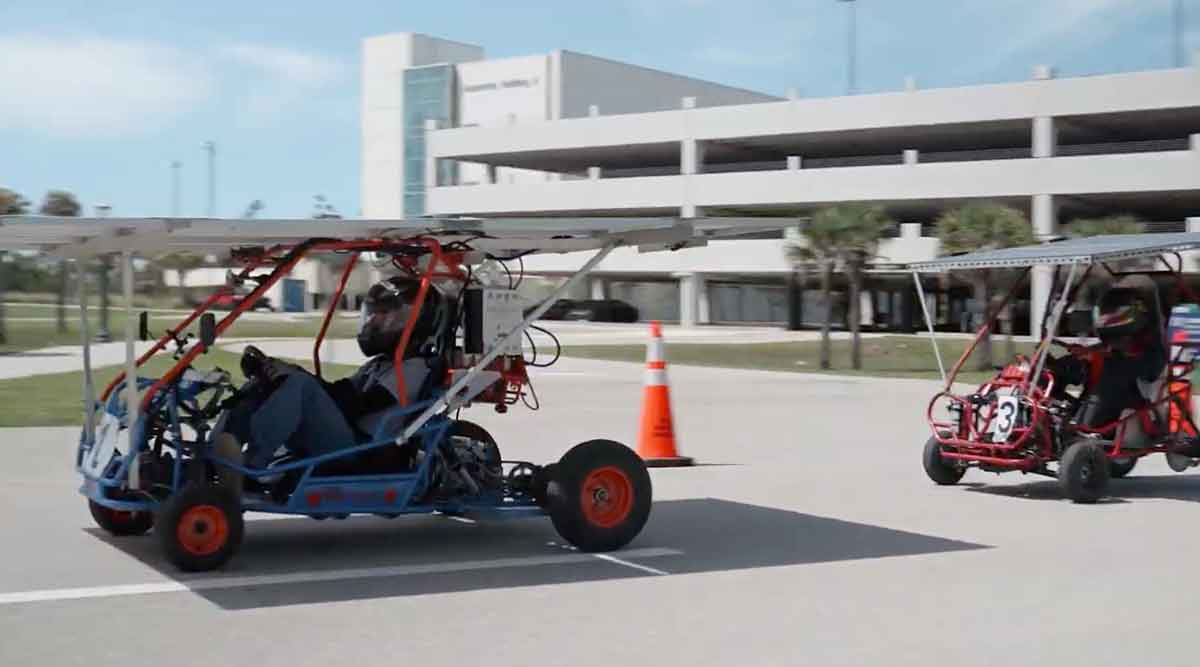
Hosted by FGCU’s Whitaker Institute, SunChase brings teams from across Southwest Florida to run solar-powered go-karts they design, build and refine over months. The event challenges students to balance engineering and sustainability in a unique competition centered on renewable energy.
“We close down the loop road, and we have eight to 15 teams from high schools around the region that will come and race solar go-karts that they’ve been working on all year,” said Heather Skaza Acosta, a College of Arts & Sciences professor and director of the Whitaker Institute.
The program was piloted in 2013, when Joe Simmons, FGCU’s first Backe Chair for Renewable Energy in the U. A. Whitaker College of Engineering, envisioned a contest for high school students that would spark interest in engineering and renewable energy technologies. Since then, FGCU faculty, staff and students have continued growing the event, providing local students with a hands-on learning experience that extends far beyond race day.
The SunChase Solar Go-Kart Challenge puts clean energy to the test on FGCU's campus loop road.
Accelerating innovation
Before the green flag dropped this year, students presented their designs to judges, explaining design alterations, testing methods and engineering decisions.
“The competition consists of two sections,” said Mason Huffman, a senior and team captain from Cape Coral High School. “A presentation where teams talk about their vehicle, any modifications they’ve made and how those have affected performance or efficiency, and then the actual race.”
The racing portion features two sprints and two endurance runs around the campus loop. Sprints measured speed over two laps, while endurance heats tested how many laps teams could complete in 30 minutes.
“They have to rely at least somewhat on the power from the solar panels,” Lura said.
Teams were required to work within strict battery limitations while optimizing solar energy collection, vehicle weight, aerodynamics and overall efficiency. Some built their vehicles entirely from scratch, while others modified existing frames.
Cape Coral High School took the custom-build route using computer-aided design.
“We started off with CAD models designing our frame, and then we built everything from scratch using steel,” Huffman said.
The process involved months of fabrication, wiring, testing and troubleshooting.
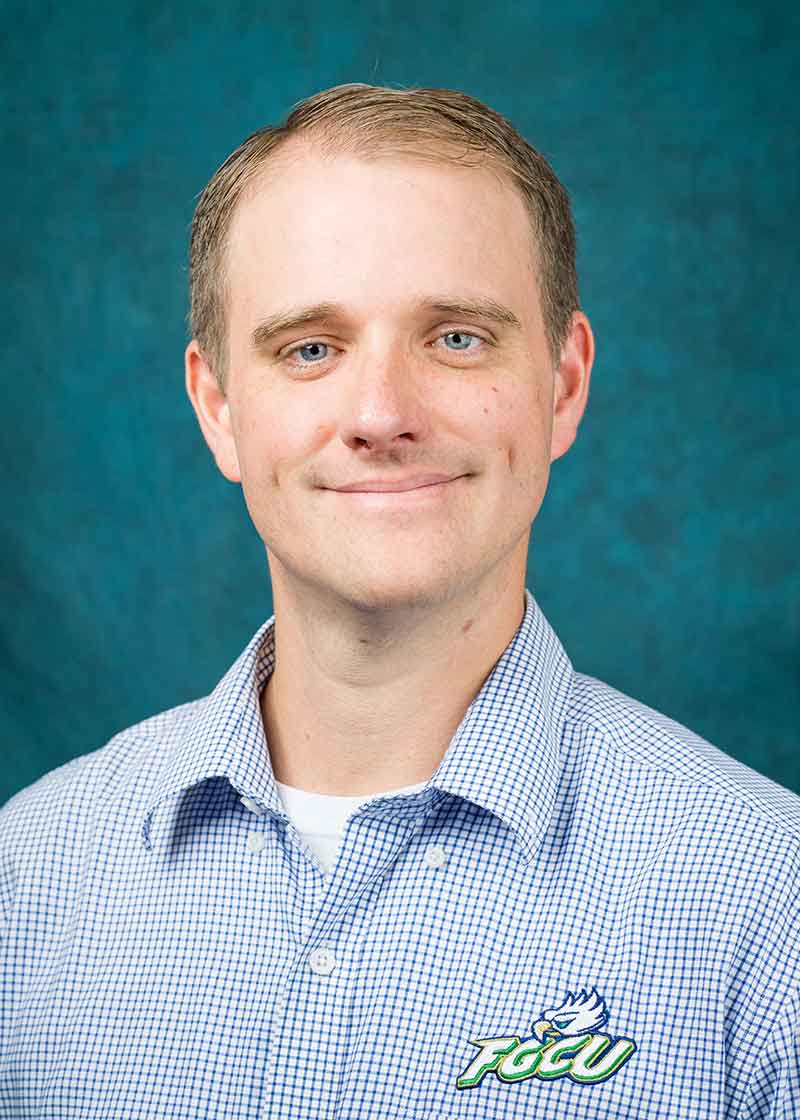
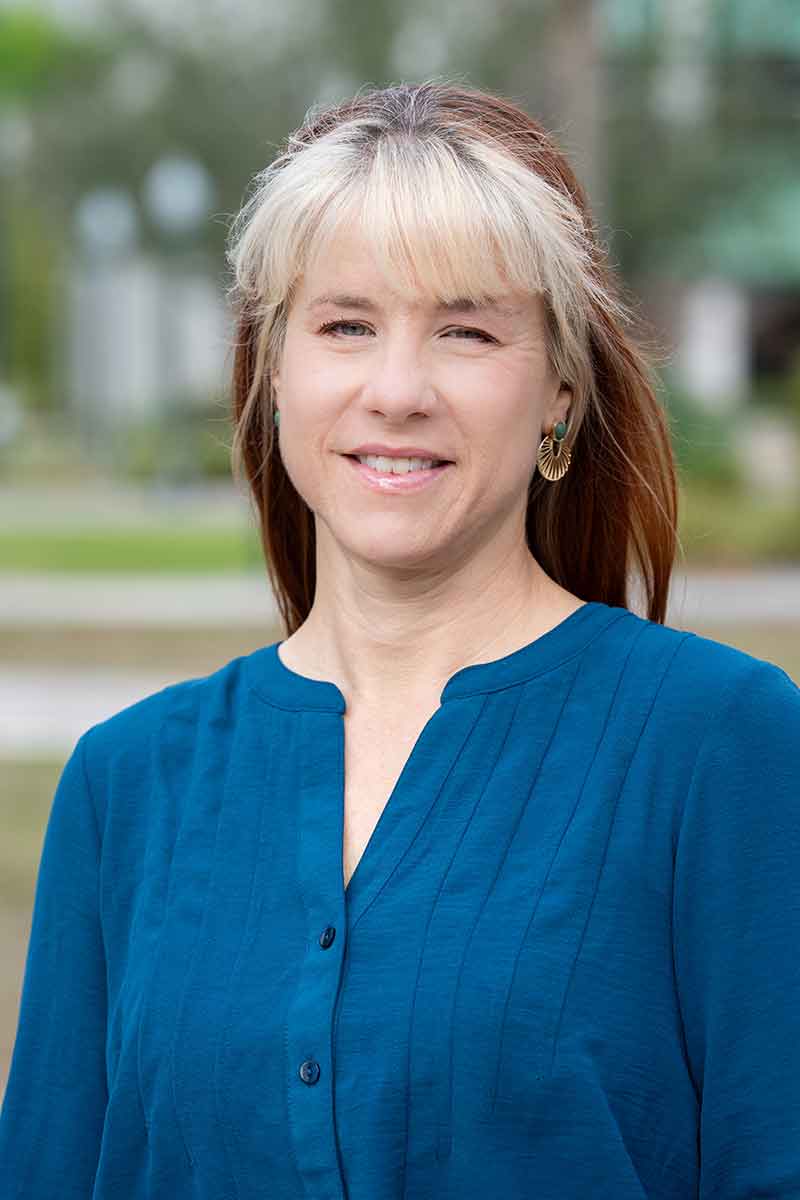
Derek Lura. Photo by James Greco.
“You can only see if your car works if it actually goes through rigorous testing. A lot of unexpected things can show up,” Huffman said. “It’s an extremely daunting task, especially as we’re only students, but pretty much everything was student built.”
The Hardee Senior High School team from Wauchula focused on fine-tuning performance. Senior Alana Wyckoff said the group experimented with sprocket testing, tire configurations and gear ratios while also incorporating head-up display helmet technology that allowed drivers and pit crews to communicate.
“We use a helmet HUD to be able to call the driver and obtain accurate data while they’re racing around the track,” Wyckoff said. “It allows us to obtain real-time data.”
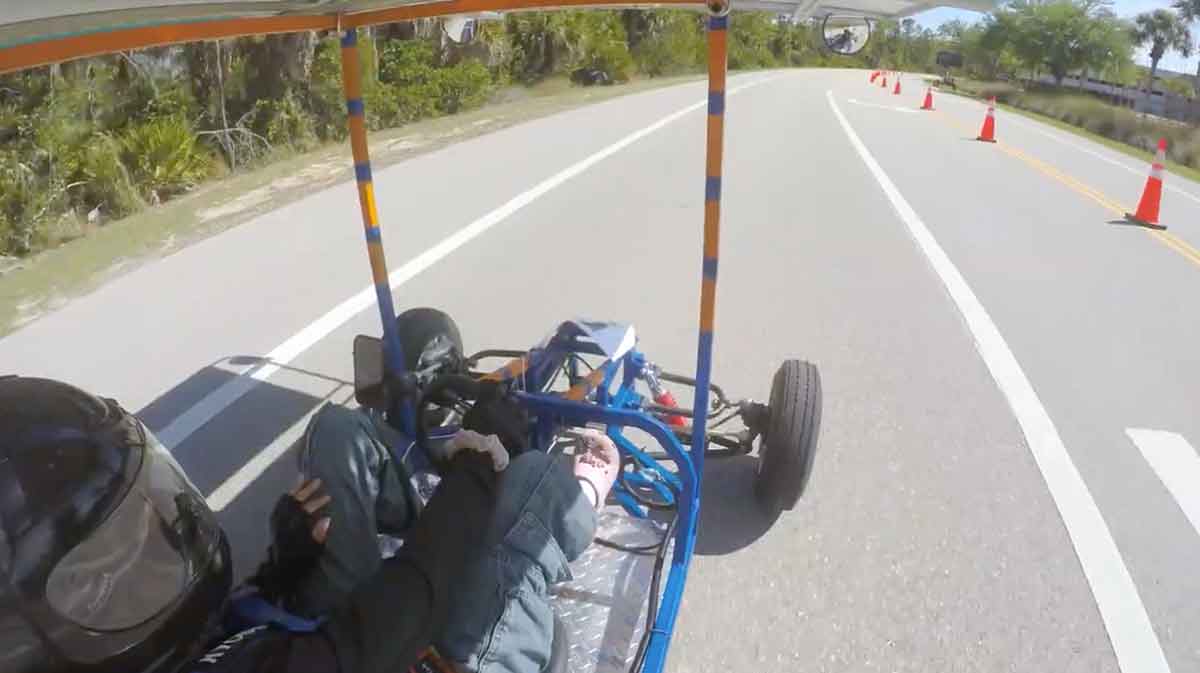
A camera mounted on this solar go-kart gives a driver's-eye look at navigating the course.
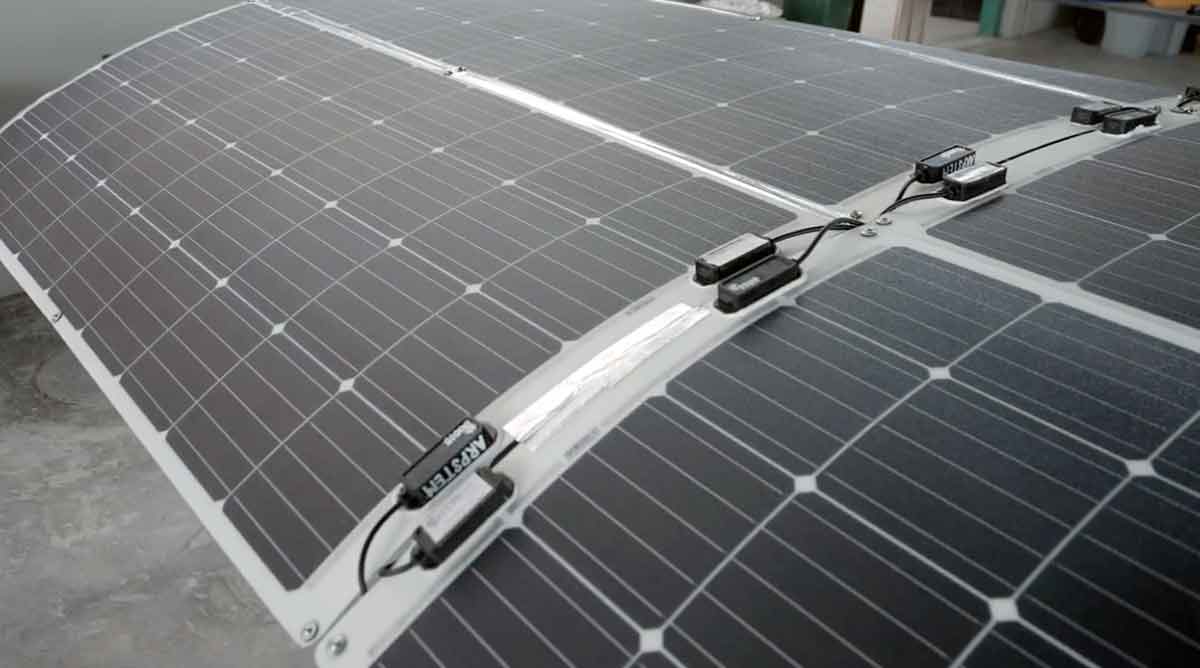
A close-up of some of the solar panels used.
A starting line for STEM careers
While final results matter, FGCU organizers emphasized that the greatest lessons happen before students reach the finish line.
“Most of the work is getting to the race,” Lura said.
Students develop technical skills in electrical systems, mechanical engineering and computer modeling while strengthening their communication, teamwork and decision-making.
Heather Skaza Acosta. Photo by James Greco.
“This is not something that students can accomplish by themselves,” Skaza Acosta said. “They learn a lot about teamwork and collaboration. They learn a lot about problem solving and critical thinking.”
For many students, those experiences align with future career goals.
Huffman, who plans to study aerospace engineering at the Georgia Institute of Technology, said the competition mirrored industry challenges engineers face.
“It’s especially important to have high school students involved in the actual engineering and building process so they have a taste of what it’s like working on real-world projects,” he said.
Wyckoff, who plans to pursue a nursing degree, said the experience strengthened her passion for STEM.
“It’s a way for us to connect with the real world before we get into it,” Wyckoff said. “It helps us learn what we want to do in the future and who we want to be.”
The event also reflected FGCU’s long-standing commitment to sustainability, a mission organizers said aligns naturally with solar-powered transportation.
“The sustainability aspect of the race is important,” Skaza Acosta said. “At FGCU, we pride ourselves on being a school that values sustainability in our curriculum and across campus.”
Lura noted that the SunChase has evolved alongside renewable-energy technologies. When the competition first began more than a decade ago, electric vehicles were still relatively uncommon. Today, students are gaining experience with technologies that continue to play an increasingly visible role in modern transportation.
“I would like to think that these races help to encourage awareness and adoption of those technologies,” Lura said.
Ferrari may have dismissed aerodynamics in favor of engine power, but FGCU’s solar go-kart challenge motivates students to think differently. As the last vehicles crossed the finish line, the annual contest demonstrated that modern engineering is about more than building the fastest machine.
For more information on Whitaker Institute K-12 programs, visit the institute’s website.