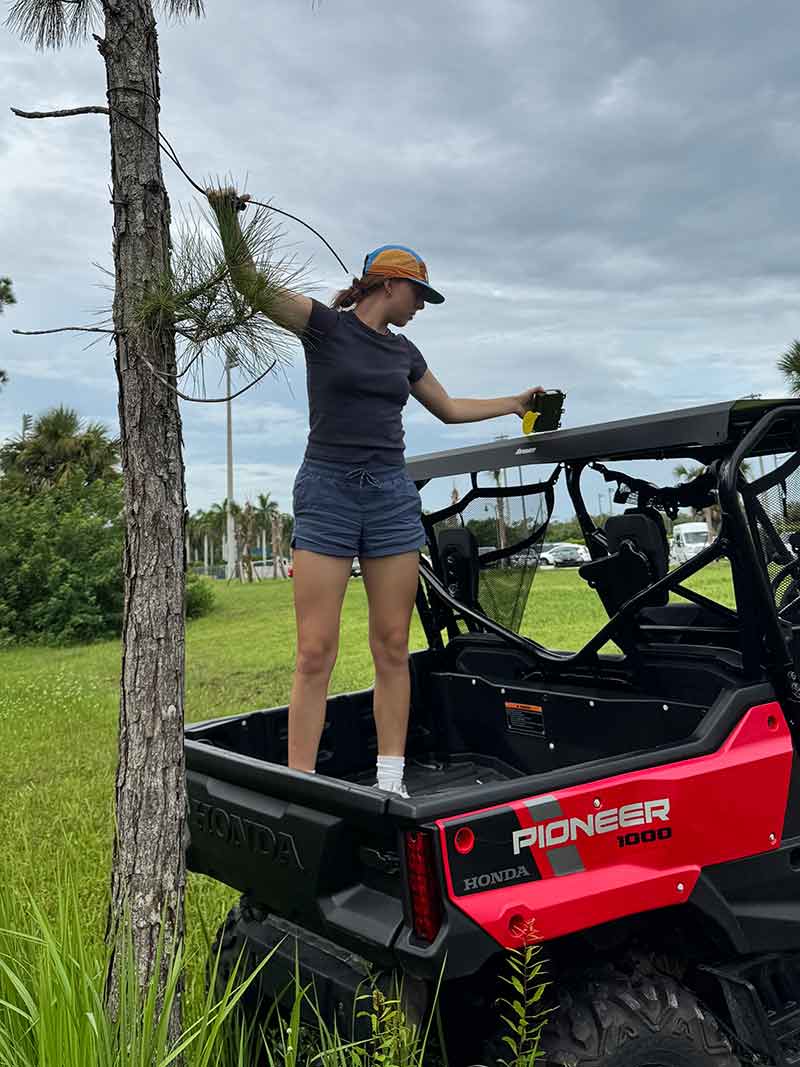
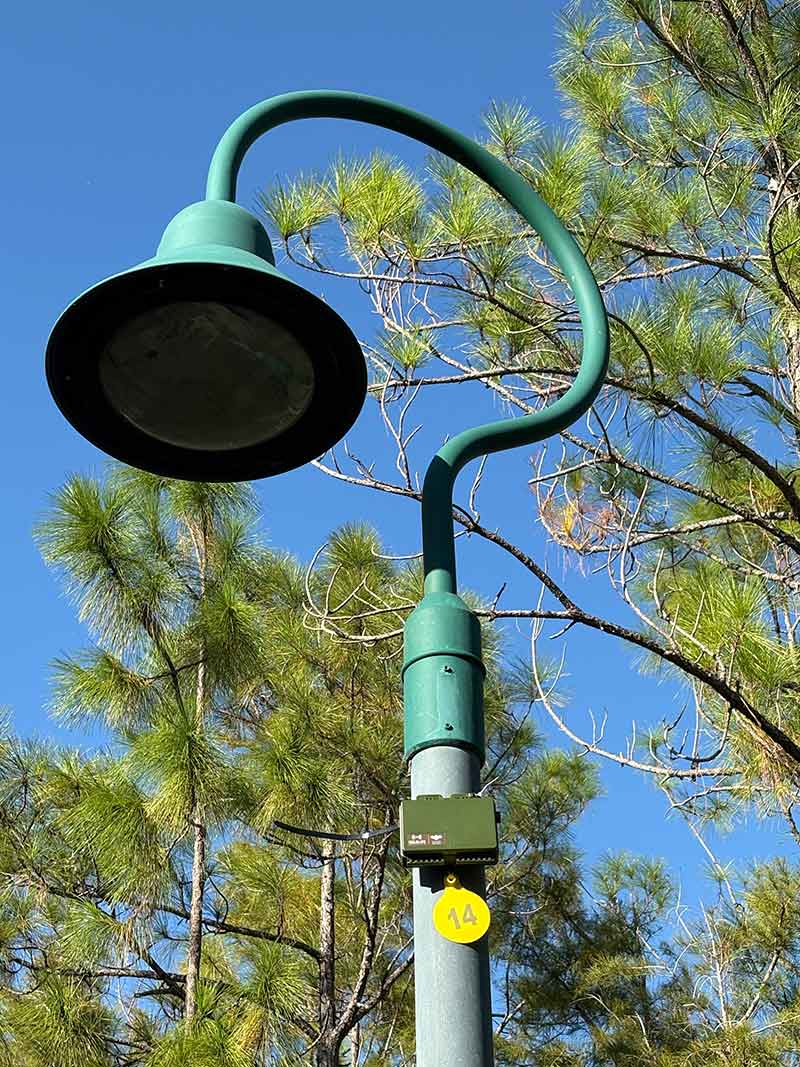
Not just students like it here
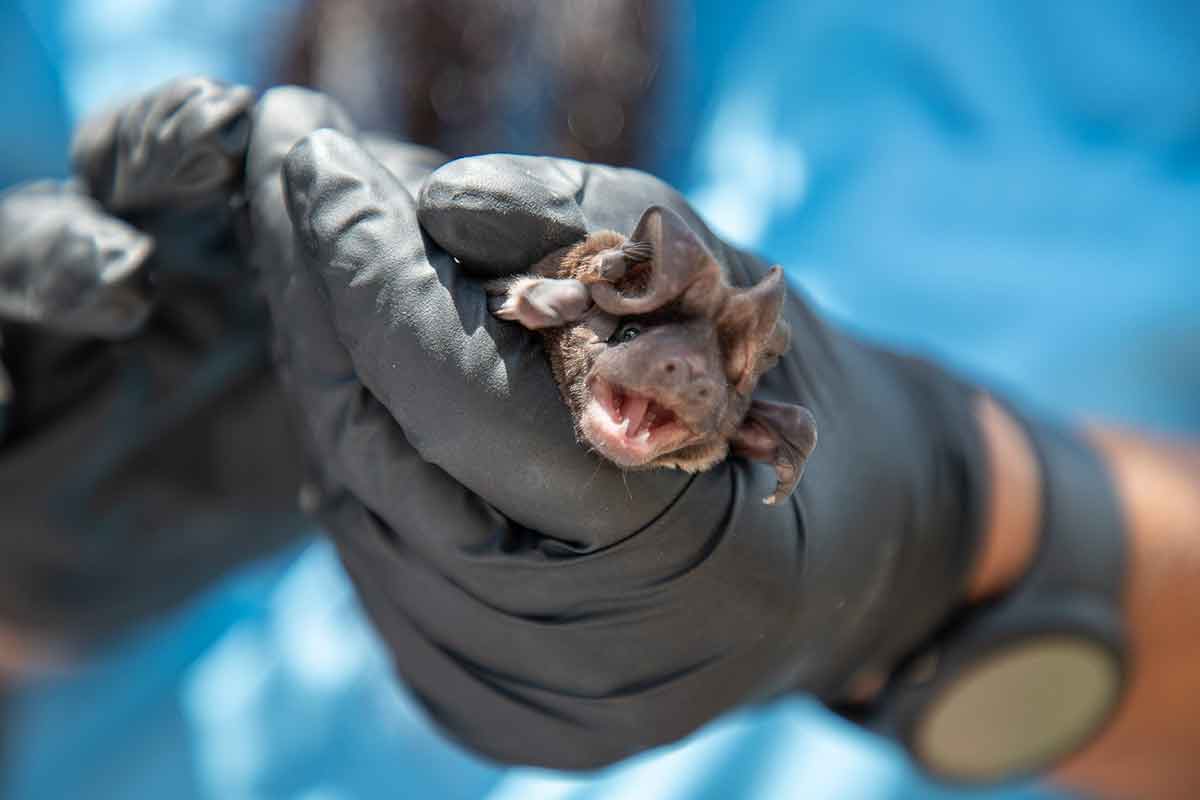
The discovery of bonneted bats within the ecosystem raises an important question: What makes FGCU such an attractive place for bats?
“Most people I’ve talked to are surprised that we have bats at all,” Goodwin says.
Habitats that combine large trees with adjacent open spaces tend to support the greatest bat activity. Open areas provide easy feeding grounds, while forests and wetlands offer places to roost, rest and breed.
Bonneted bats can travel as much as 20 miles in a single night while searching for insects, making their presence an encouraging sign of ecosystem health.
“If bonneted bats are using the FGCU campus as a foraging ground, that means our campus has a healthy enough ecosystem to support enough insects to allow all bats to consistently use this area for foraging. This also means that we haven’t overdeveloped our campus, as we still have adequate habitat to provide good foraging ground.”
Several other bat species frequent the area, including Mexican free-tailed bats, evening bats, hoary bats and northern yellow bats, according to Goodwin.
“Florida is an increasingly developing state, and we are one of the highest states for population growth in the entire country,” she says. “The biggest killer to our bat populations is loss of habitat due to human development, so if we increase our artificial roosting sites in the correct areas, I think it would help our bat populations drastically. Which is great because they are free insect repellent.”
For Goodwin, the bats’ presence represents proof that development and conservation can coexist.
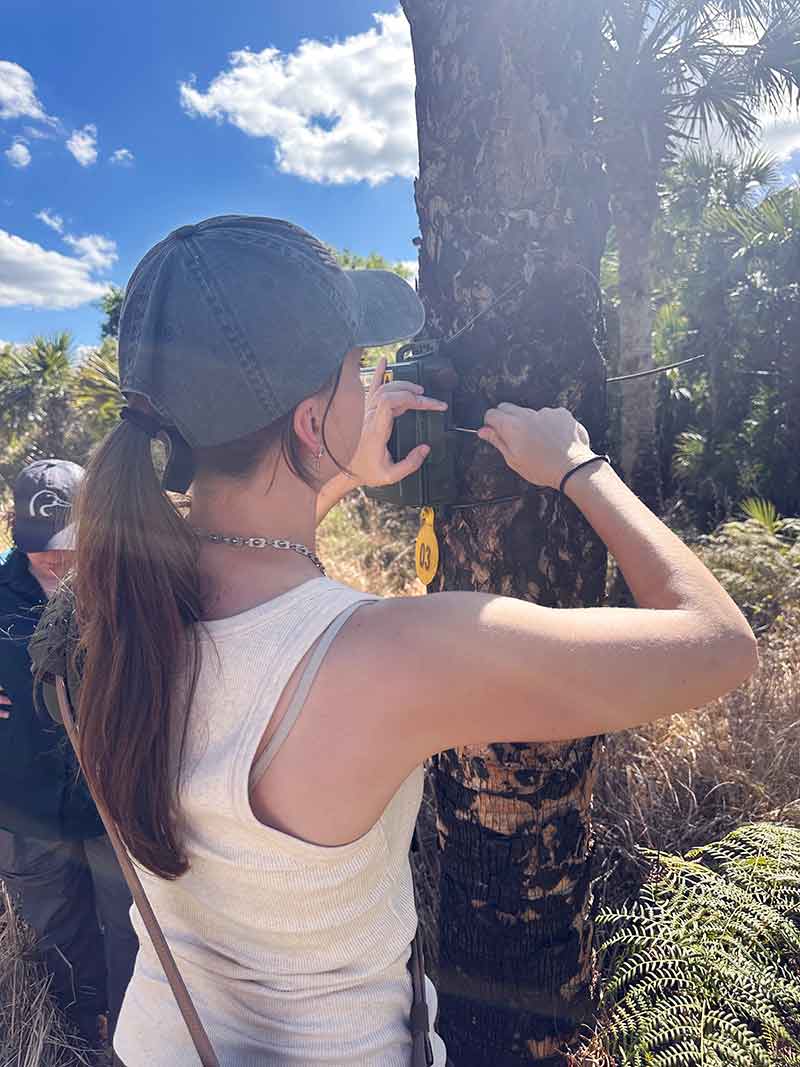
“I’ve decided to stick to the FGCU campus for the duration of my project,” she says. “I’m working to develop a conservation plan and a possible bat box installation guide for the FGCU campus.”