For ice dancer Lucas Appel, the recent competitive season wasn’t all smooth skating — but it ended with yet another golden moment. The Florida Gulf Coast University senior won his third national title in solo ice dancing in September, marking a return to champion form after finishing third in 2025.
“This latest win means the absolute world to me,” he said. “To be able to showcase my art and express myself in my truest form doing music that I want to do, and being able to create such a unique story on the ice goes to show how proud I am of myself as a skater and person. I am so blessed to have an amazing team around me that helps support me and my dreams.”
Appel, 21, said he was fortunate to represent the U.S. team on a large stage for solo ice dance following a difficult season that included injuries and equipment issues.
“It was an insane way to debut and start the 2026 season on the right foot,” he said.
The setbacks along the way also did not stop Appel from breaking the world record in solo ice dance this year with a score of 218.26 points at the 2026 EDGE Cup International Figure Skating Competition in Poland.
All told, he has won seven international titles representing the United States. In fact, in 2024 he became the first American man to compete in and win an international solo ice dance event.
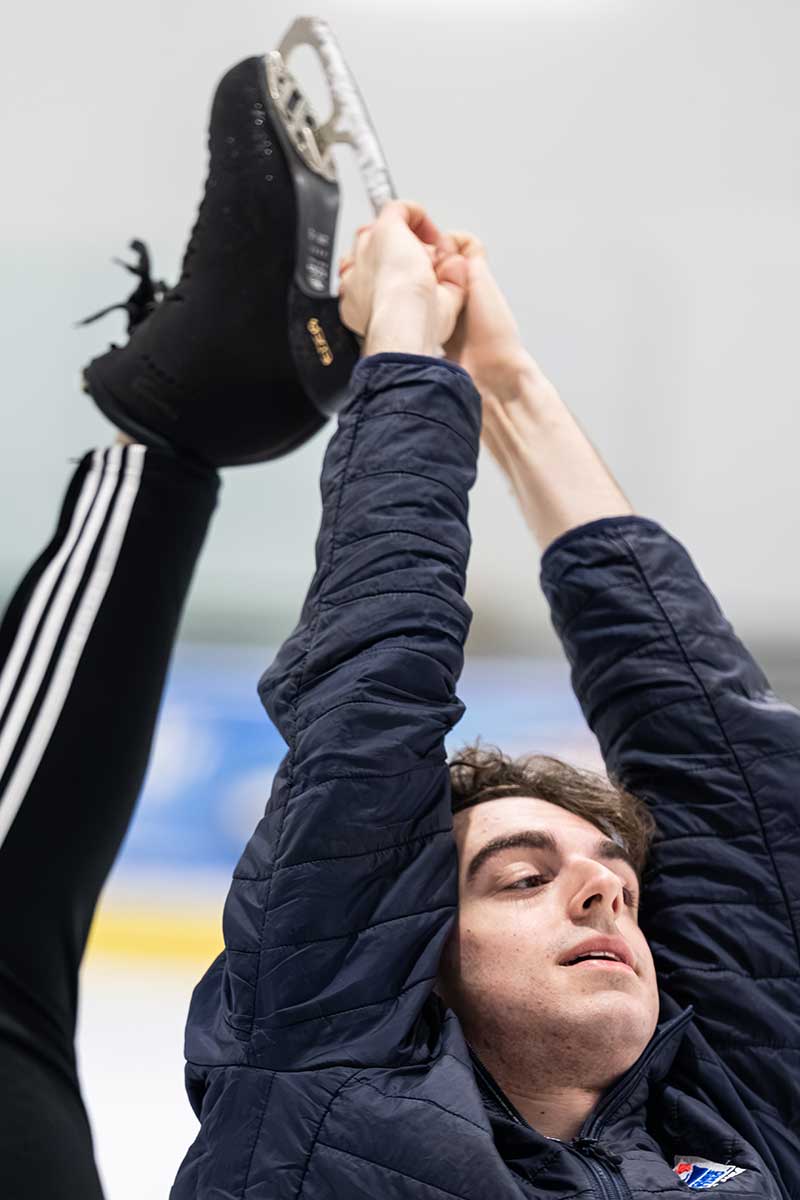
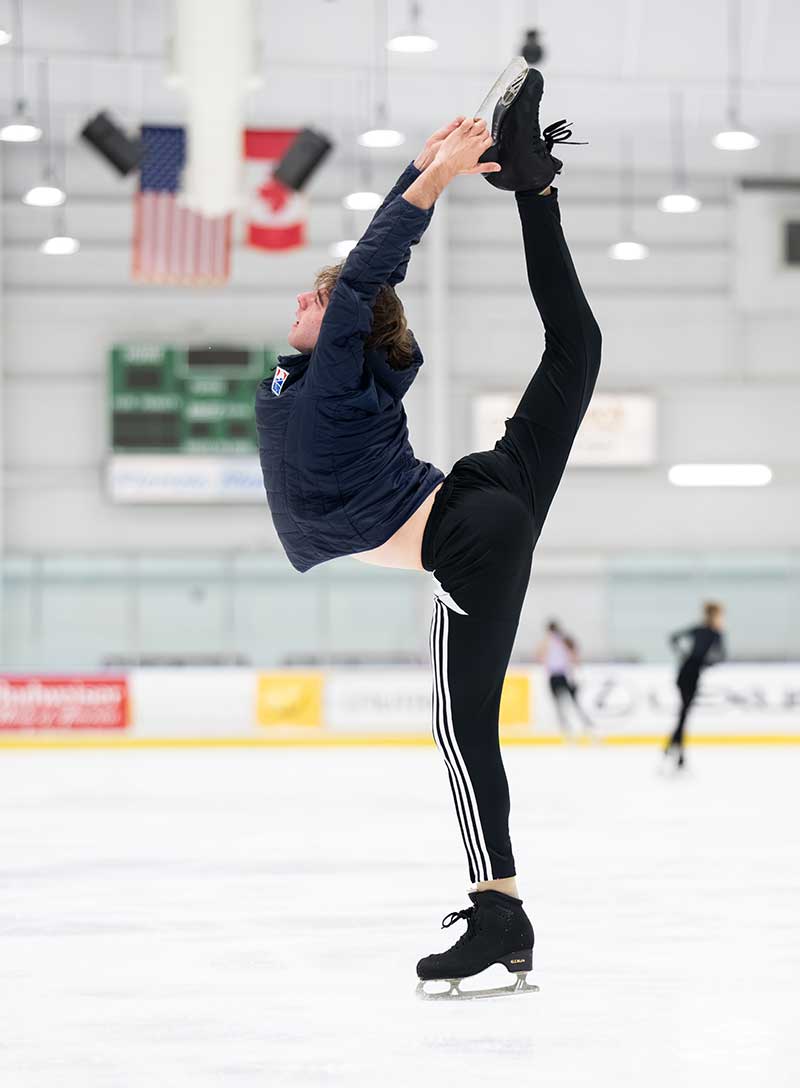
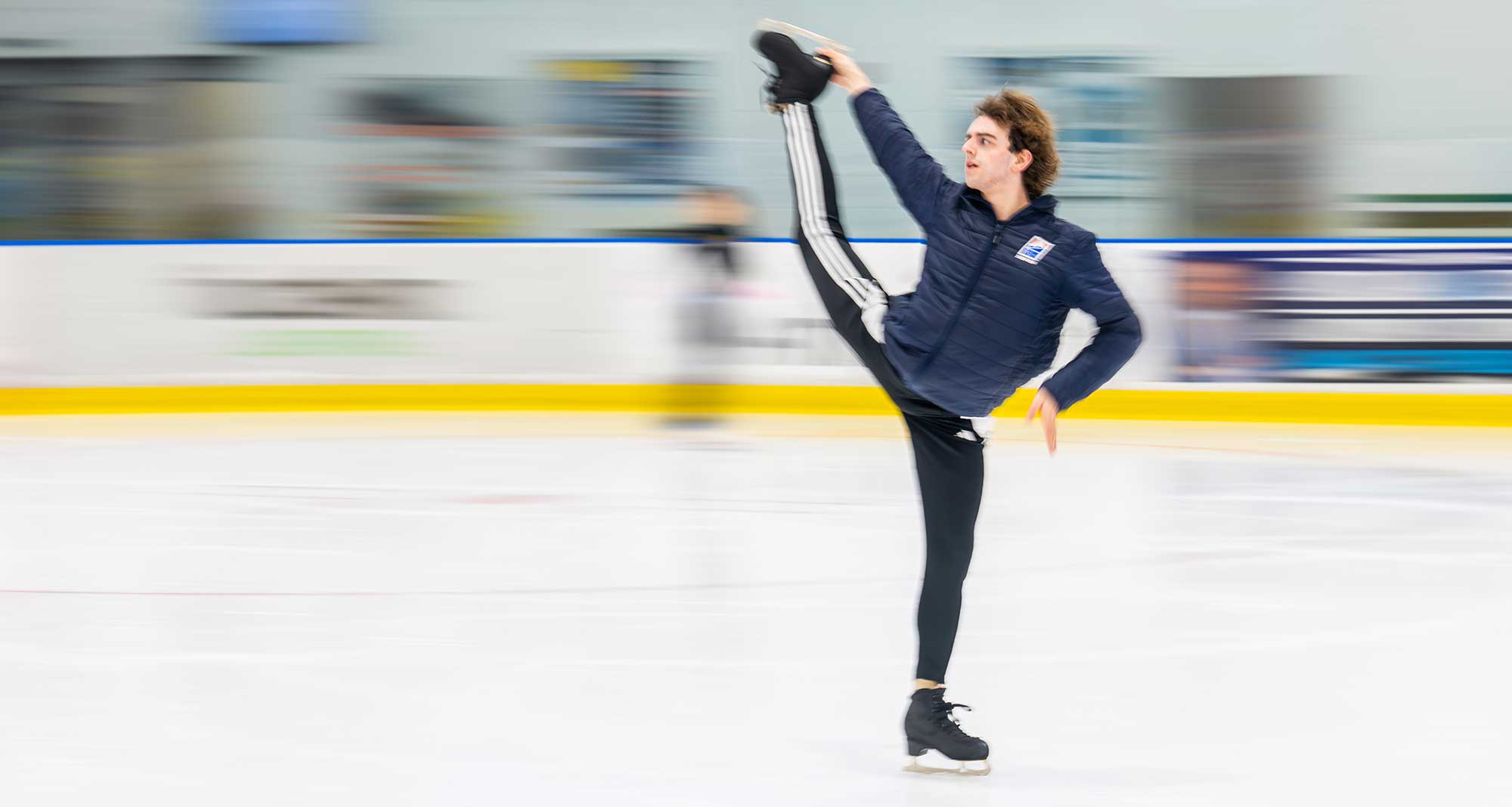
Lucas Appel performs a Biellmann spin — one of his signature moves — during training.
And yet, his trailblazing career almost didn’t happen.
Appel was first introduced to ice skating through family friends. While his sister was immediately drawn to the sport, he said it took time for him to warm up to it. He eventually began participating in group and private lessons.
“I found the sport of ice dancing a few years into my skating journey,” he said. “I was struggling to learn the more difficult jumps that are associated with moving up in the levels and was feeling discouraged about trying to continue to compete.”
At 13, he was on the verge of quitting.
His coach at the time pointed him toward ice dancing, where crowd-pleasing quads that dazzle judges aren’t part of the repertoire. Compared to ice skating, ice dancing places more emphasis on choreographed movement, precision timing, musical interpretation and intricate footwork.
Pairs ice dancing has long been a familiar sport, but solo ice dance is a relatively new discipline within the International Skating Union, the worldwide governing body for competitive ice skating sports. It joined the global stage in 2023.
“It was a way for me to continue to compete, improve my scores and try to make it to the national championships without the worry of trying these jumps I knew I could not do,” Appel said.
Growing up, he said he was never “super competitive” but considered himself “creative and artistic.”
“Blending the worlds of creating art on the ice and athletics and the discipline it takes to be an elite athlete has definitely fueled my competitive fire over all these years I have been ice skating,” he said.
Juggling competition and college
Being a full-time student-athlete while skating competitively and working as a private coach is rewarding but tiring, Appel said.
“Some days may be very long, with waking up at 6:30 in the morning to go train at the ice rink, and not coming back home until 8 or 9 at night. But it is so rewarding to see not only myself improve on the ice and in the classroom, but to see my students grow and improve their skills as well,” Appel said.
He evaluates his schedule on a week-by-week basis to make sure he does not overwhelm himself, especially before major international and national events.
“I tend to dial back my private coaching as there are times I need to rest and regroup, such as the week before I competed and won my third U.S. title,” he said. “I took a week off from teaching to be able to rest my mind and body before competing at one of the biggest events of the season.”
Appel moved to Estero to continue his training. Around the same time he began looking at colleges, his skating career started taking off. He will continue competing in 2027.
“I wanted to still be actively competing at a world level while still pursuing higher education, so FGCU made the most sense. It had a great program for psychology and was close to the great on-ice training at Hertz Arena,” he said.
Appel is pursuing a major in psychology, which he says provides many routes to go down.
“I’ve wanted to be a sports psychologist or a psychiatrist for a very long time,” he said, “which is why I picked psychology to study in college. With my degree, I want to better gauge and understand the human mind and brain on a biopsychosocial level to better connect with students and understand how to coach and connect with all different levels and ages of students.”
Appel said understanding psychology has also helped his own skating career. He now “understands what motivates people to get up and train, work hard and push themselves as athletes on and off the ice,” while also helping him make better connections with people.