Long before Florida Gulf Coast University welcomed its first students, Lucas J. Century engraved a significant part of America’s story into polished black granite. His iconic work on the Vietnam Veterans Memorial in Washington, D.C., stands as a national testament to sacrifice and memory.
Century’s work on “The Wall,” as it is informally known, gave the Vietnam War’s fallen a place to be seen and never forgotten. In honor of the semiquincentennial, America’s 250th birthday, FGCU360 sat down with Century to talk about how he called on the same artistry and technology to shape some of FGCU’s prominent campus artworks.
Etching history into stone
In high school, Century had a job engraving names on snow skis at an Ohio resort shop. A few years later, while working as a window washer, he had an idea to transfer graphic images to glass. Four years of experimenting with acid‑etching and other techniques led him to develop a photographic stencil process for sandblast engraving.
Then in 1981, his mother pointed out a newspaper article about Maya Lin’s winning design for the Vietnam Veterans Memorial, which required inscribing tens of thousands of names into polished black granite. Century contacted the project team and learned they were struggling to find a technique to engrave all the names within the projected timeframe. His process provided the solution — the method that ultimately etched every name into the wall.
“Maya was 21, and I was 26,” Century says, marveling at how two young people made such a permanent mark on American history.
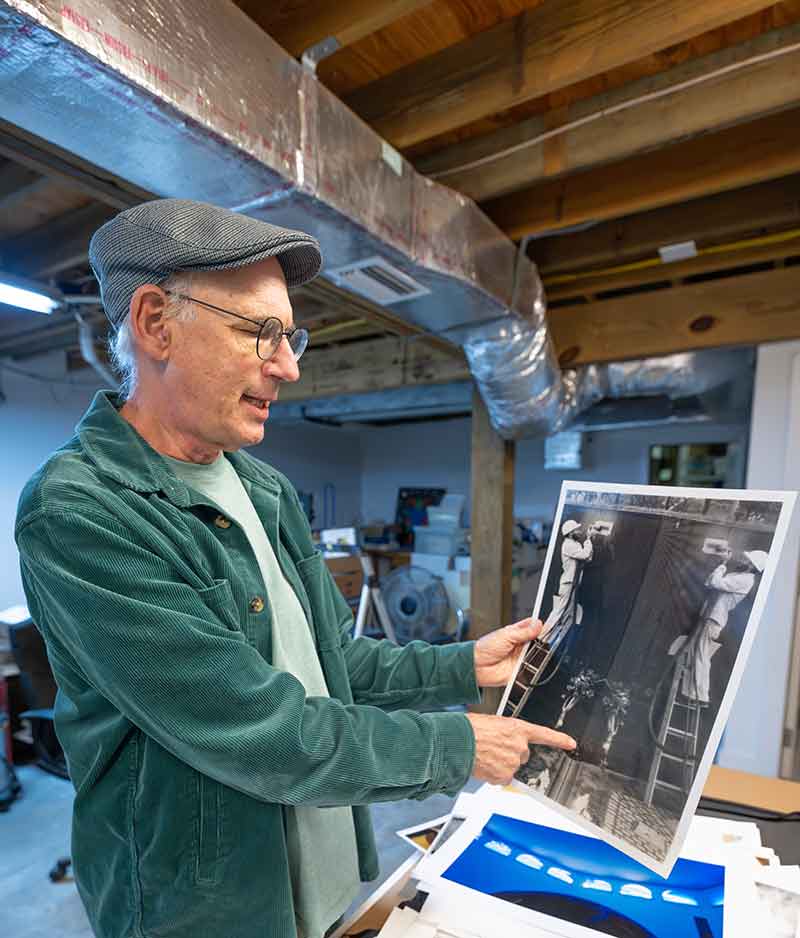
Luc Century holds a historic photograph documenting his work engraving the Vietnam Veterans Memorial Wall.
For those who have visited the memorial, this national altar of remembrance serves as a poignant reminder of the cost of service. Dedicated in 1982, the monument features more than 58,000 names of service members who died or went missing during the Vietnam War, arranged chronologically by date of casualty. While most of the names were etched into 140 black granite panels in Memphis and transported to D.C., Century personally engraved a portion at The National Mall.
“The hardest thing I’ve ever had to do was to go to the wall and with no protection, no control of the environment weather-wise, I actually successfully added 100 names.”
Through his work, Century is forever connected to this part of American history.
“I had three months to figure it out back then. It’s evolved, it’s changed, I’ve improved it,” he says about the photo-stencil etching technique he created.
Prefabricating stencils and affixing them to the granite so each name could be etched became the start of his career as an artist. Over the years, he refined the technique and explored other ways to use it creatively.
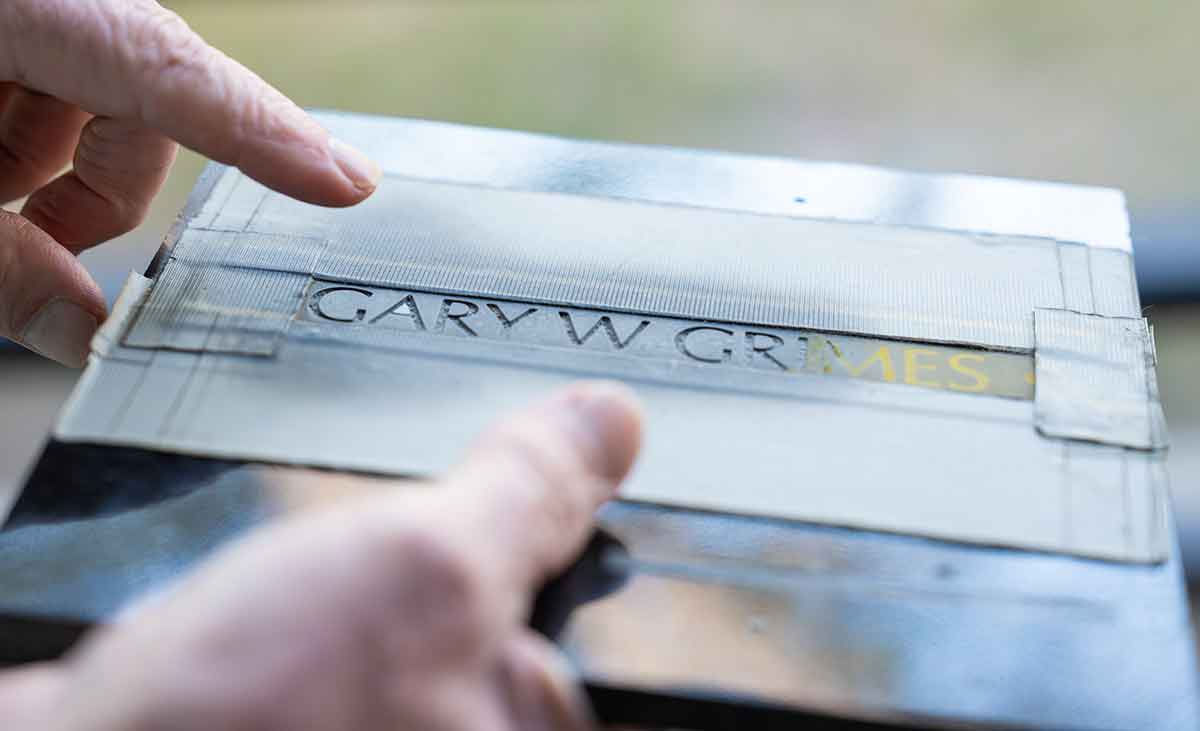
Century holds his “proof of concept” tile from 1983 that demonstrated he could engrave additional names on erected granite, after the initial 58,000 names had been etched in 1982. Gary W. Grimes was a Navy veteran who died in 1965, during the Vietnam War.
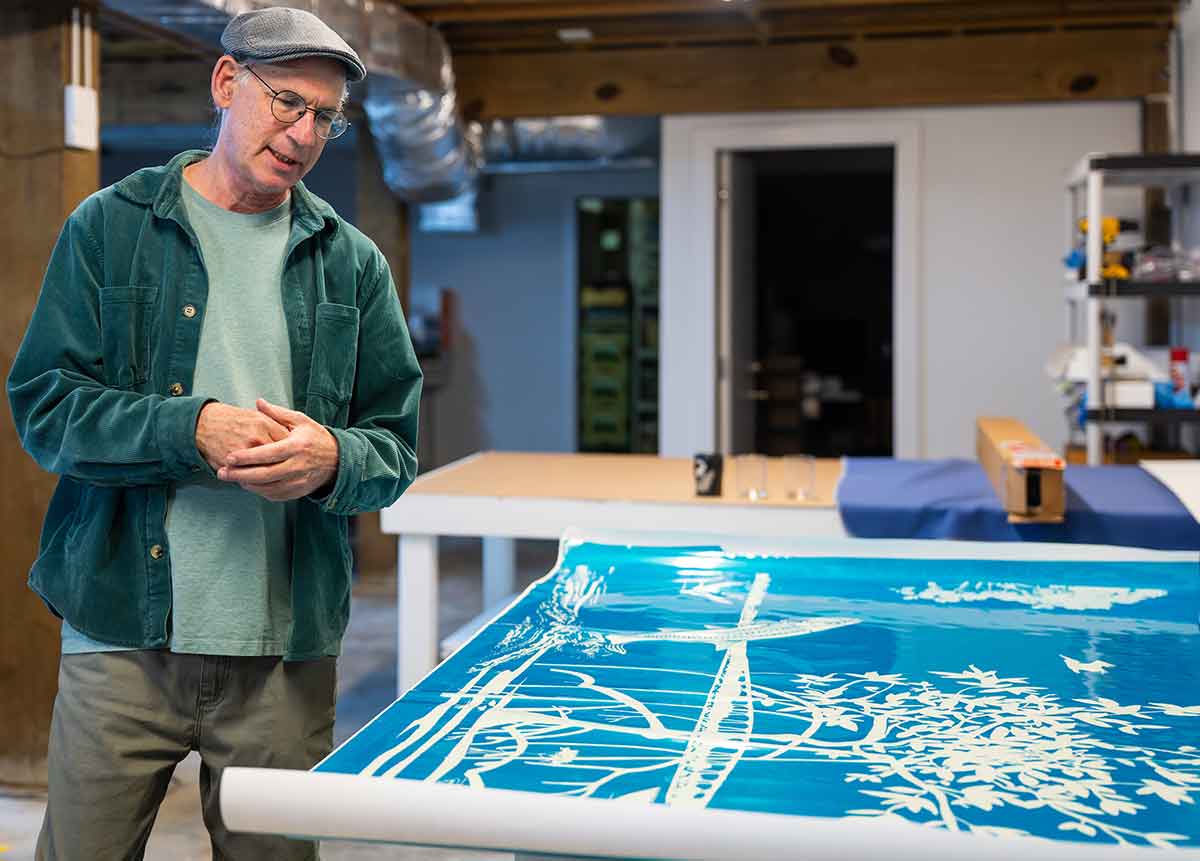
In his studio, Century examines a new work for a Southwest Florida business using the photo-stencil etching technique he created.
His legacy continues at FGCU, where Century’s artistry spans across 10 works that anchor the university’s public art in buildings throughout campus.
“Each commission had its own challenges because I often use different materials — granite, porcelain tile, sandstone, glass. All the building materials had to not just decorate but be appropriately installed and be everlasting, protected from cleaning and UV light.”
Inspired by Leonardo da Vinci at Whitaker Hall
Leonardo da Vinci’s curiosity about anatomy and flight mirrors the scientific focus of Whitaker Hall, home to many of FGCU’s biology and astronomy courses. Century brings that connection to life through two installations.
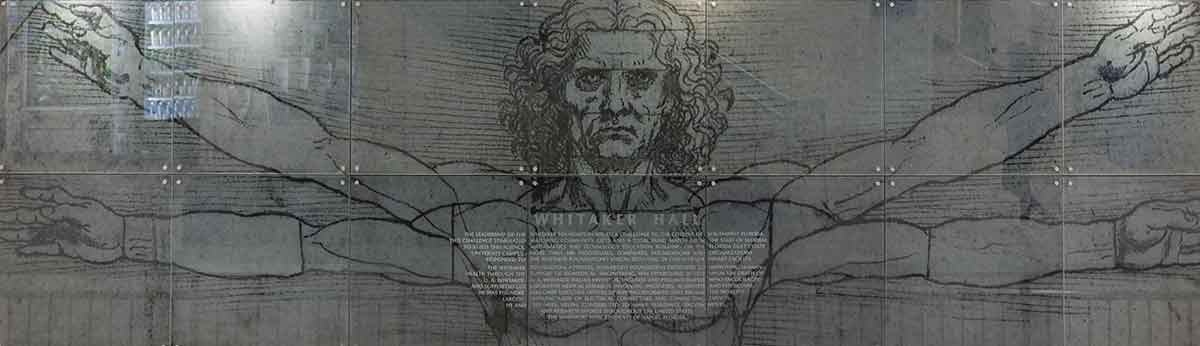
Inside the lobby, his 2001 etched‑glass mural, “Leonardo da Vinci Drawings and Sketches in Glass,” stretches across a first‑floor wall. The monochromatic piece evokes the look of Renaissance notebooks, featuring an outstretched figure inspired by Leonardo’s “Vitruvian Man” and illuminated by overhead spotlights.
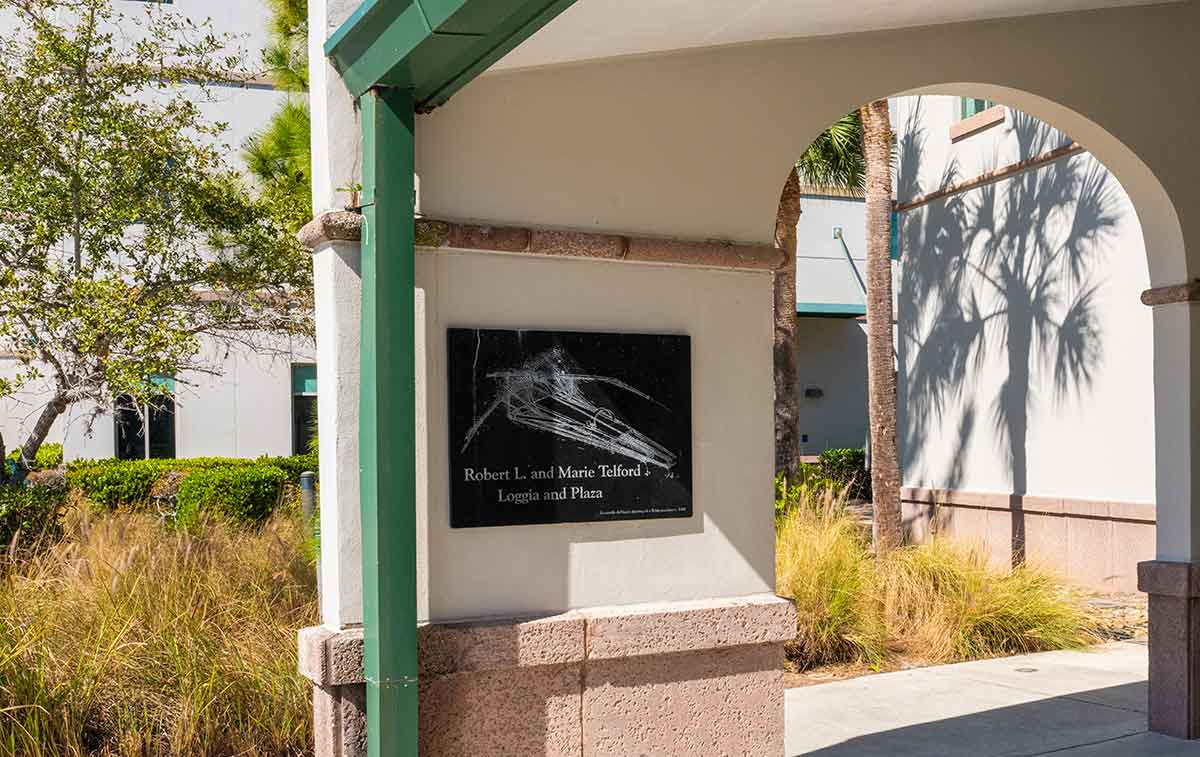
On the building’s outdoor loggia and plaza, Century continues the homage with a black‑granite etching of Leonardo’s flying machine — linking FGCU’s pursuit of discovery with the timeless spirit of invention that shaped both artists’ work.
Century's black granite etching of Leonardo’s flying machine is located outside Whitaker Hall.
Century's “Leonardo da Vinci Drawings and Sketches in Glass" at Whitaker Hall.
Across campus at the Bower School of Music, Century shifts from Renaissance geometry to the rhythm of the natural world.
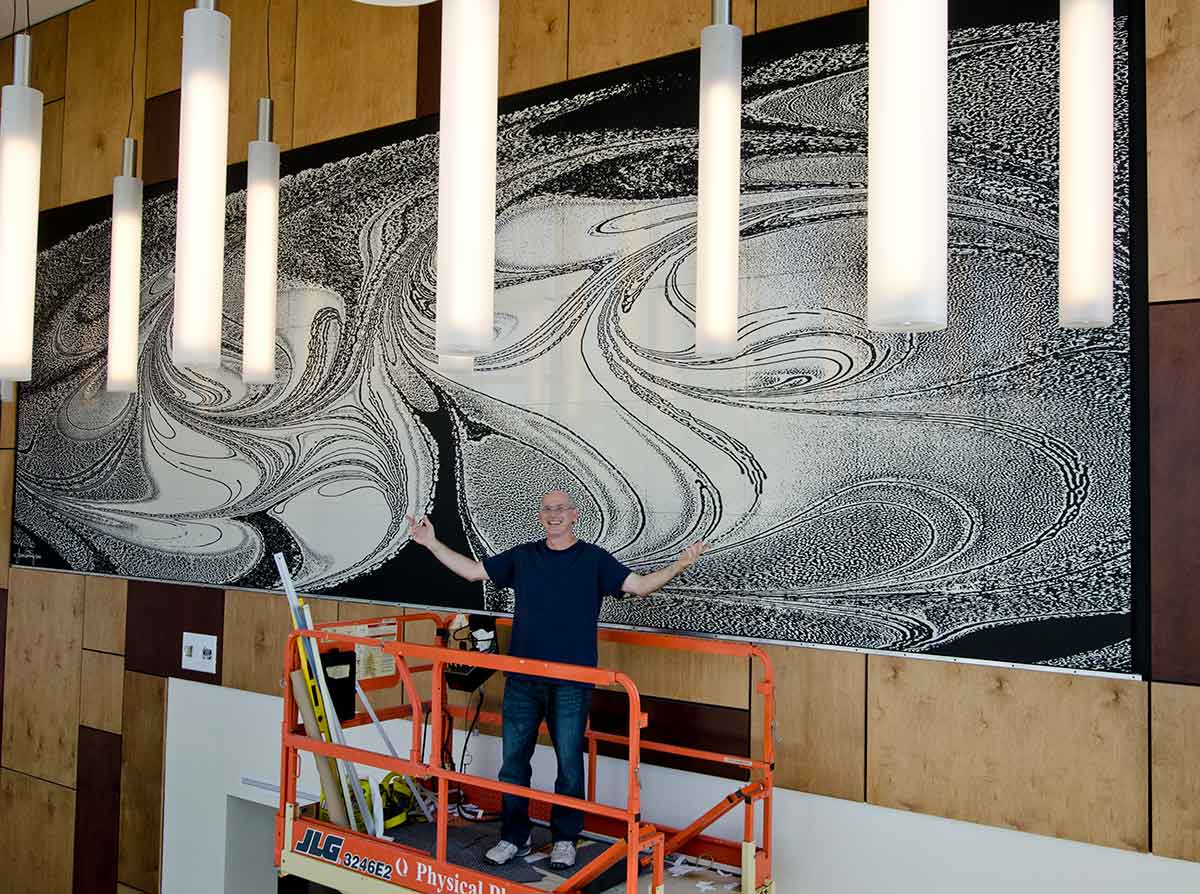
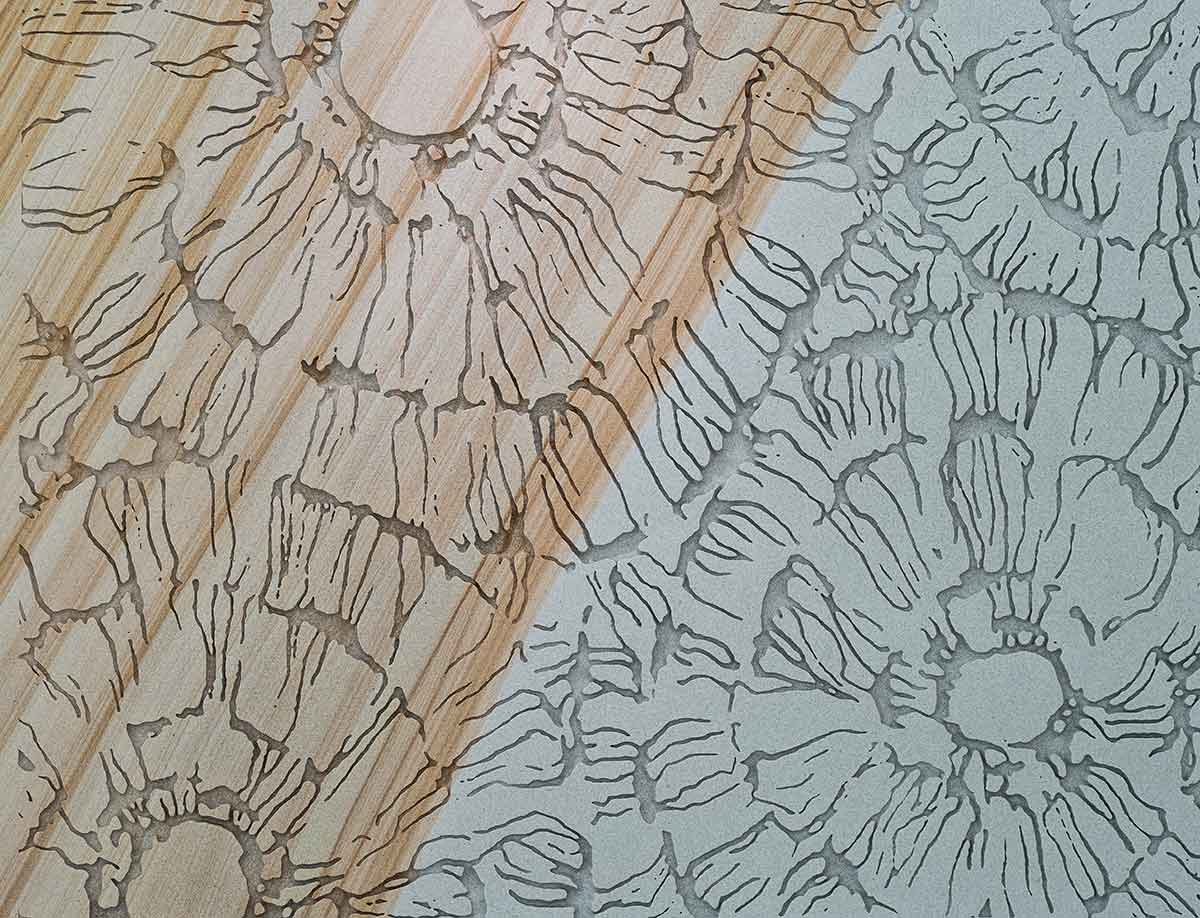
Installed in 2010, “Water Symphony” is a 10‑by‑30‑foot porcelain tile mural that dominates the two-story lobby of the building. The work consists of 75 individual 2‑by‑2‑foot ivory ceramic tiles engraved with swirling black patterns inspired by the waters surrounding Sanibel Island, Century’s former home. The mural reflects the artist’s evolving mastery of large‑scale engraved surfaces.
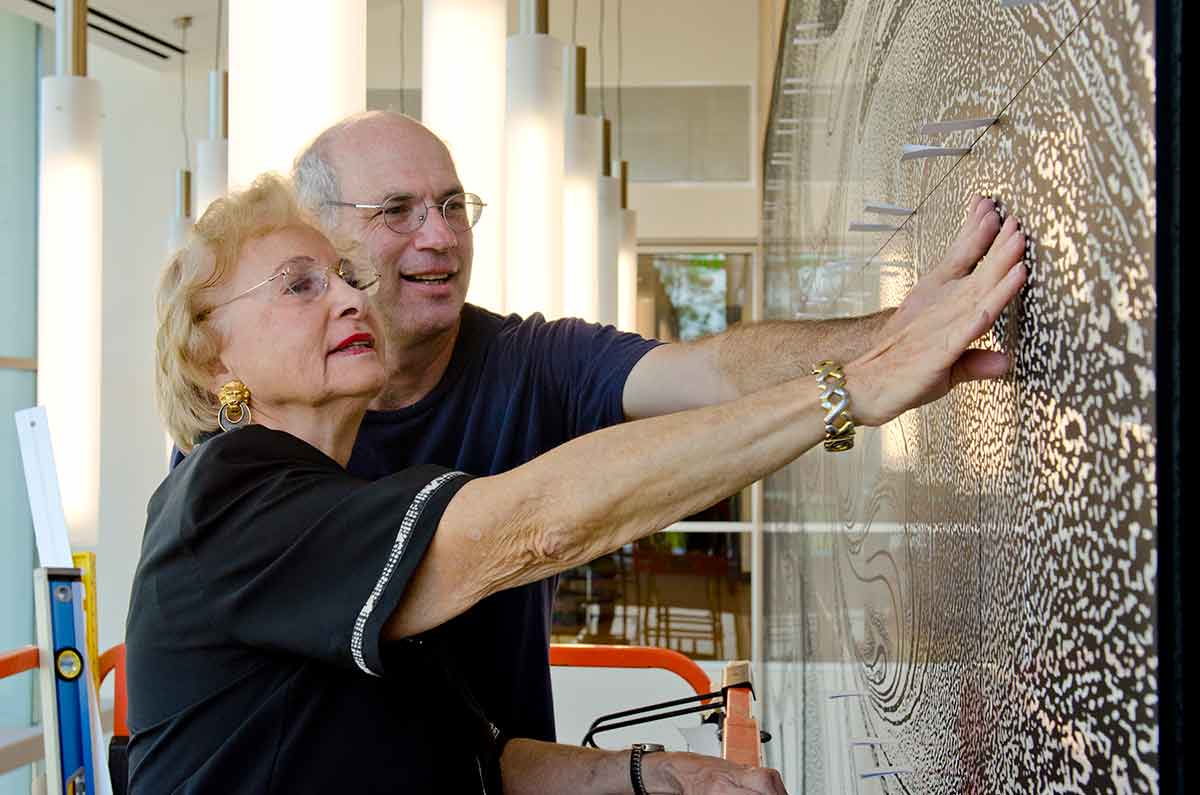
Although leveling the tiles proved challenging, he fondly remembers completing the installation as a “joyous day.”
Century and Ruth U. Tobe examine the large scale installation at Bower School of Music in 2010.
“Water Symphony” dominates the two-story lobby of the Bower School of Music. Photo taken 2010.
The view of “Water Symphony” from outside the Bower School of Music. Photo taken 2010.
‘Tourbillion’ at Seidler Hall
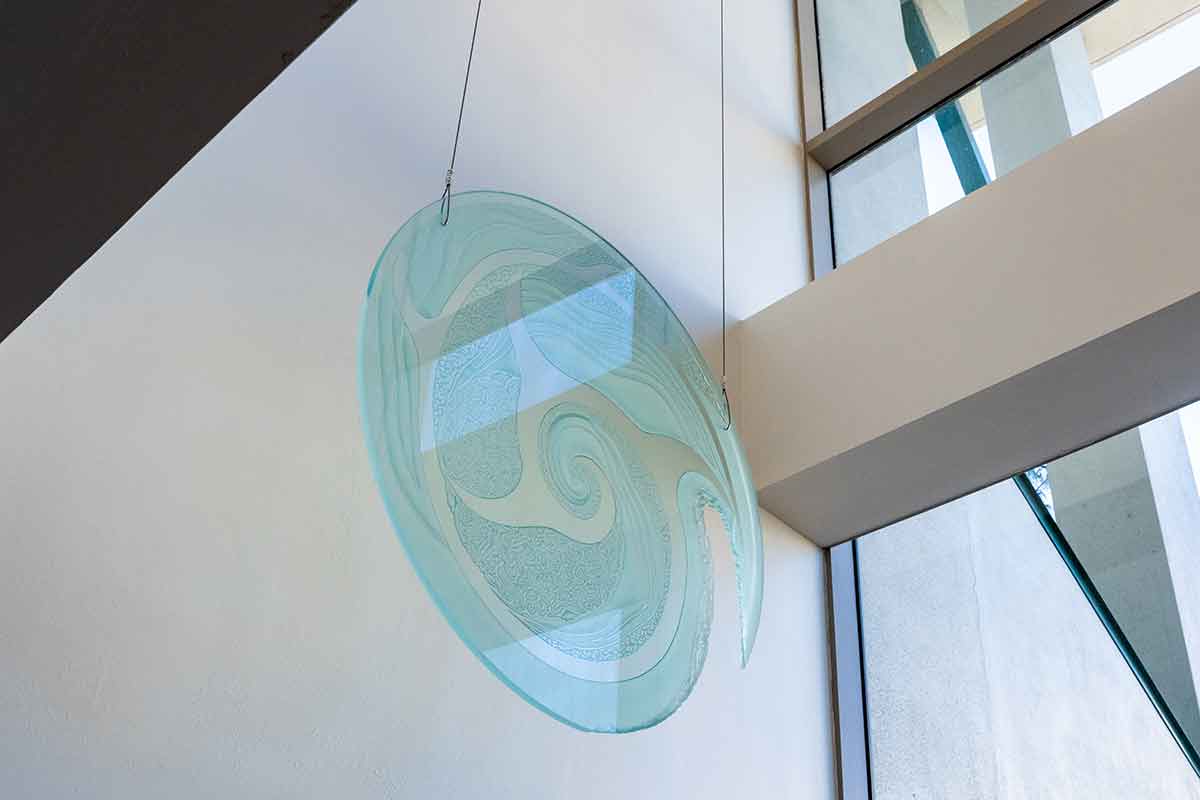
Created in 1991 for the first‑floor lobby of Seidler Hall, “Tourbillion” is a 50‑inch‑diameter etched‑glass piece, three‑quarters of an inch thick. The swirling, vortex‑like composition embodies the “tourbillion” — a whirl of energy captured in a circular plane. Its placement in the sciences and mathematics building reinforces its themes of motion, force and natural order.
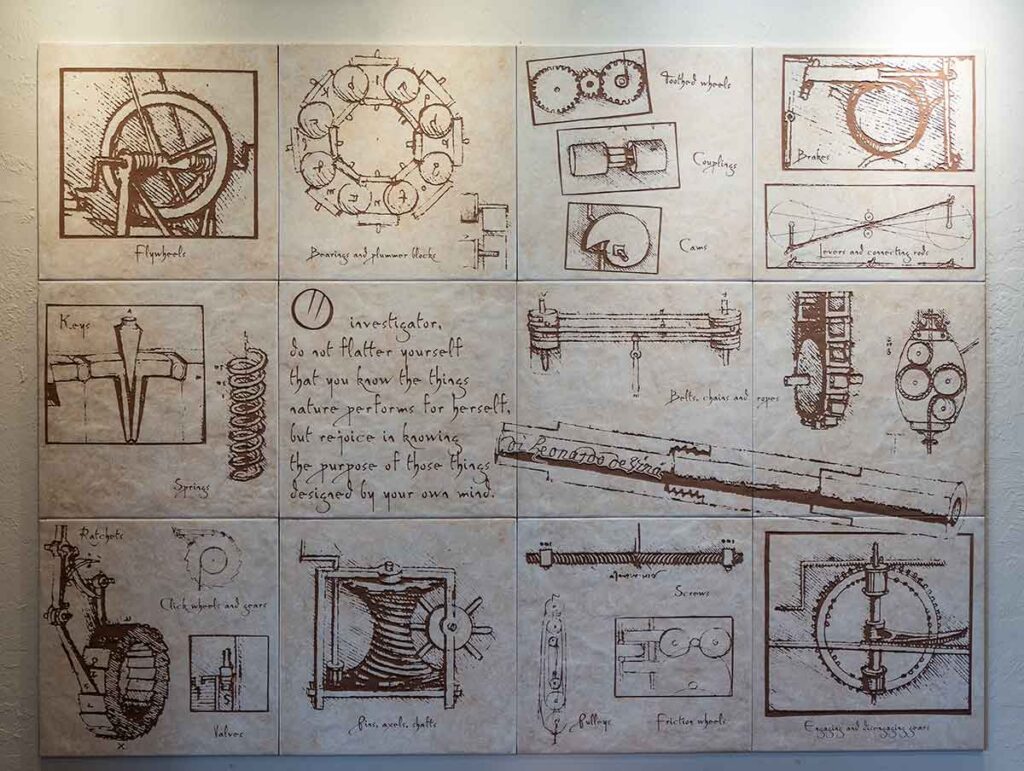
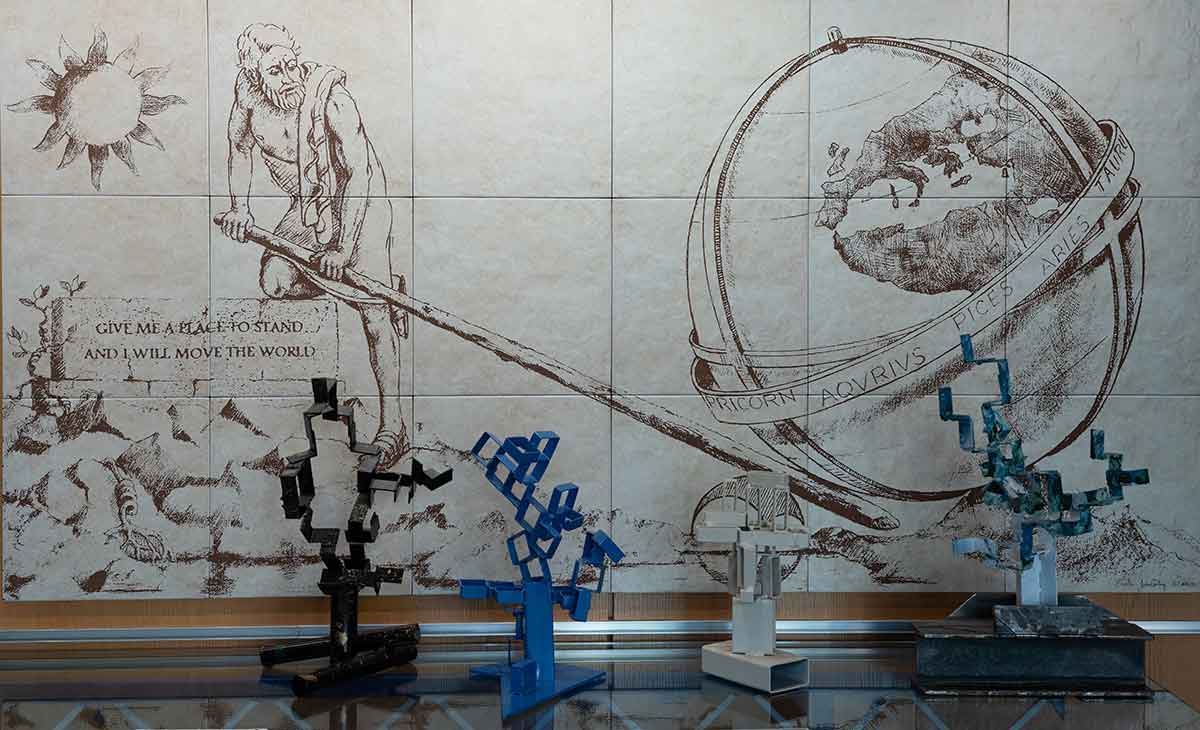
‘The Elements of Machinery’ and ‘Give Me a Place to Stand’in Holmes Hall
The etched‑stone panels “The Elements of Machinery” and “Give Me a Place to Stand” greet visitors in the first‑floor lobby of Holmes Hall. Both works draw from themes of mechanical design and foundational principles, making them a fitting contribution to the environment in which U.A. Whitaker College of Engineering students study and collaborate.
‘Tourbillion’ at Seidler Hall.
‘The Elements of Machinery’ in Holmes Hall.
‘Give Me a Place to Stand’ in Holmes Hall.
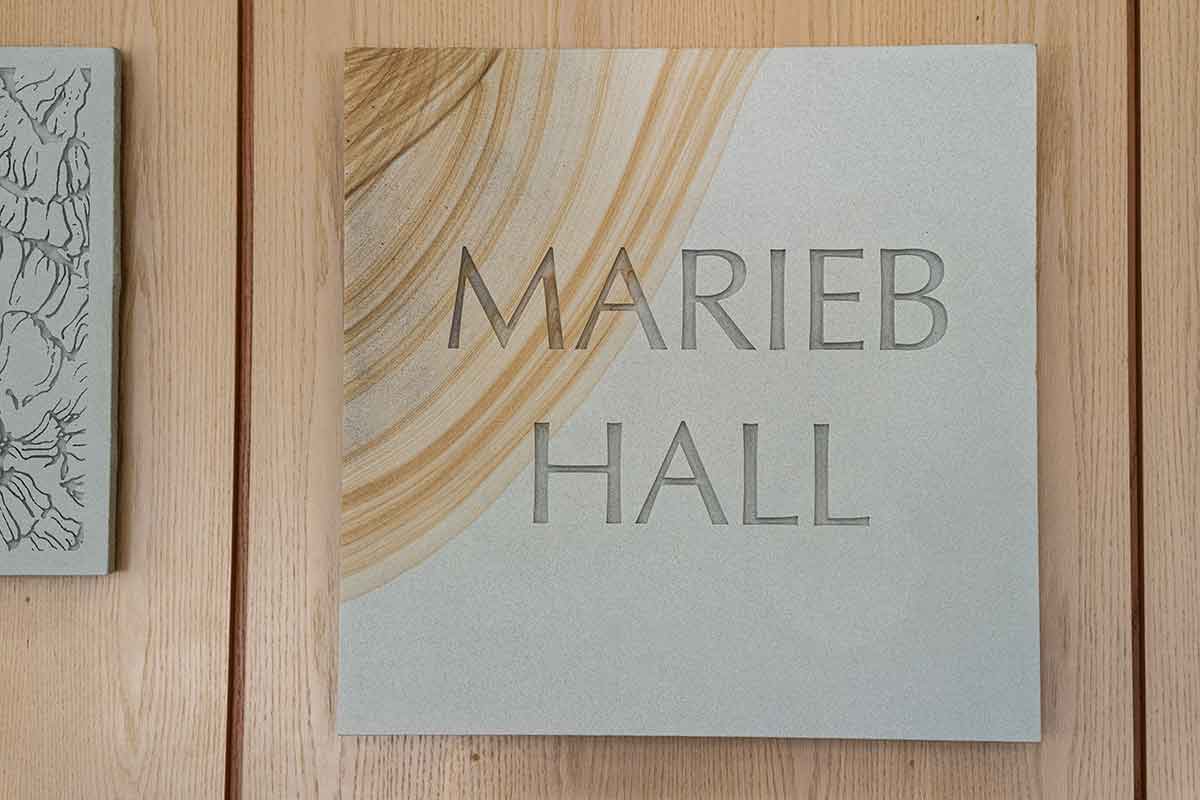
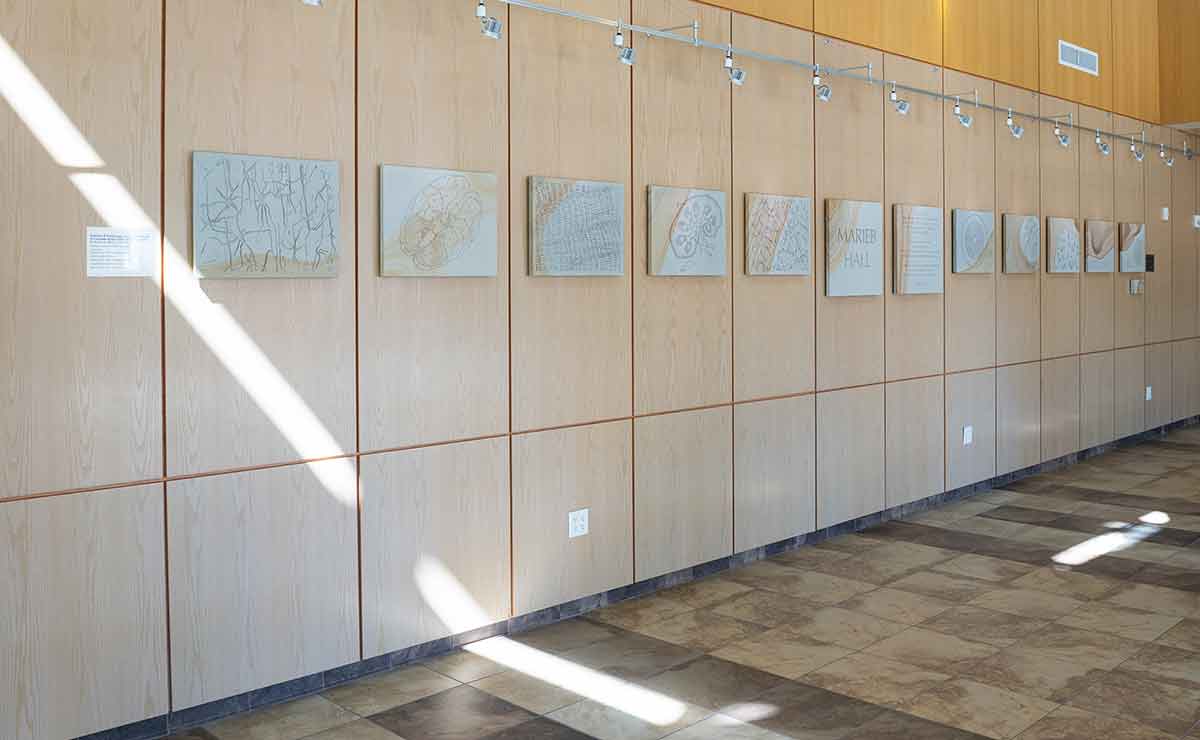
Stone etchings in Marieb Hall
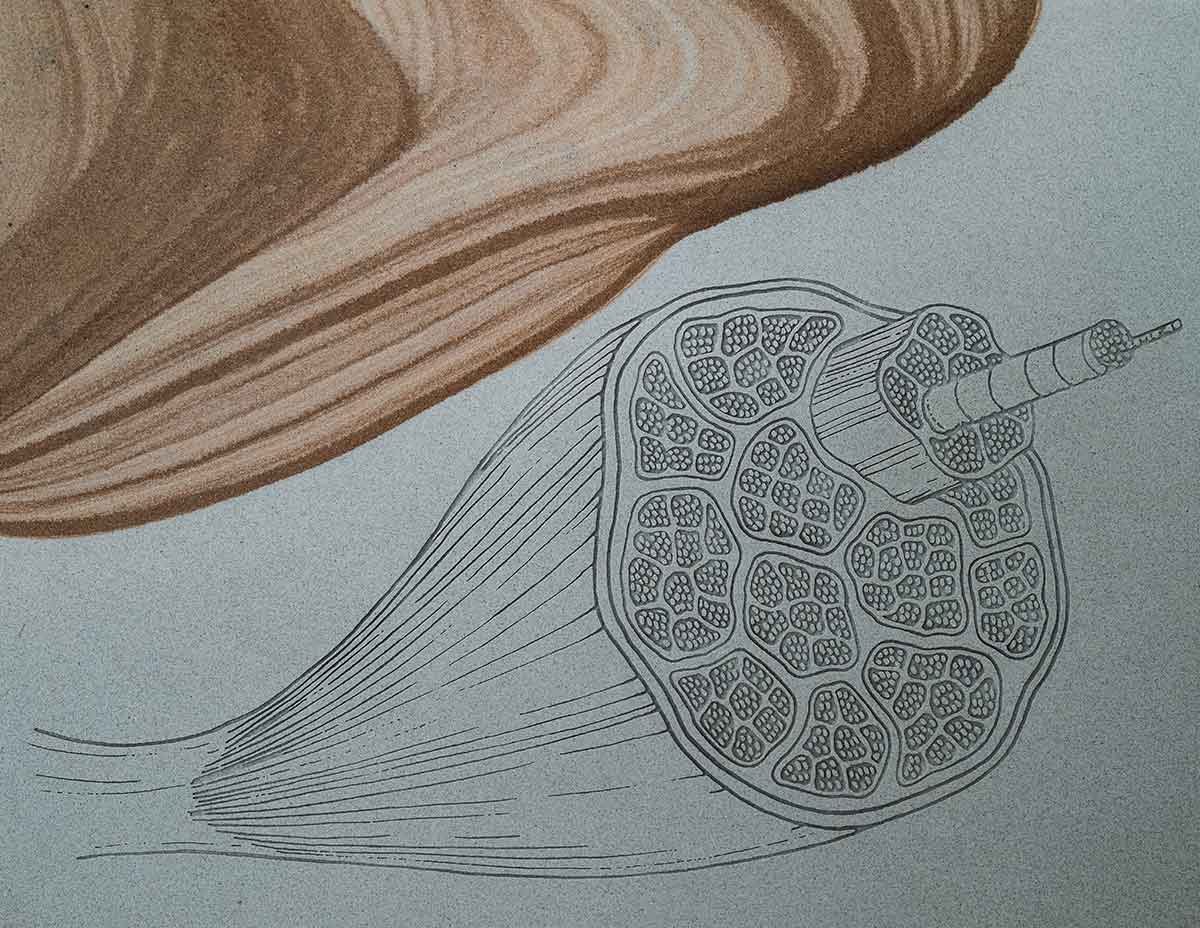
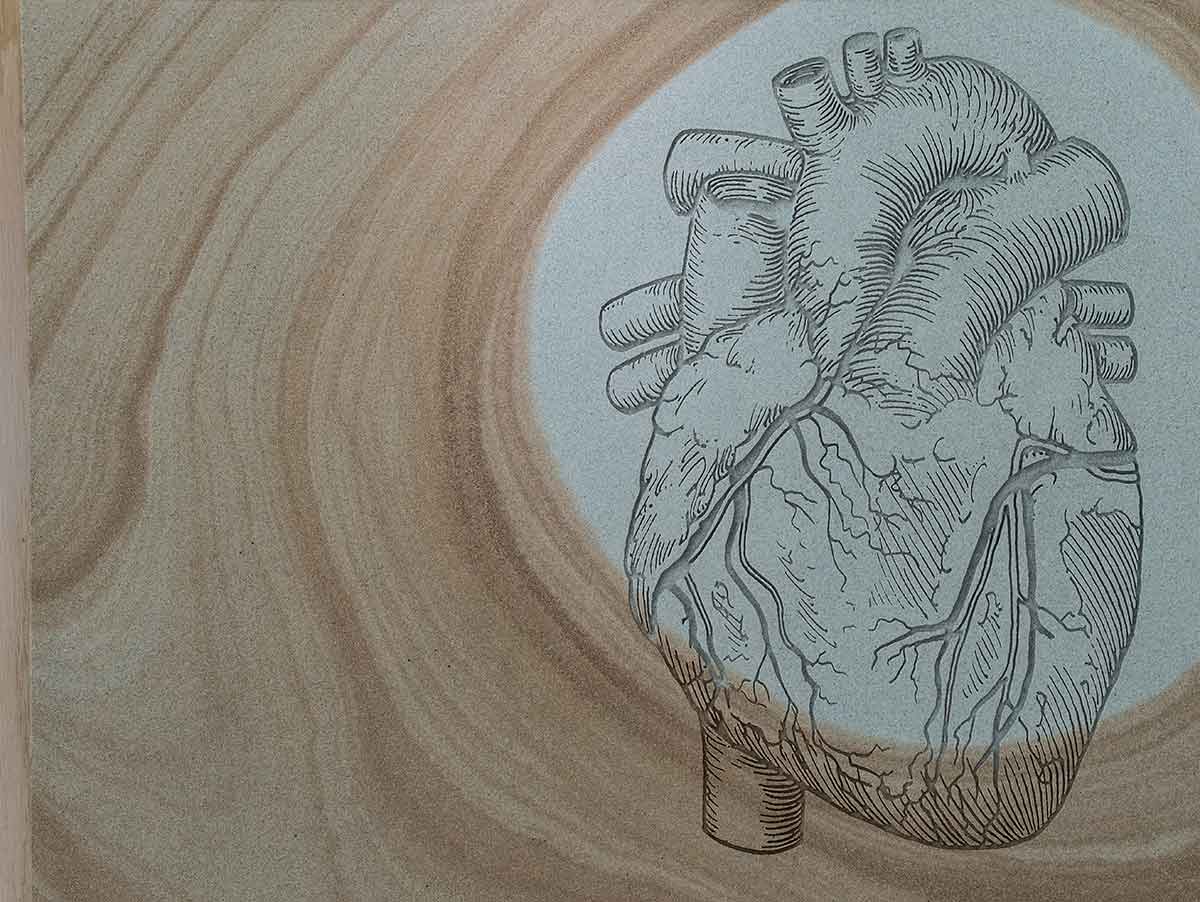
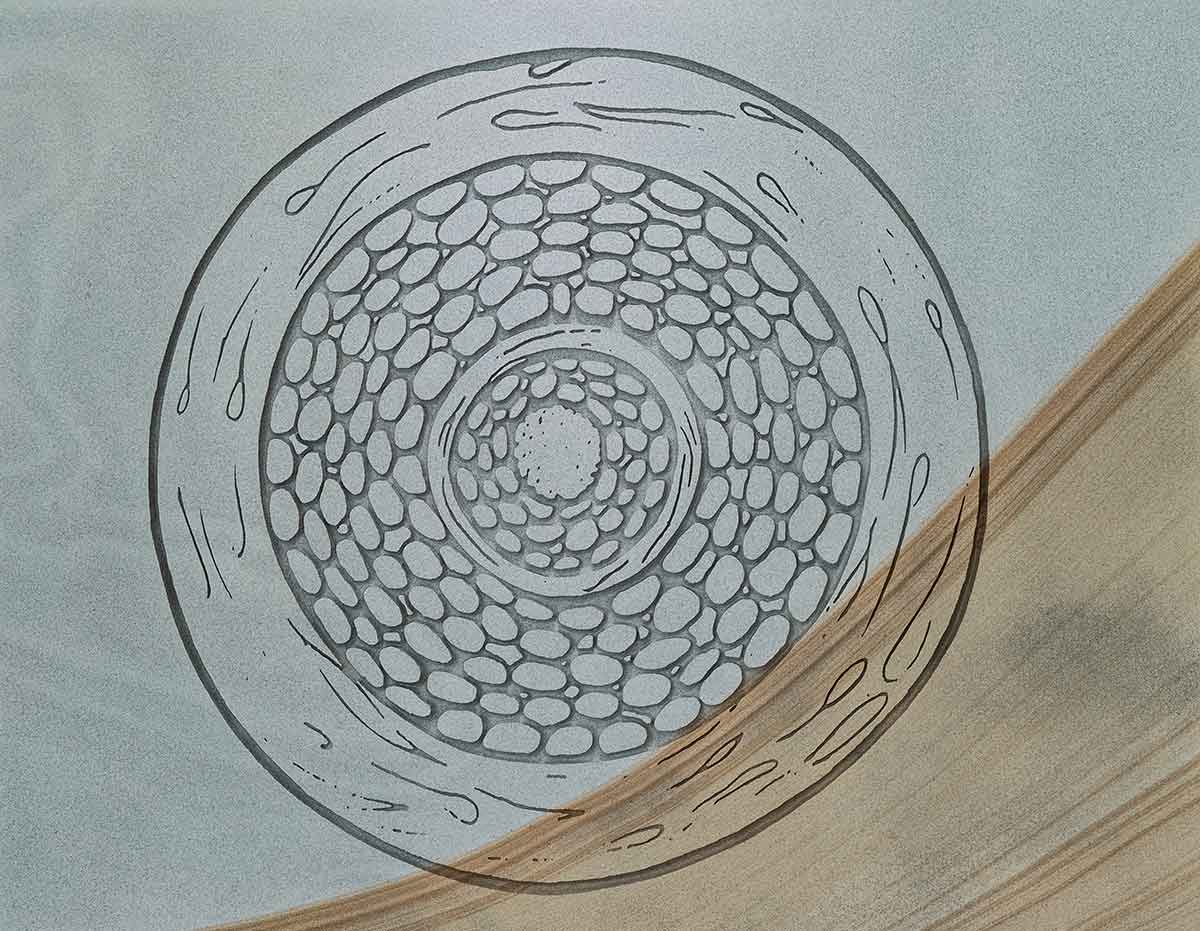
Century’s artistic eye turned to the human body with a series of stone etchings lining the first‑floor lobby of Marieb Hall. Created in collaboration with the college’s and building’s namesake, anatomy scholar and author Elaine Nicpon Marieb, the works echo the health and human services mission of the programs housed there.
“Elaine had quite a bit of input. What a wonderful woman she was,” Century says. He adapted drawings from Marieb’s textbooks into sandstone etchings so students would encounter familiar anatomy imagery as part of their daily environment.
“It takes on a different meaning as artwork, so that it is really a part of their environment but in a different format.”
Century also created donor‑recognition placards that accompany several of his installations across campus, honoring contributors to the FGCU Foundation, which commissioned most of his pieces.
“I still get excited about it even though I’ve been doing this 50 years,” he says.
Century’s campus placards honor the individuals whose generosity shapes FGCU’s future, just as the Vietnam Veterans Memorial preserves the names of those who served and sacrificed. Both forms of recognition — etched in glass or granite — underscore his belief that names matter, and that memory lives on through what we create and the people we commemorate.
In connecting the most-visited memorial on the National Mall — which attracts more than 5 million people annually — with FGCU’s campus, Century reminds us that memory can be carried in national landmarks or the everyday spaces where we learn, gather and imagine.
Each piece at FGCU is vastly different, he says. “I just hope that there’s an inspiration that comes through on some level. That’s what art is. It’s different to everyone. And I tried to have students and people visiting the university in mind.”
As the United States celebrates its semiquincentennial, Century’s work offers a powerful reminder that the story of a place — like a memorial or a university campus — is also the story of those who remember.