Contributors: James Greco, Photos | Rob Salazar, Video
8 – minute read
In Nate Pipitone’s psychology lab at Florida Gulf Coast University, researchers examine young adults’ emotional responses to baby images and sounds.
Down the hall, Krystal D. Mize’s psychology lab team studies complex emotions babies exhibit, such as jealousy. All this is thanks to technology funded by the College of Arts & Sciences, which helps FGCU undergraduates gain hands-on research experience that offers them a competitive advantage when applying for graduate school and jobs.
“The human brain is the most complex organ known to science,” says Pipitone. “Having the ability to track its function is of huge importance to behavioral and cognitive research.”
“We’re very lucky the College of Arts & Sciences funded this technology,” says Mize. “Students at some of the other institutions don’t have this technology.”
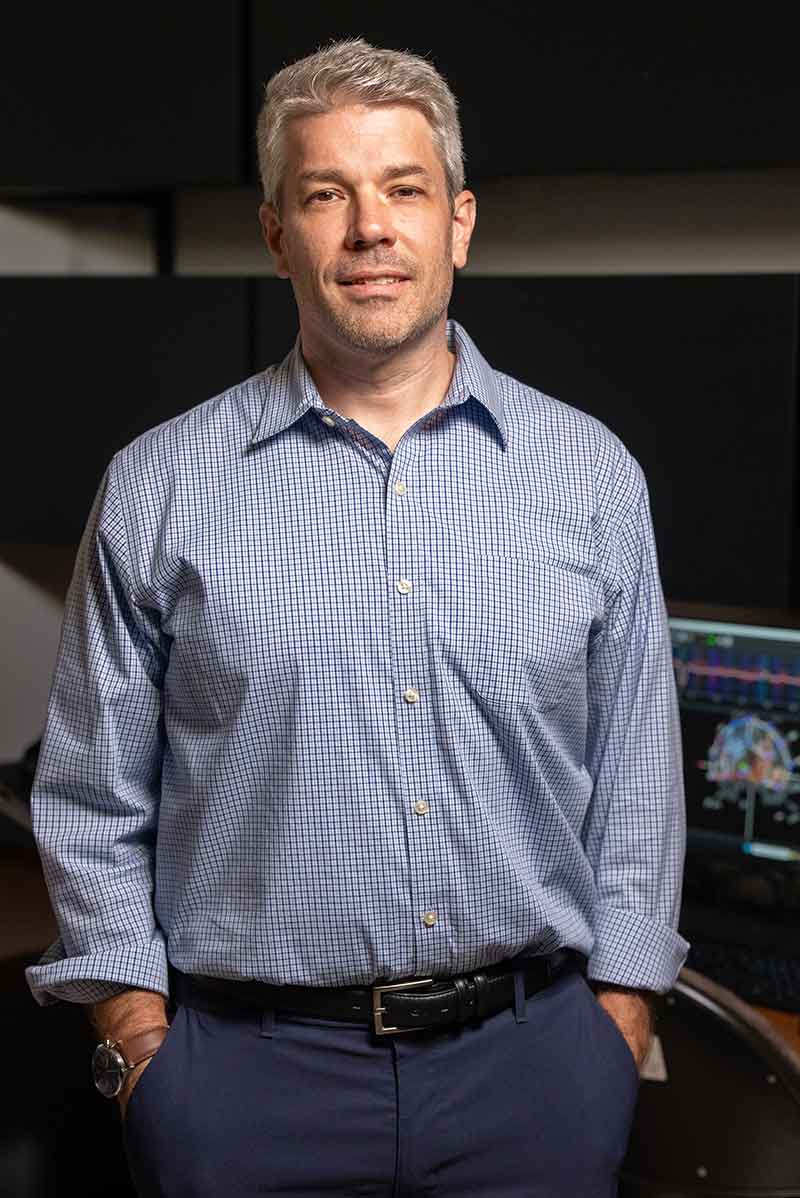
Nate Pipitone
Krystal D. Mize
With this college-funded equipment, psychology faculty and their undergraduate research assistants conduct real-time neuro and behavioral studies typically limited to graduate students at most institutions. The work underscores how FGCU invests in tools that make its undergraduates better candidates for graduate programs and research careers.
Lighting up the brain
Bella Ling spends her evenings watching the brain at work — sometimes until she’s forced to leave.
“A couple of times, I was still in Dr. Pipitone’s lab at 11 (p.m.),” she says. “The only reason I left was because of overnight parking rules. Otherwise, I would have worked straight through until dawn.”
That commitment is partly thanks to the access she has to some new technology: functional near-infrared spectroscopy. This noninvasive optical imaging technique uses a sensor cap and harmless infrared light to enable the senior psychology major from China to measure how oxygen moves across and through the brain during cognitive tasks. This allows Pipitone and his team of undergraduate student researchers to see which areas of the brain are active during thinking, learning and social interaction.
“We’re asking, ‘Did the brain respond to the image we presented, and if so, which area?’” Pipitone says.
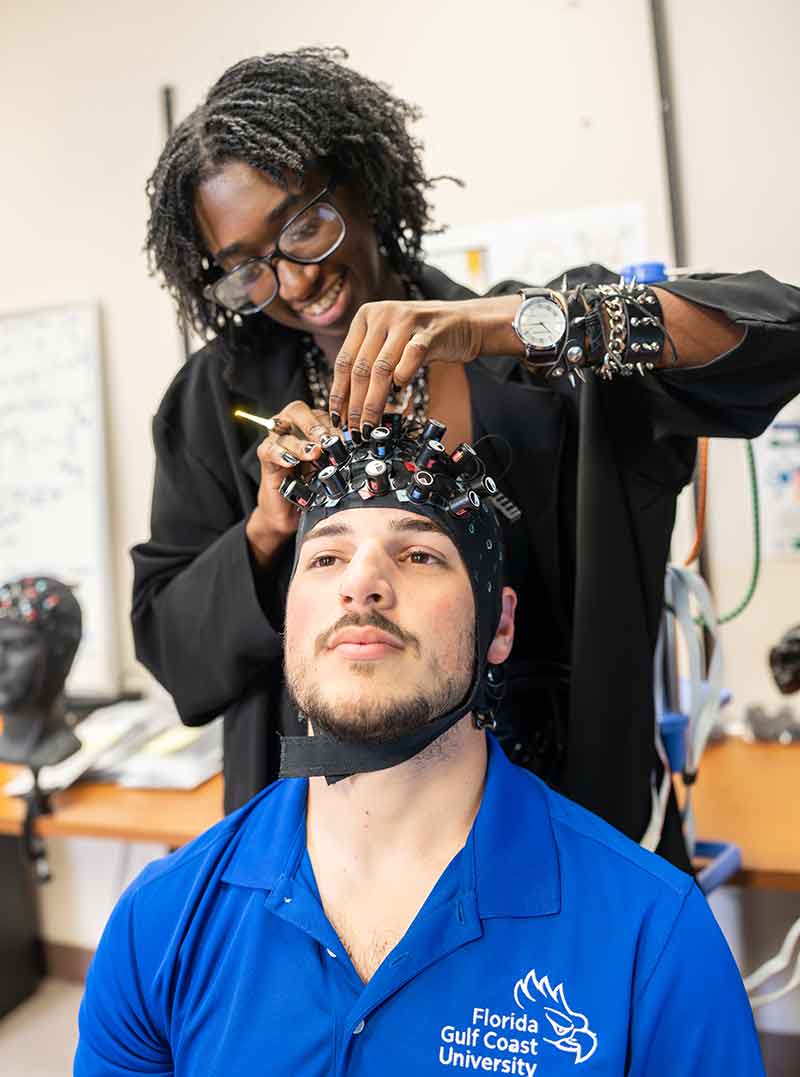
Sterleen Georges fits Anthony Valdes Alfonso with the functional near-infrared spectroscopy sensor cap. Blood contains oxygenated and deoxygenated hemoglobin, which absorb light differently; optodes on the sensor cap shine near-infrared light into the scalp and detect the light that reflects back.
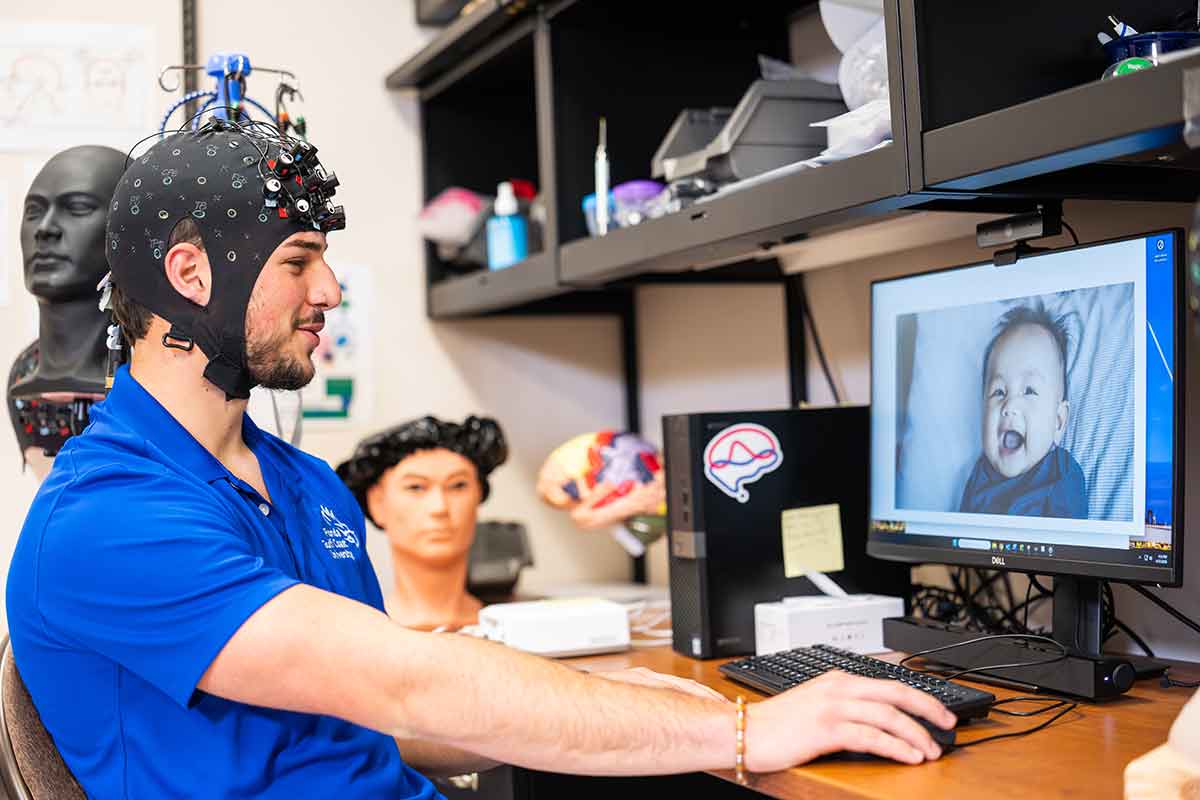
FGCU student Anthony Valdes Alfonso volunteered as a test subject to run through Pipitone's lab experiment.
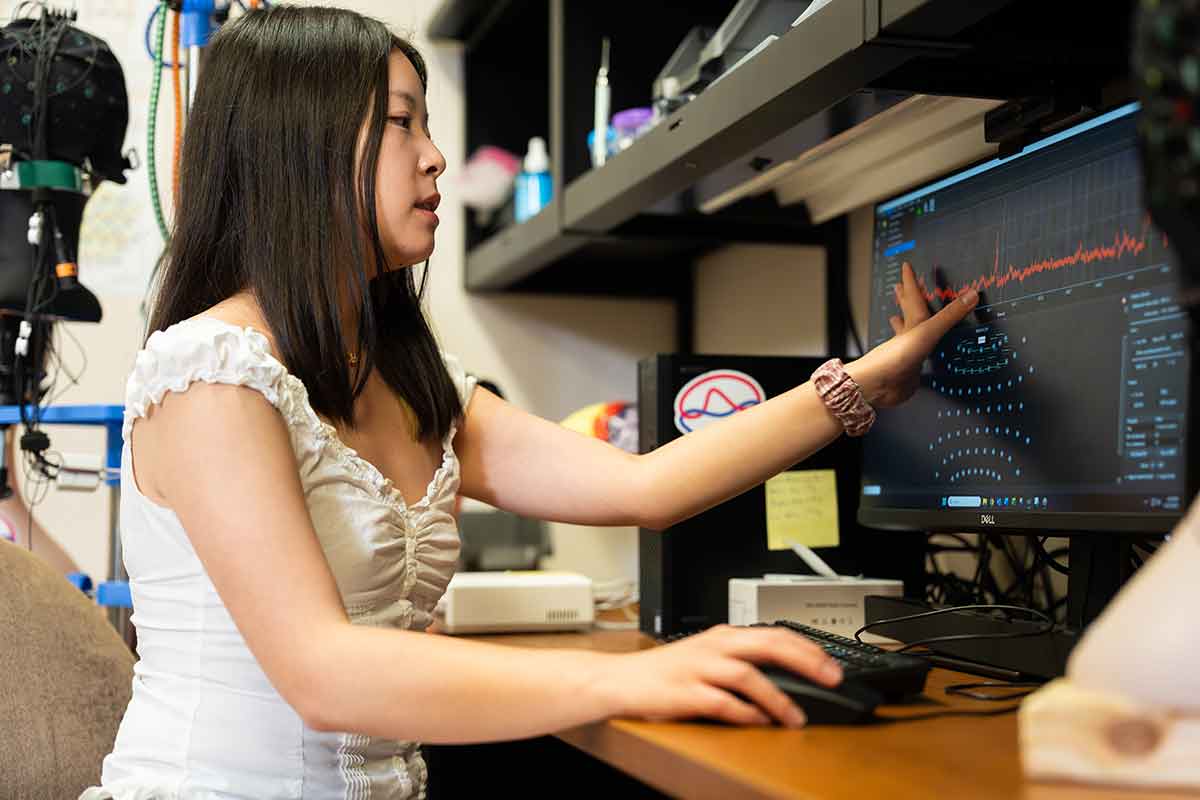
Bella Ling reviews the results. When brain regions become active, they require more oxygen and blood flow increases. Sensor cap optodes map activity in areas such as the prefrontal, temporal and motor cortices, while software analyzes hemoglobin changes to identify which regions are engaged.
Kylie Burt, Ling’s classmate, always knew she wanted to work with the brain. What she didn’t expect was getting hands-on experience with neuroimaging technology as an undergraduate psychology major.
“I chose FGCU specifically due to the small student-to-faculty ratio that has allowed me to make connections with faculty, which has granted me so many incredible opportunities in my undergrad,” Burt says.
The Tampa native uses the same spectroscopy technology in Pipitone’s lab — an experience she says makes her already feel like a graduate researcher, even as it has helped her get into her top choice master’s program.
Another classmate, Naples native Sterleen Georges, finds the research challenging but particularly rewarding as she looks toward medical school to become either a psychiatrist or neurologist.
“Functional near-infrared spectroscopy is particularly new, so there is still a learning curve in understanding the program, operating the machine and analyzing the results,” Georges says. “Looking at the analysis program we use is when I take a step back and recognize how professional this all is.”
She remembers touring the FGCU campus in seventh grade. “From then on, I knew that FGCU was a university that had a lot to offer me,” Georges says.
When Abigail Gonzalez (’26, psychology) brought FGCU’s mobile electroencephalogram (EEG) equipment to a lab at Florida Atlantic University, a graduate student there told her, “You have no idea how lucky you are.”
Gonzalez has spent the last two years working in Mize’s psychology lab researching early emotion development. The equipment she has access to — two EEGs (one stationary and one portable), eight cameras and facial recognition software that codifies and analyzes emotion — is not typically available to undergrads like her.
“For students that want to go to grad school or into the workforce straight after a bachelor’s, do anything, really, to step outside your comfort zone,” Gonzalez says. “Even if you’re doing it scared — because you never know what it could lead to. And that’s kind of how everything started for me.”
Mize’s lab explores how infants experience and express complex emotions, such as jealousy, challenging long-held assumptions that babies lack this emotional depth.
“When I was training originally as an undergraduate, I was told that infants can’t experience complex emotions,” Mize says. “As a parent, I disagreed.”
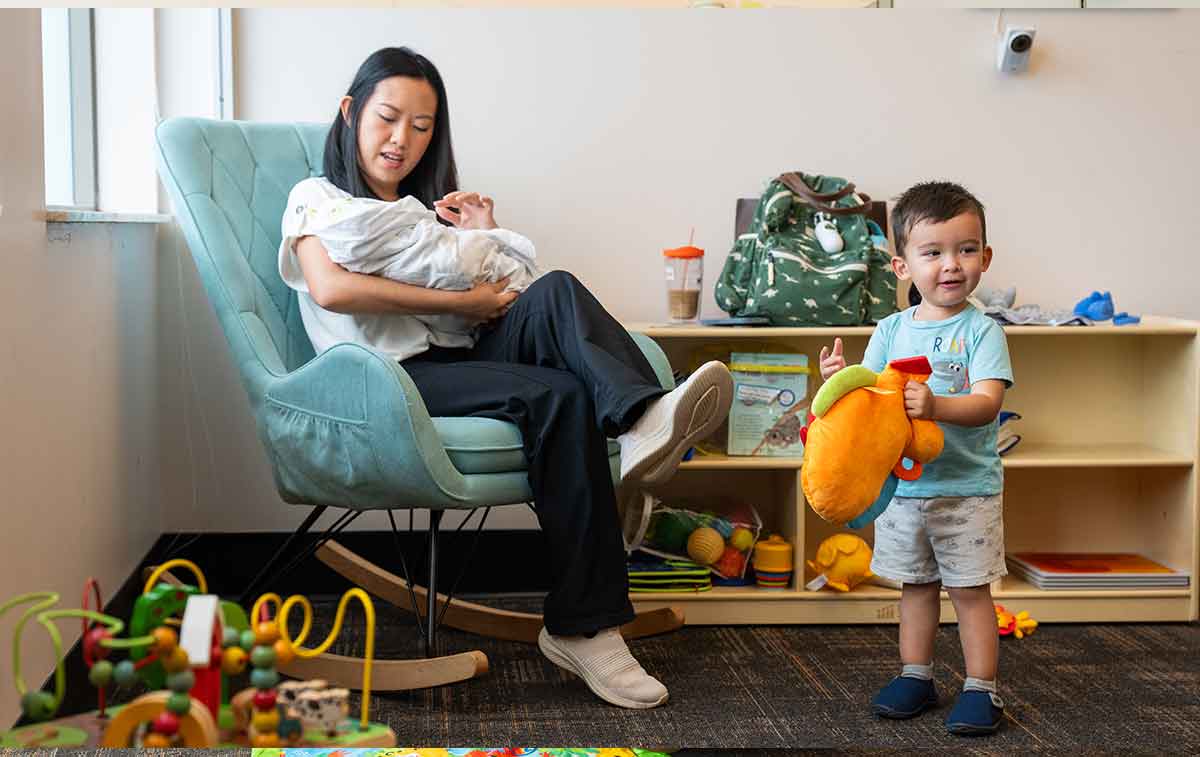
Elaine Phan and her son, Theo Snook, have participated in Krystal D. Mize's infant jealousy research since he was 6 months old.
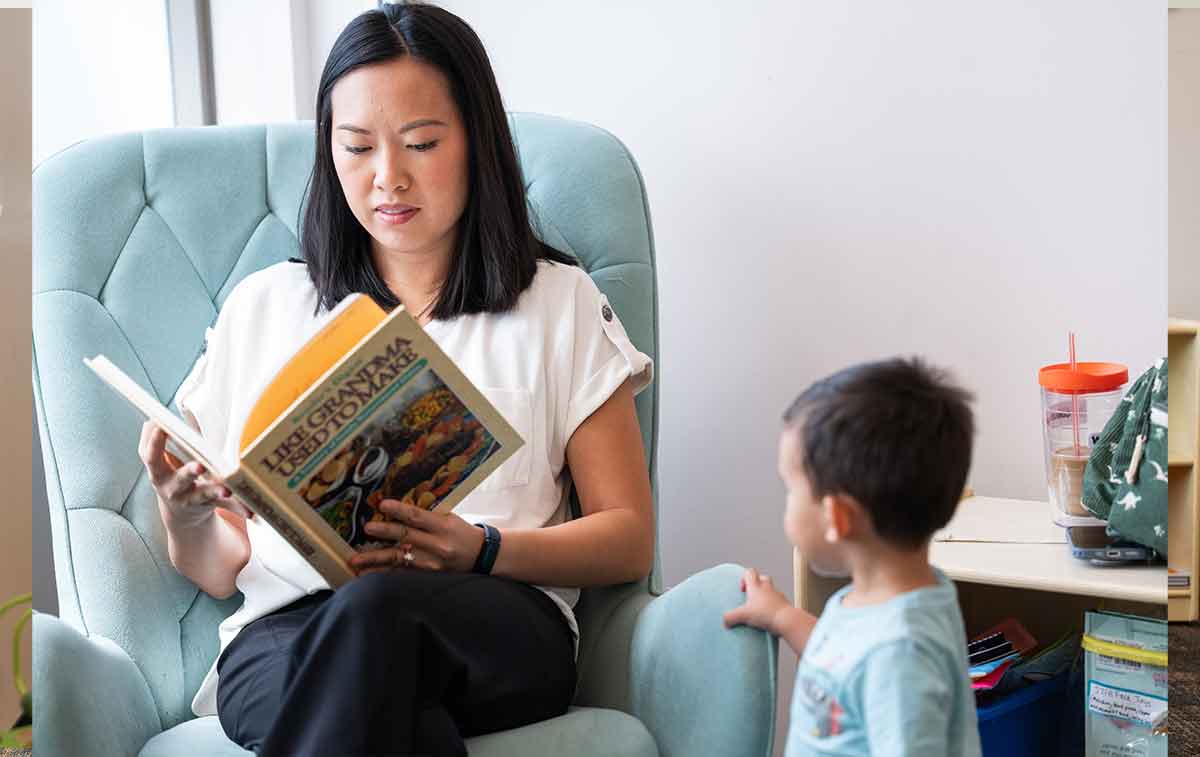
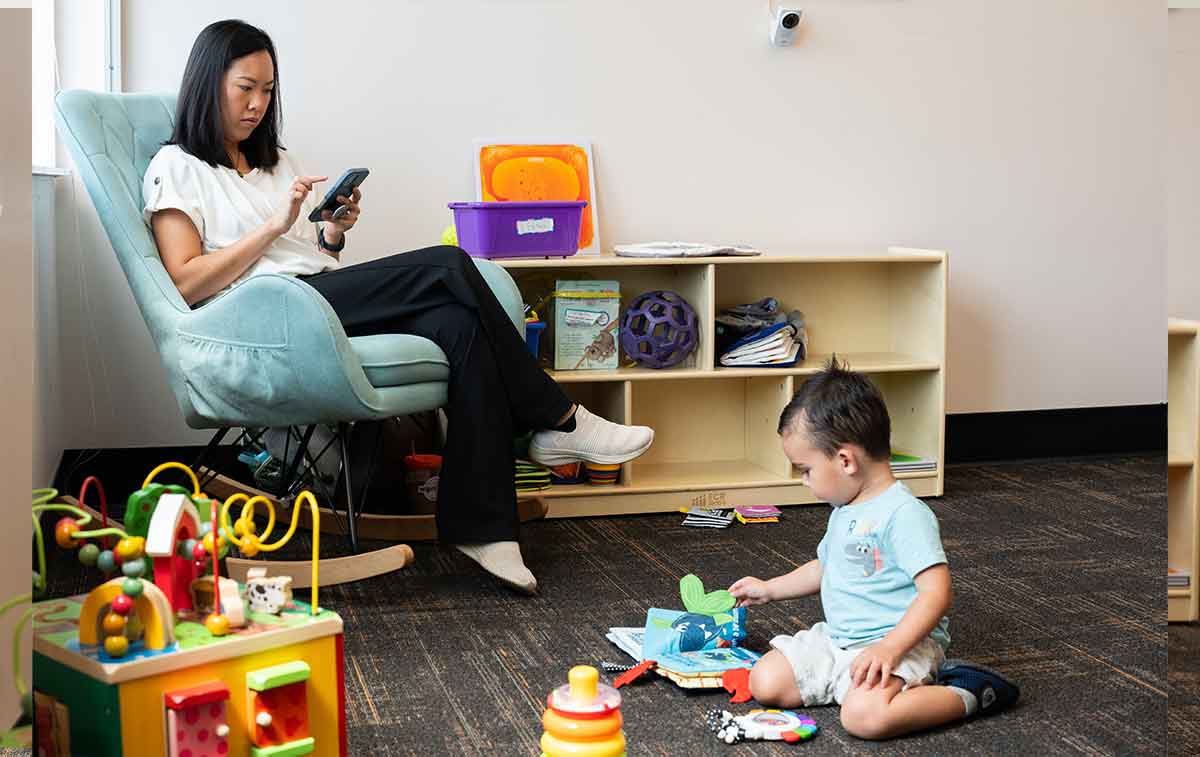
During the study, a parent participates in activities that do not involve the child, like reading a book, scrolling on a cell phone or interacting with a lifelike baby doll.
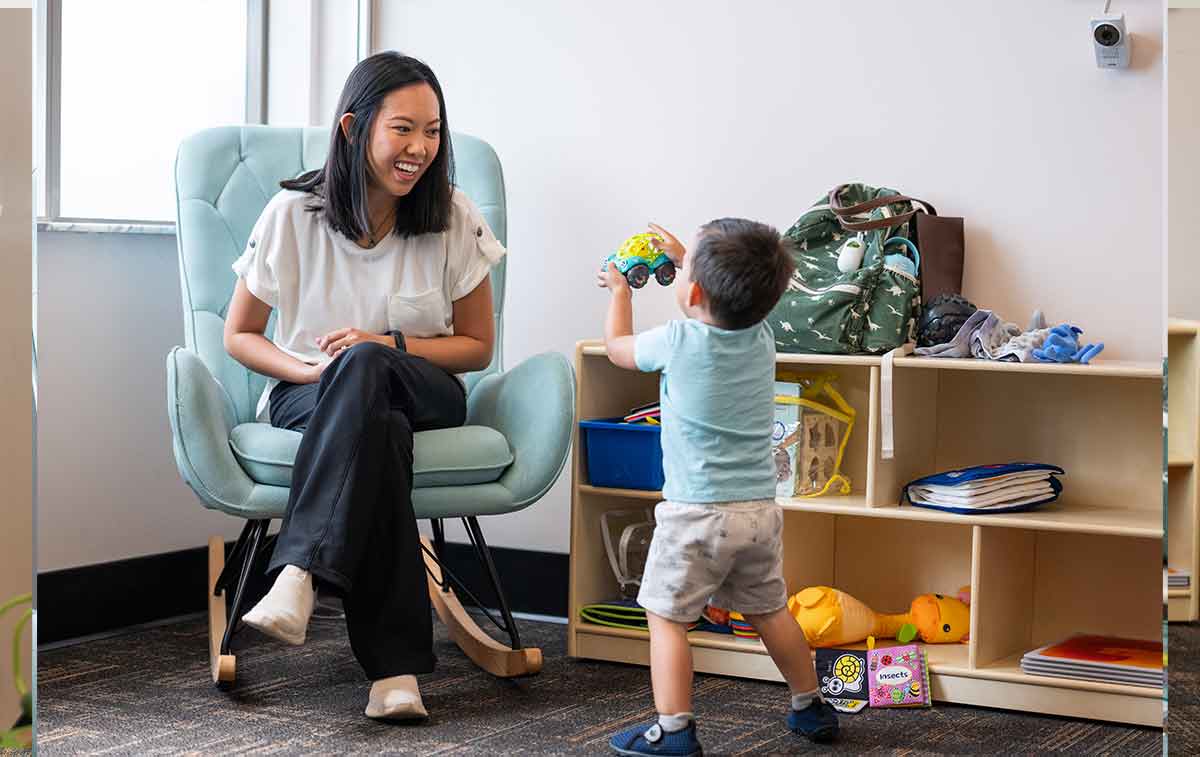
Between each activity, the parent interacts with the child.
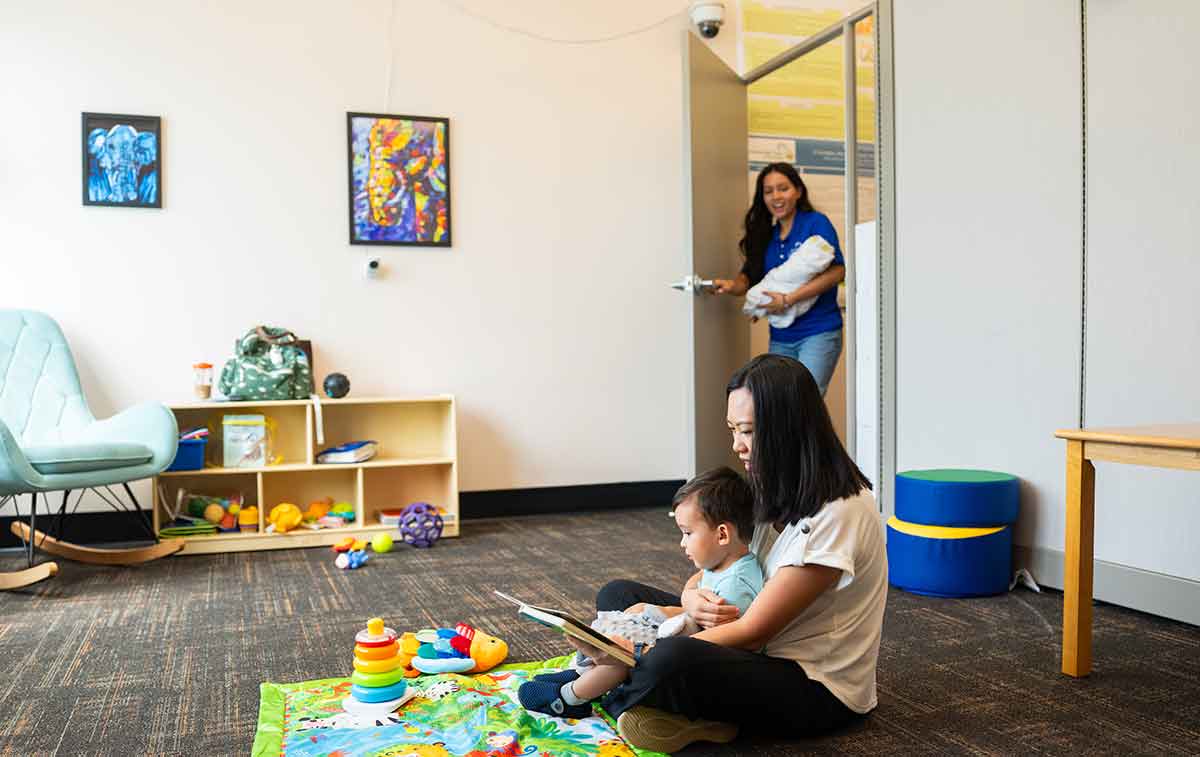
Abigail Gonzalez arrives with a realistic baby doll.
Theo earned a baby scientist certificate for his participation in the study.
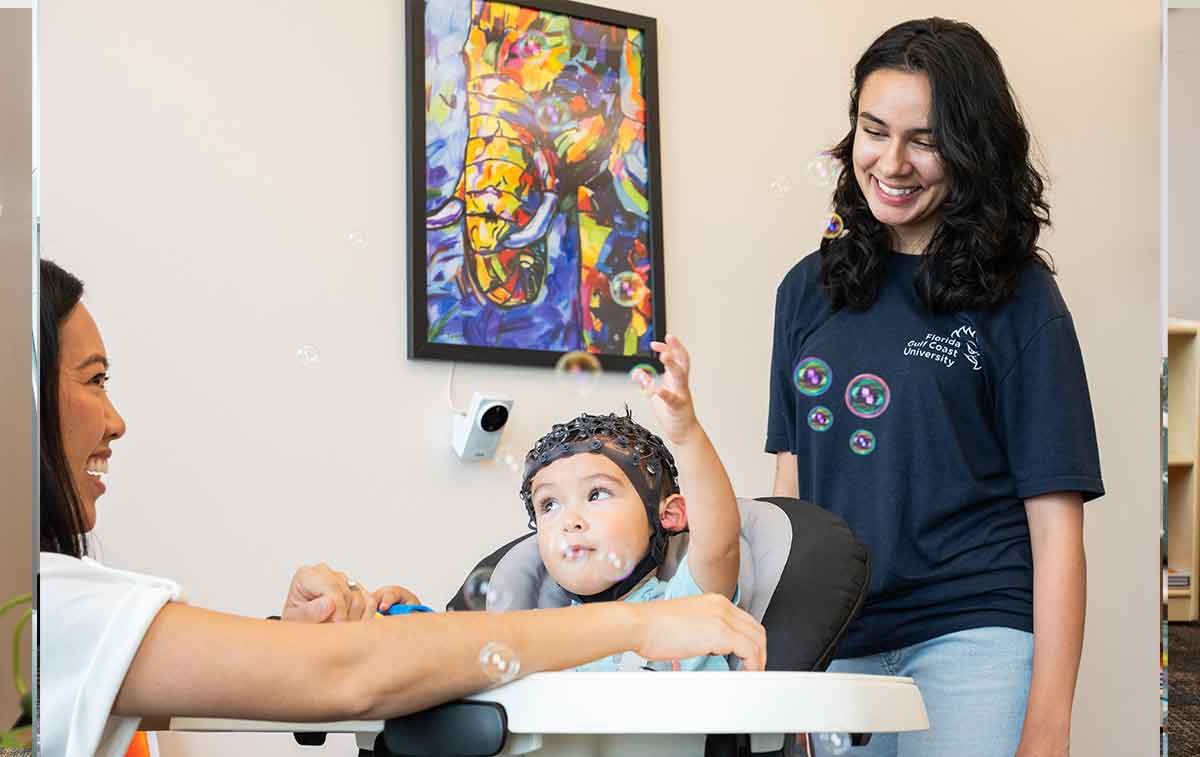
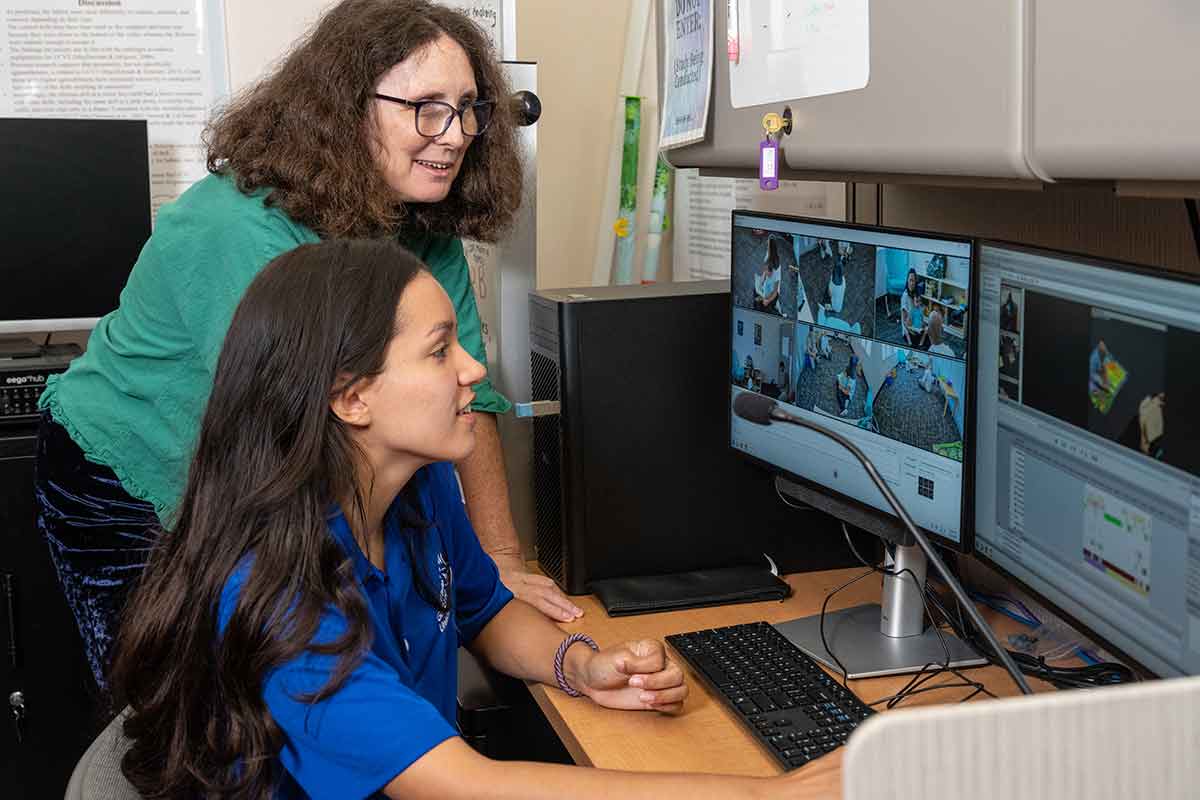
By inviting parents and their babies into the lab, Mize’s team captures detailed video and brain activity data using EEG technology and a network of cameras that track facial expressions, movement, proximity and body tension. These behaviors are then coded and analyzed to better understand how emotions develop in early life.
“With this project, we’re really seeing the development of early jealousy and how infants portray those emotions. I was told as an undergraduate that babies are passive in their development and this research shows that is not true,” Mize says.
Her own graduate research at FAU centered on the nature of jealousy. With the work she started there and continues at FGCU, she has collected 20 years of data with 138 infants.
A bubble machine distracted Theo as student researcher Solange Gonzalez fitted him with a a soft cap that measures brain activity for five minutes.
Mize and her student researchers, like Abigail Gonzalez, review the recordings and code the child’s behavior — like facial expressions, sounds and movements — using software that tracks actions second by second.
With
the equipment funded by the College of Arts & Sciences, Mize’s research demonstrates
that babies are more perceptive than was once believed — and FGCU
undergraduates play a key role in uncovering that insight.
Gonzalez
will start her doctoral degree this fall at FAU and continue her focus on
infant jealousy research.
“I wouldn’t have been
able to get into the Ph.D. program without working in this lab,” Gonzalez says.
“You can maybe read about it, but actually going hands on, seeing participants
come in and seeing the flow of how a research project develops from beginning
to end is super important.”