Contributors: James Greco, Photos | Chris Noonan, Video
7 – minute read
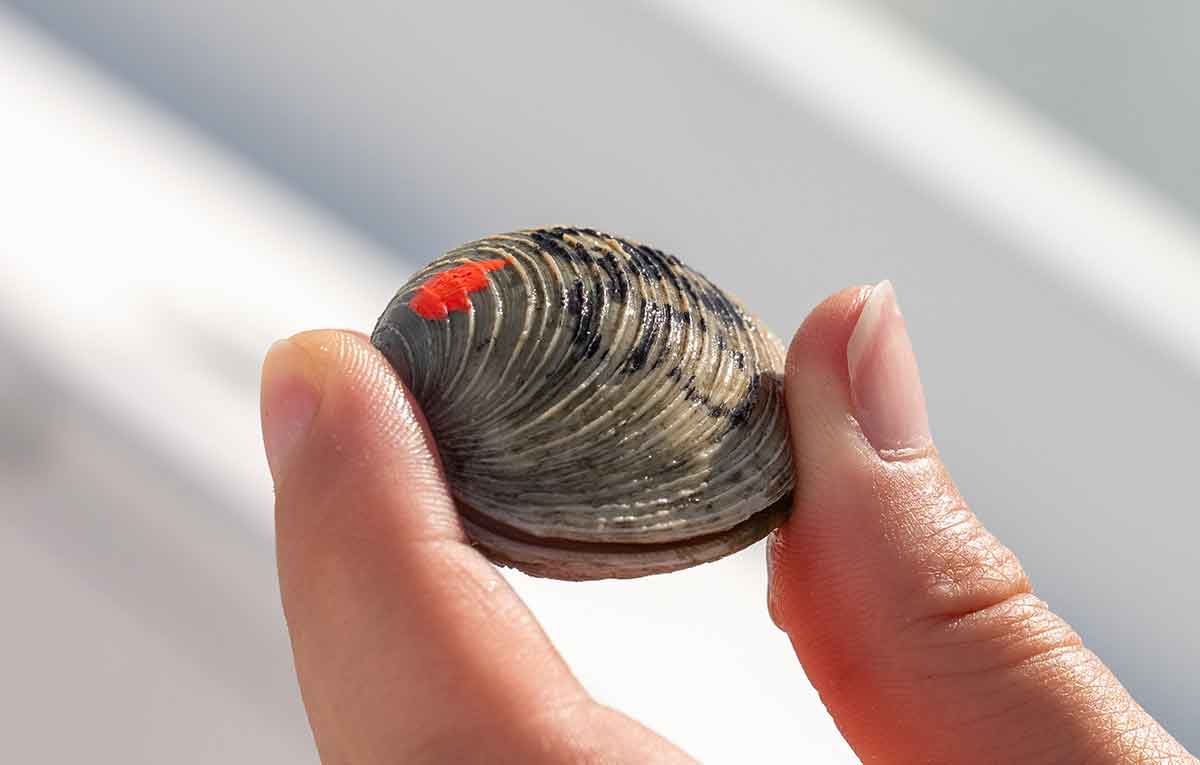
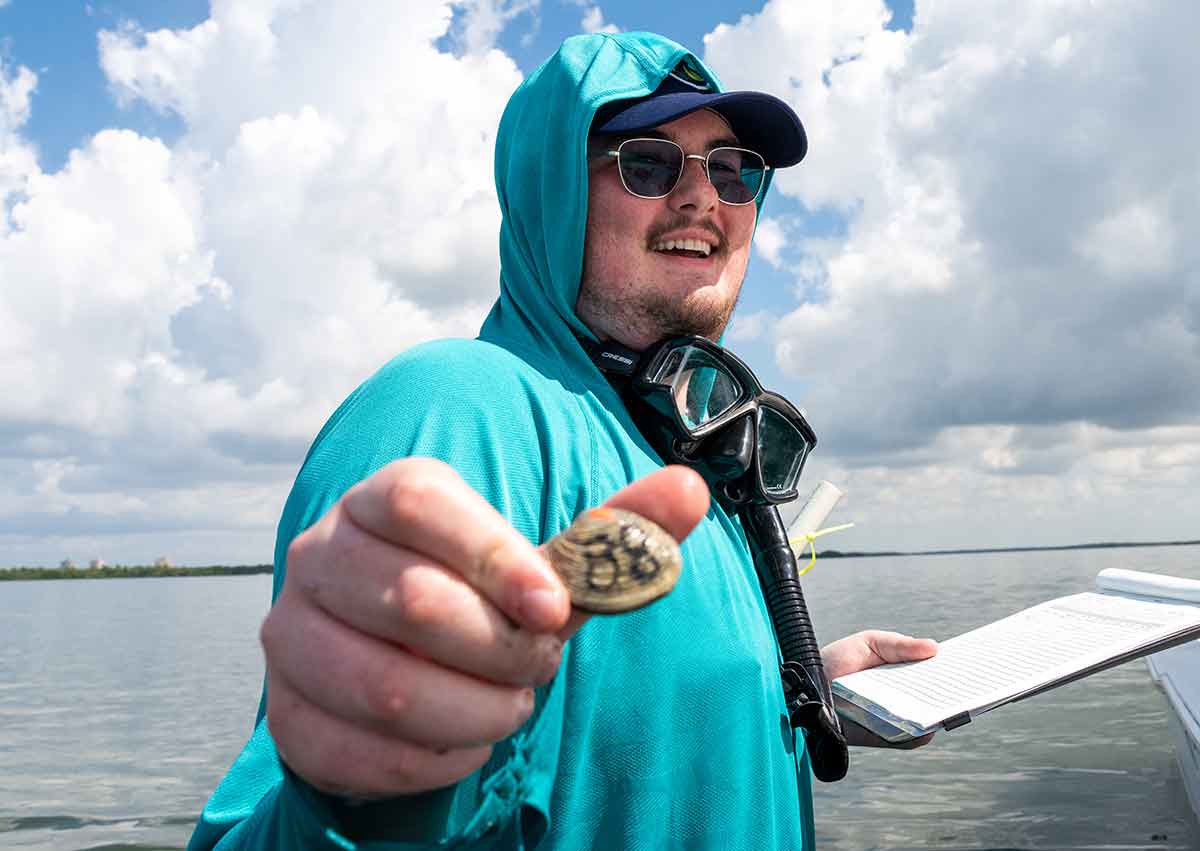
Fluorescent pink and orange nail polish isn’t standard marine biology equipment. But at Florida Gulf Coast University, researchers recently used it to mark 1,500 clams destined for the waters of Estero Bay.
The marked shellfish are part of a statewide experiment that could help answer an important question concerning Florida’s coastal ecosystems: Can clams and seagrass help each other recover?
Melissa May and James Douglass, FGCU marine science faculty members in The Water School, lead the university’s role in the Florida Bivalve-Seagrass Restoration Consortium Project. The statewide initiative will examine whether restoring clams and seagrass together can improve the health of both species, which have declined locally and around the state.
“There’s this idea that you can restore populations of clams and seagrass by themselves, but if you put them together, they tend to facilitate restoration,” May says.
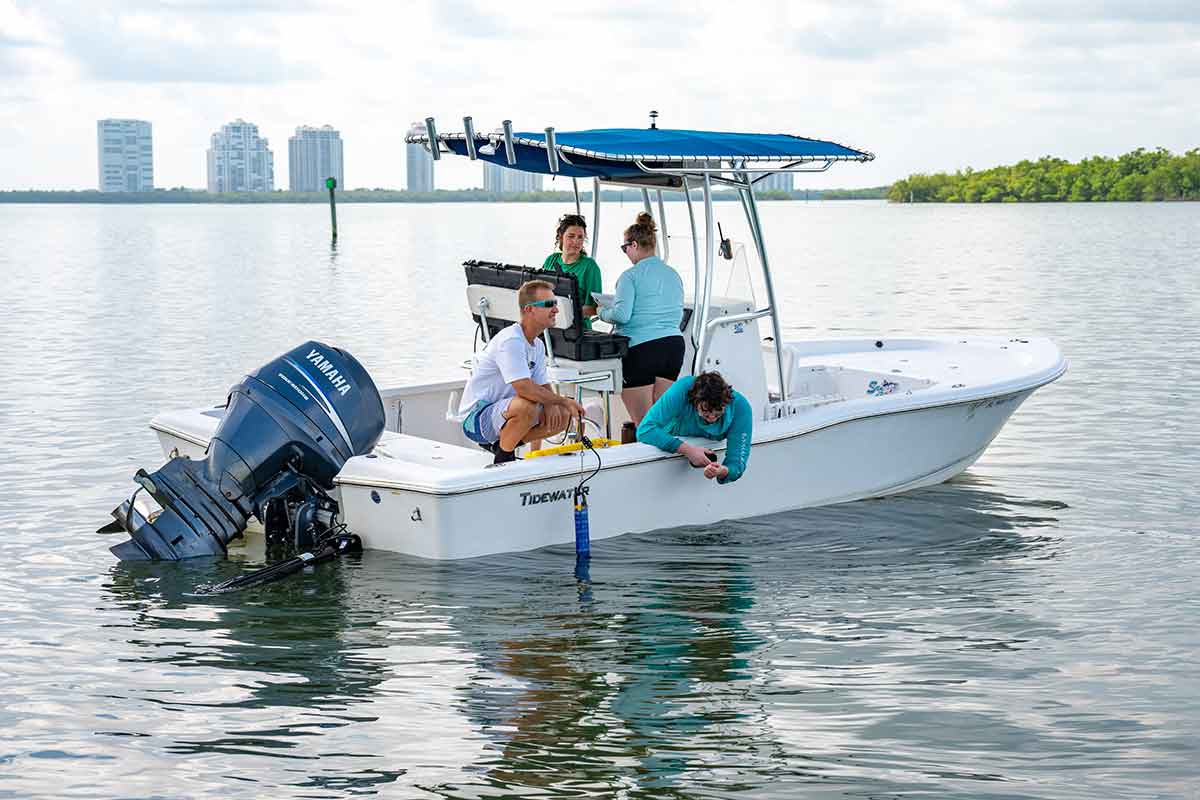
A team of student and alumni researchers from The Water School have established experimental plots in Estero Bay, which is adjacent to FGCU’s Vester Field Station in Bonita Springs, and Rookery Bay, which is south of Naples.
Testing the waters of a new restoration strategy
The research is built around a mutually beneficial relationship. Clams filter water and may recycle nutrients into the sediment where seagrass can use them. Seagrass, in turn, may provide protection for clams by helping hide them from predators.
“The overall hypothesis for the consortium is that the clams will improve conditions that would facilitate seagrass restoration,” May says.
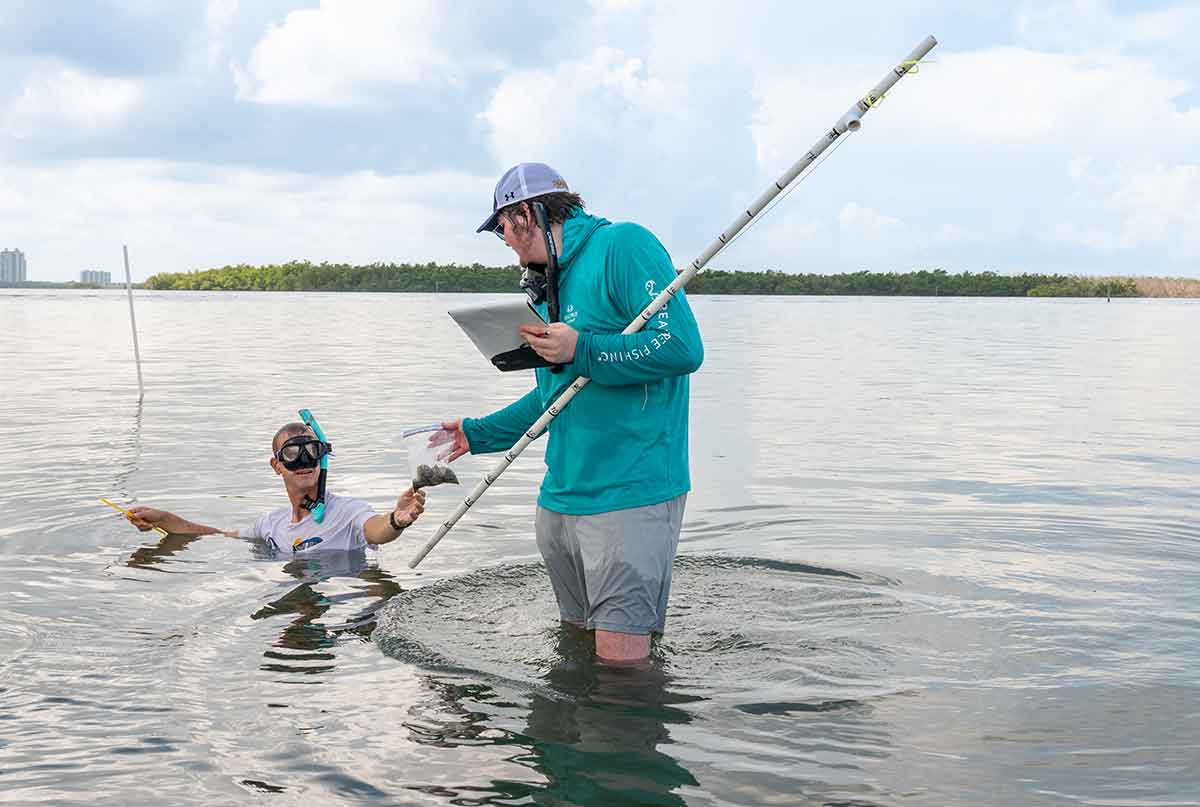
To test that idea, May and Douglass and a team of student and alumni researchers have established experimental plots in Estero Bay, which is adjacent to FGCU’s Vester Field Station in Bonita Springs, and Rookery Bay, which is south of Naples. The Water School team placed the marked clams in existing seagrass beds as well as in nearby bare-bottom areas. Through November, they’ll monitor seagrass growth, clam survival, nutrient levels and other environmental conditions.
The Water School researchers are also conducting an additional experiment in Estero Bay to determine whether clam size influences restoration success.
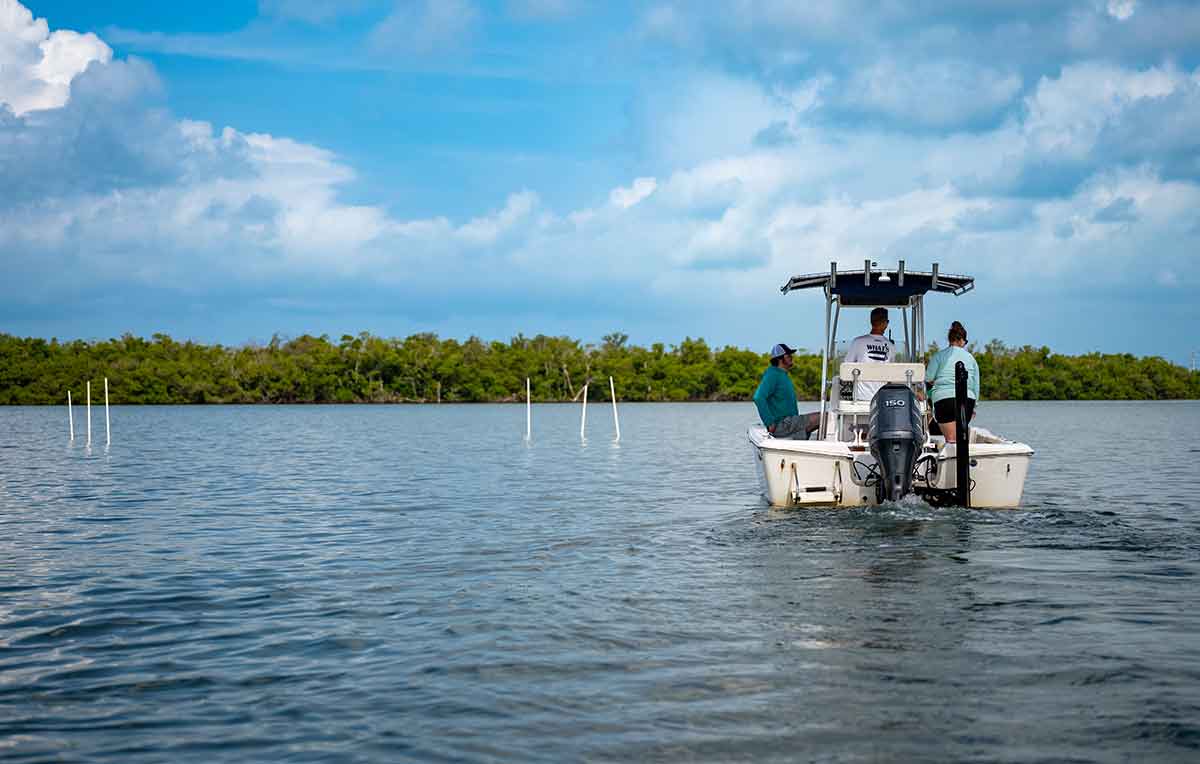
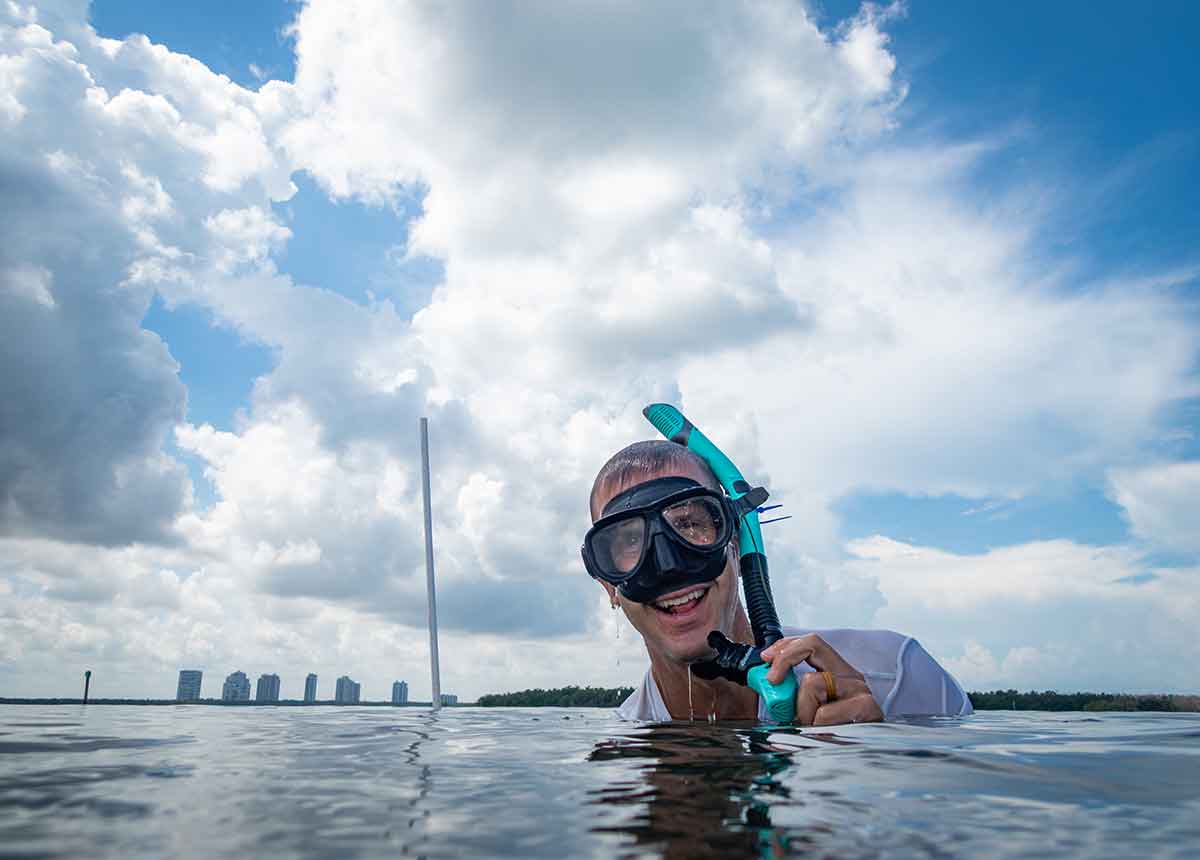
The experimental plots are marked with tall, white PVC pipes.
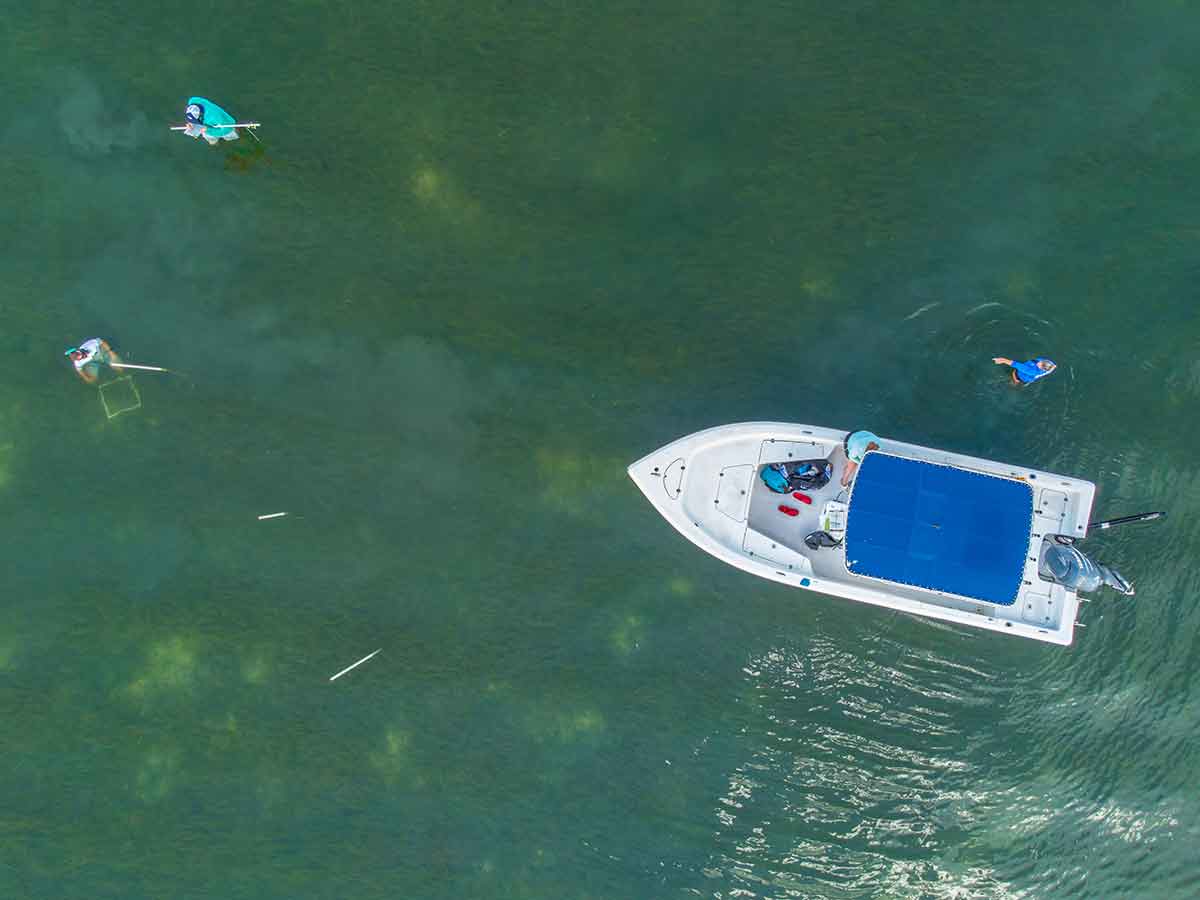
A drone shot of the same area.
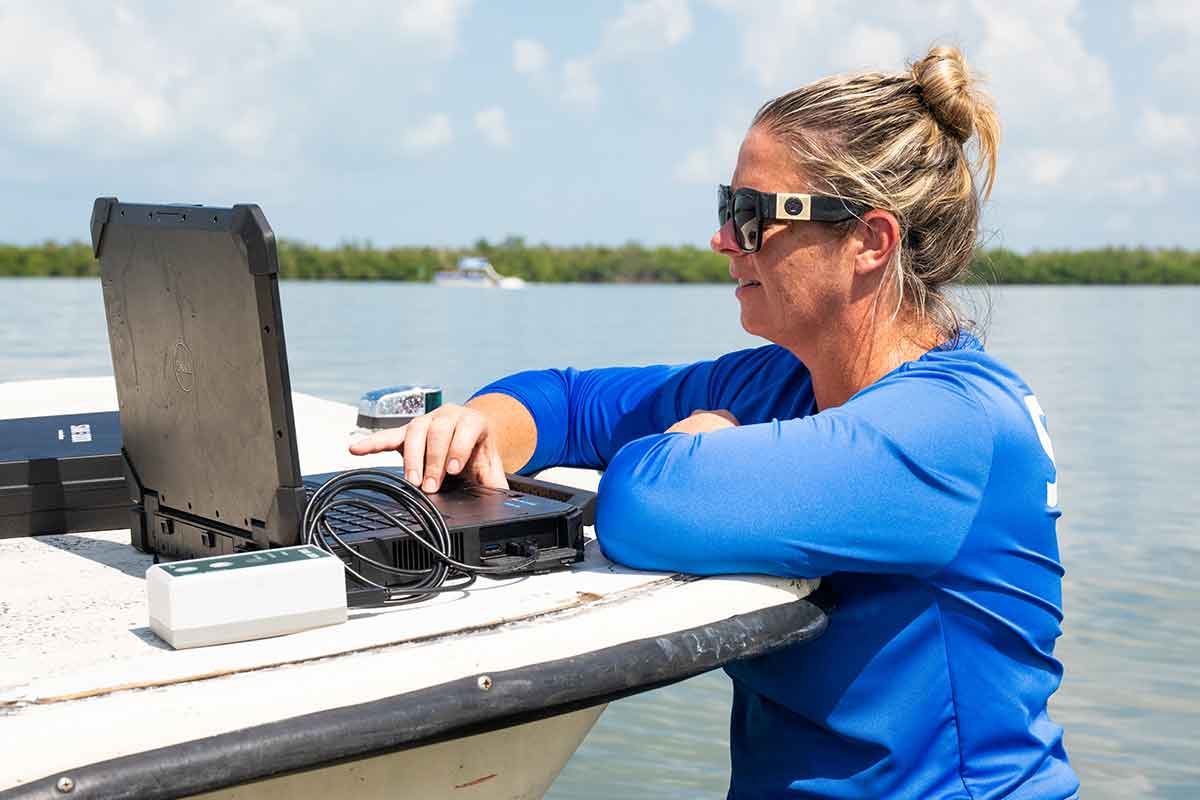
Melissa May.
“The preliminary sampling was pretty intensive,” May says.
Fieldwork can be physically demanding. Near New Pass, an inlet connecting Southwest Florida’s inner waters to the Gulf, strong tidal currents often challenge FGCU researchers trying to stay in position while working underwater.
“When the tide is changing, the current can get really strong,” May says. “I was fighting for my life to stay in place and try to do the work” during one of the field days.
FGCU students and alumni have played a critical role in every phase of the project.
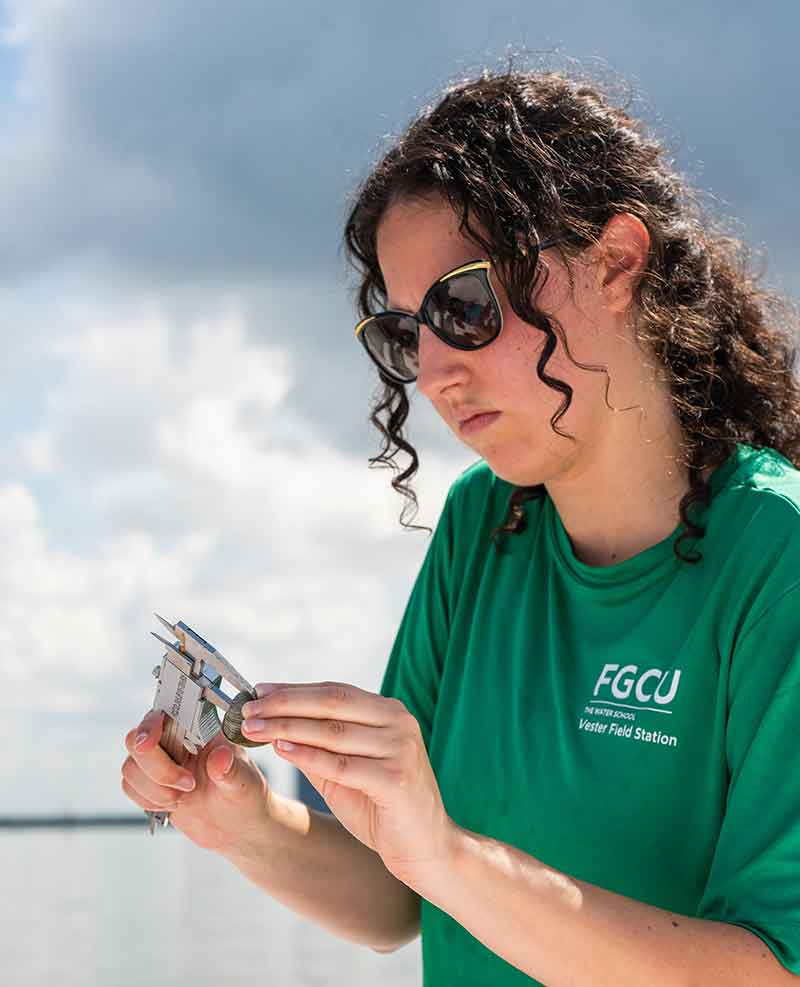
Douglass’ five interns and May’s lab technician helped process approximately 1,500 clams before deployment, measuring and numbering each one before painting them with fluorescent nail polish. The colorful markings allow researchers to identify their experimental animals later, even if only their shells remain after predation events.
“If we find a shell that was eaten, if it has nail polish, then we know that was one of ours,” May says.
Students also assist with monthly field sampling and extensive laboratory work. Water samples are analyzed for hydrogen sulfide, a chemical associated with oxygen-poor sediments that smells like rotten eggs. Researchers also process clams and seagrass samples to evaluate their condition and growth over time.
Emmett Cullinan, a marine biology student at the University of California, Santa Cruz, is one of Douglass’ summer interns.
Bailey Day, a senior marine science major, is helping monitor seagrass and clam survival through an internship in Douglass’ lab.
“It’s very important for benthic ecosystems,” Day says. “The seagrass provides clarity of water, which is essential for bays like Estero Bay.”
Double Eagle Jolie Alberty is a Vester Field Station lab technician.
The project provides hands-on research experience that extends well beyond the classroom — as Jolie Alberty (’22, marine science; ’25, master’s in environmental science) knows well. The Vester Field Stationlab technician first met May as an undergraduate and credits that mentorship for launching her scientific career.
“I was really fortunate to meet Dr. May in her first year of teaching at FGCU, and that’s kind of where my personal science career took off,” Alberty says. After completing graduate school and a research project on environmental stressors on clams in Pine Island Sound, she now works alongside her former professor.
“It was really a full-circle experience,” Alberty says. “I went from being that scared, nervous undergraduate student and now have fledged into a scientist.”
She says FGCU’s size and location gives students unique access to research opportunities.
“We always talk about how as an undergrad, there were a lot of opportunities that we knew we wouldn’t be able to have at other larger universities,” she says. “It’s really cool that at FGCU we can do really expansive, higher-level projects here.”
The stakes extend far beyond academic research. Seagrass meadows serve as nursery habitat for many commercially and recreationally important species in Southwest Florida. Clams help maintain water quality through filtration and form an important part of the coastal food web.
“For seagrass beds, especially in Southwest Florida, they’re really important economically, but also ecologically,” Alberty says.
James Douglass.
Douglass and summer intern Emmett Cullinan.
The Florida Bivalve-Seagrass Restoration Consortium brings together researchers, government agencies, nonprofits and industry partners from across the state. In addition to FGCU, in Southwest Florida the project includes the Sanibel-Captiva Conservation Foundation, the Coastal & Heartland National Estuary Partnership and the Southwest Florida Shellfish Growers Association.
The findings could help inform future restoration efforts in Estero Bay and elsewhere around the state, where both seagrass and clam populations have declined because of environmental pressures and, in the case of clams, historical overharvesting.
For May, the project’s value ultimately comes back to community impact.
“Clean water affects us all,” she says. “In Southwest Florida, ecotourism is kind of the basis of what’s running our economy. And that relies on clean water.”
The team expects to continue monthly sampling through the fall, with final data collection planned for November. While May and Douglass don’t yet know what the results will show, they hope the experiment will help identify new ways to restore some of Florida’s most important coastal habitats.
And if the brightly painted clams survive long enough to tell the story, they may help reveal whether restoration works best when partners in nature recover together.