Contributors: James Greco and Hannah Smith, Photos
7 – minute read
Kristen Carney doesn’t slow down. The Florida Gulf Coast University graduate student balances a full course load, three part-time jobs, leadership roles across campus and the community, and training as a national-level adaptive athlete — all while navigating life with a disability.
“Adaptive sports helped me reclaim my identity, and I am committed to creating that same empowerment for others,” she says.
That commitment recently earned Carney national recognition. She was selected as a regional recipient of ESPN’s Billie Jean King Youth Leadership Award, which honors individuals who use sports to make a positive impact in their communities. For Carney, the accolade recognizes her advocacy to connect people with disabilities to athletic opportunities and helping create a more inclusive sports culture in Southwest Florida.
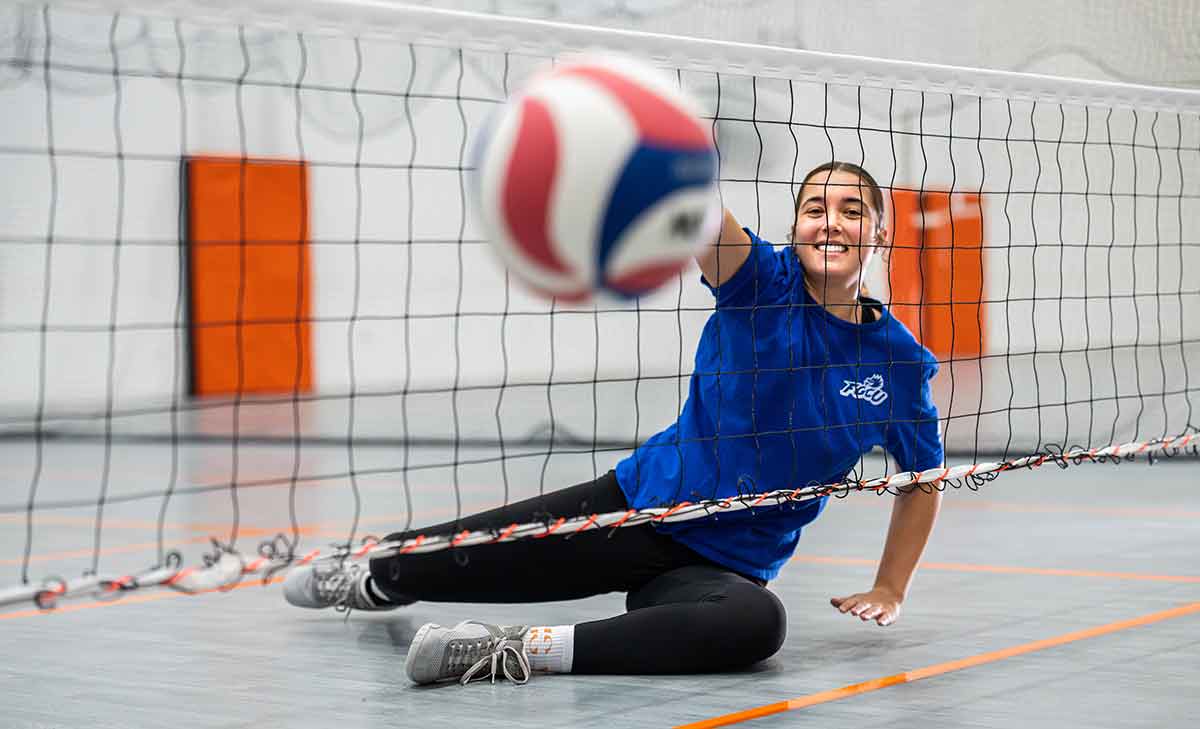
“I love sitting volleyball. I feel alive when I get to compete,” says FGCU graduate student Kristen Carney. Photo by James Greco.
A special award
Carney was shocked when she learned about the ESPN award. “I was super excited. I called all my family.”
Named for the women’s tennis icon — a 39-time Grand Slam champion and pioneering advocate for gender equality in sports — ESPN’s award celebrates high school and college students who lead with the same passion and purpose that defined King’s career and who leverage sports to strengthen their communities.
“I love getting involved with my community,” says Carney, who has led efforts to increase awareness and understanding of adaptive sports and recreation in Southwest Florida. To her, everyone belongs in the athletic community.
“As many people have said, ‘If you have a body, you can be an athlete,’” she says.
The subject became personal to her after a life-changing experience.
Adaptive Sports and Recreation Day
The public is welcome to join FGCU 9 a.m.-1 p.m. Oct. 3 for its annual Adaptive Sports and Recreation Day. Events are in and around Alico Arena.
A lifelong athlete who competed in tennis, volleyball, gymnastics and dance, Carney was preparing to start her master of occupational therapy program at FGCU when she was struck by an SUV. After months of recovery, she learned she would not regain her previous level of physical capability.
“I was devastated,” she says. “I remember feeling defeated and helpless.”
Sports had always been central to her identity, which made the setback especially difficult.
“If you asked any practitioner on my healthcare team, they’d tell you that my goals were to get back to my sports,” she says. “That was the only thing that was really motivating me.”
So Carney began researching adaptive athletics — and discovered a new version of a sport she’d played before.
“I love sitting volleyball. I feel alive when I get to compete,” she says. “My sport provides me with exceptional quality of life.”
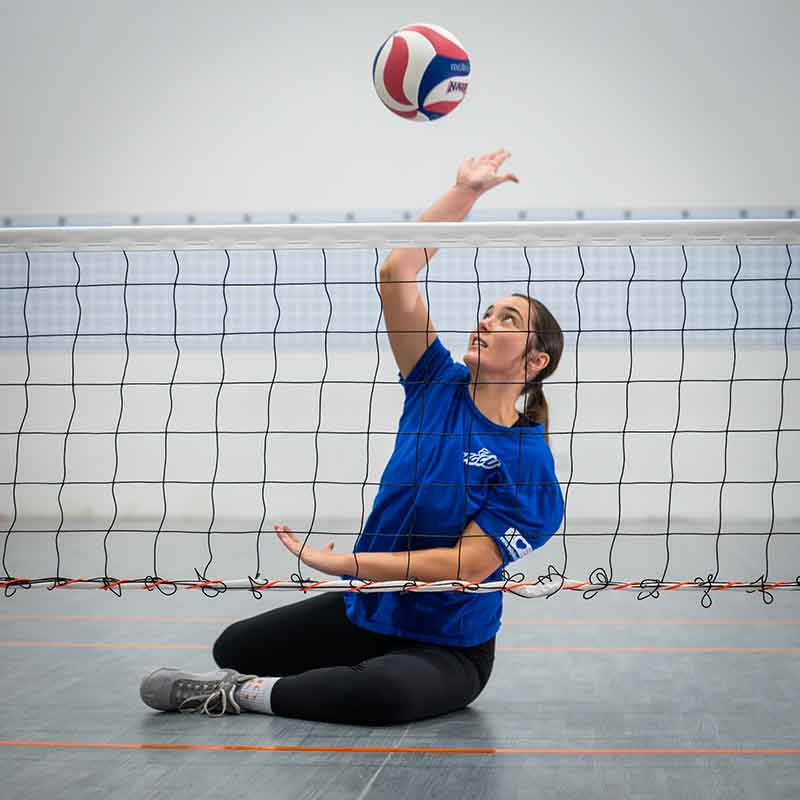
Kristen Carney balances a full course load, three part-time jobs, leadership roles across campus and the community, and training as a national-level adaptive athlete — all while navigating life with a disability. Photo by James Greco.
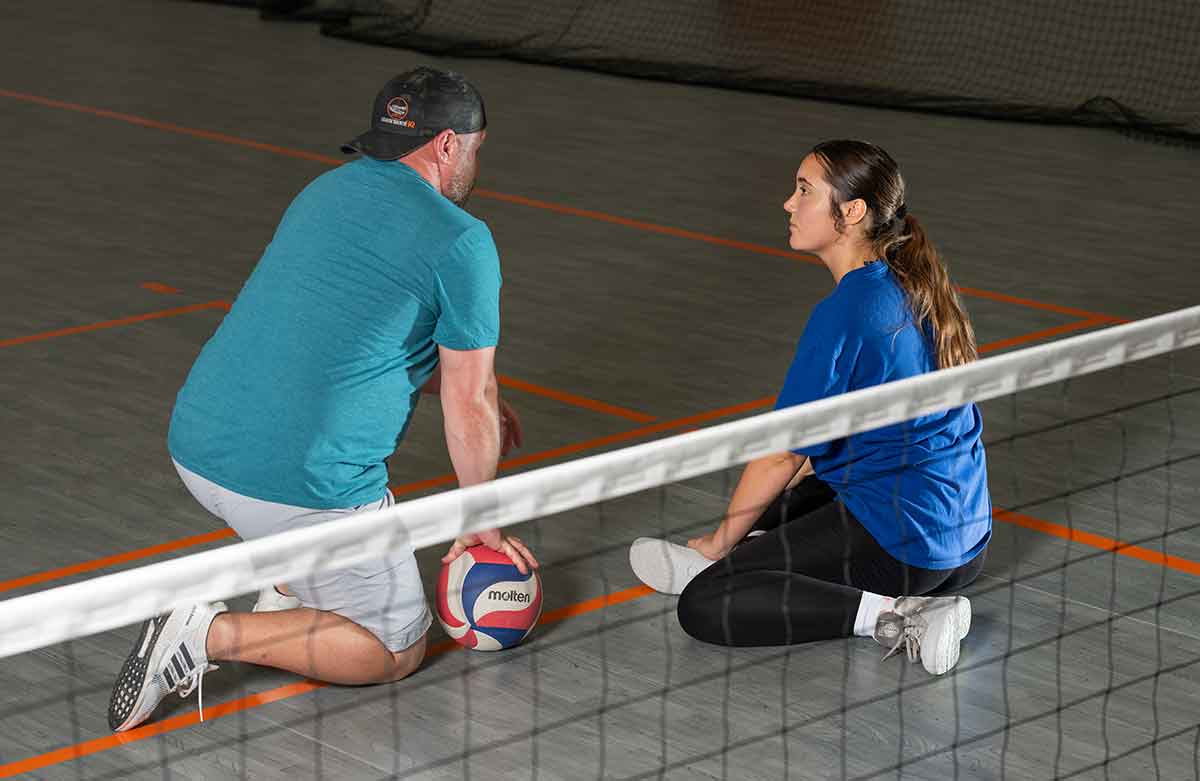
Kristen Carney talks to her coach during a training session. Photo by James Greco.
Today, Carney trains daily and plays as a member of the USA National Team Development Program for sitting volleyball. Earlier this year, she competed with Team Florida at the USA Volleyball Adult Open National Championships, helping the team earn a bronze medal.
“I aspire to become an elite athlete to hopefully represent the USA in the Paralympics,” she says.
But just as important as competition has been the community she’s found in adaptive sports.
“I want others to have that same sense of belonging,” she says. “That’s what we’re doing with FGCU Adaptive Sports Day. We’re designing a space for people with disabilities and showing that everyone is welcome in the athletic community.”
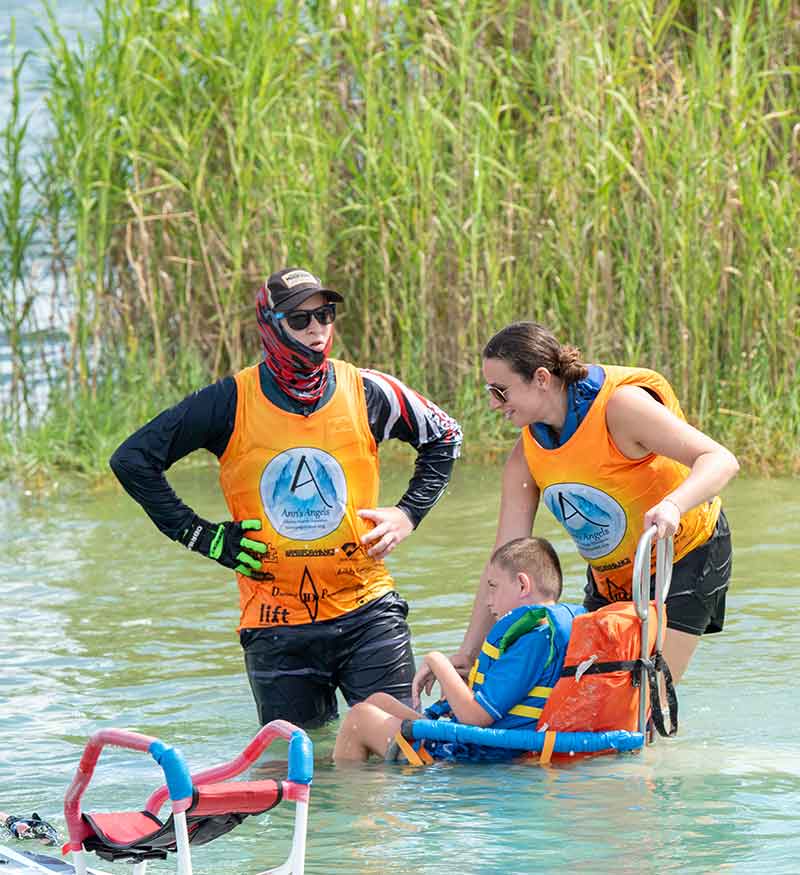
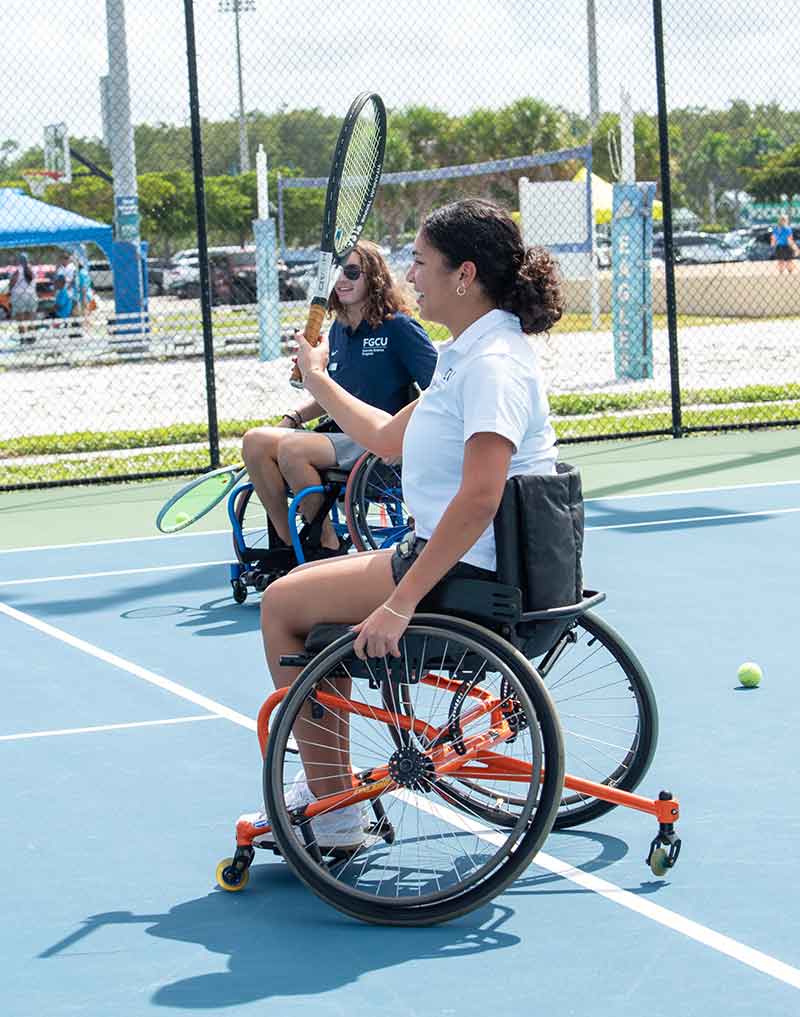
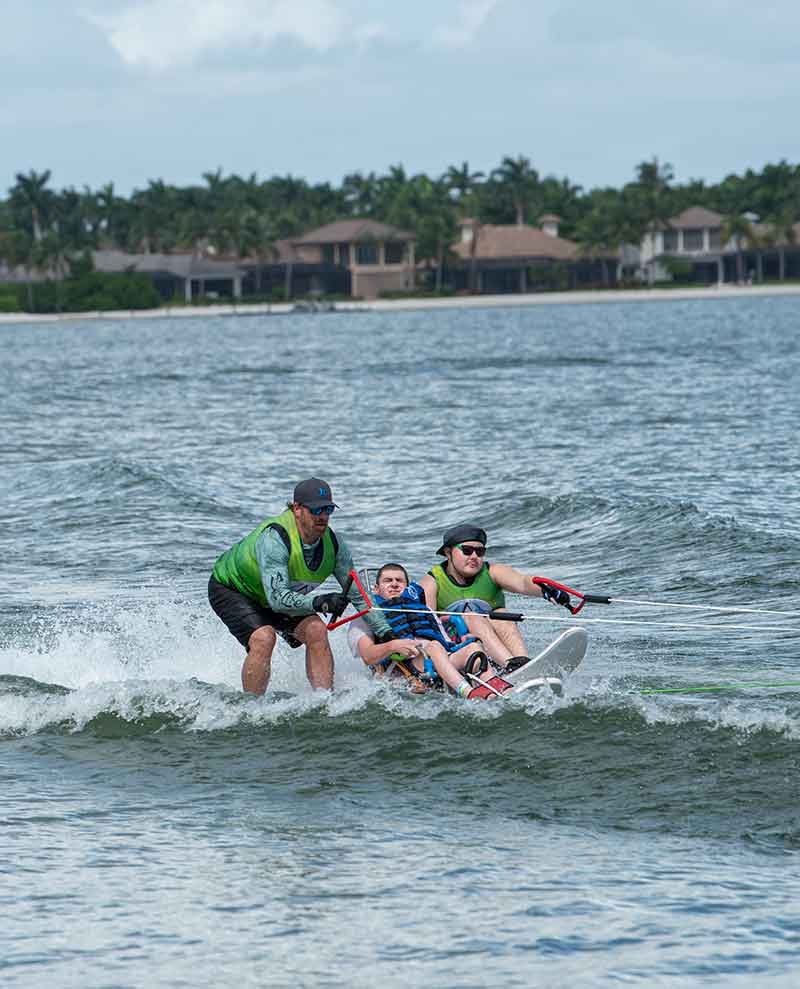
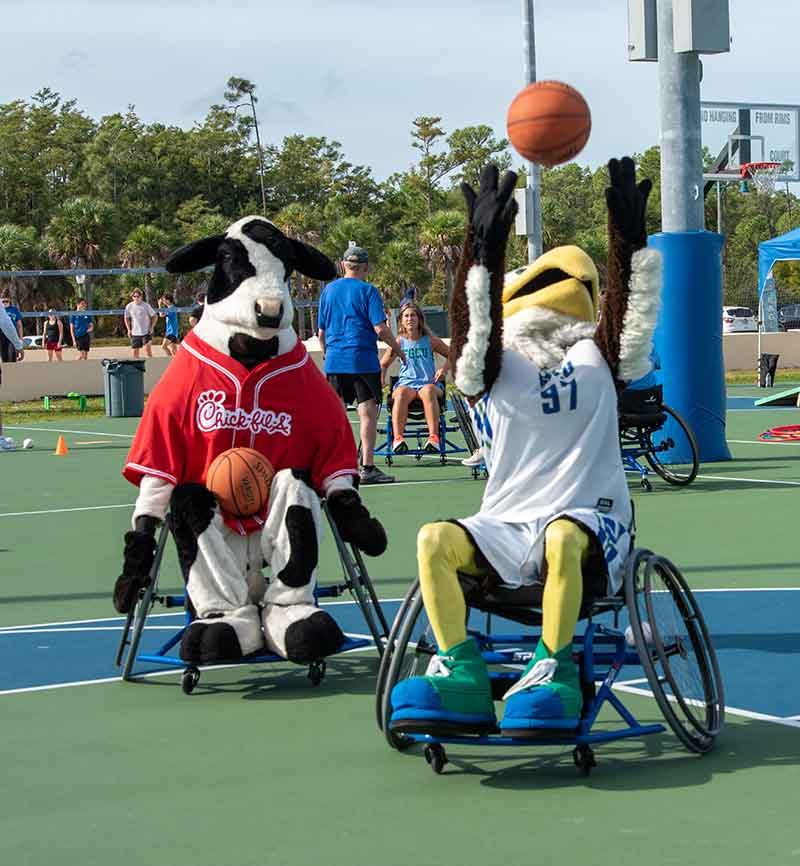
The Oct. 3 event is open to people of all abilities and will enable participants to engage in activities such as wheelchair tennis, pickleball and basketball, kayaking and adaptive water skiing.
“I haven’t had a family member come [to Adaptive Sports Day] and say their lives haven’t been changed or their cup hasn’t been filled” by participating, says Sky Santamaria, who was, until recently, the program support specialist for the Golisano initiative.
As outreach leader for the event, Carney coordinates community partnerships and helps connect participants with disability-focused organizations across Southwest Florida. She’s also an ambassador for the Golisano initiative.
“Having Kristen on our team has been just such a joy,” Santamaria says. “She’s shifted our team a lot in the sense of making us think more intentional when it comes to inclusivity.”
Carney hopes this year’s event reaches more people than ever — and challenges assumptions about disability and athletics.
“It exposes students and other members in the community to adaptive recreation and creates a more understanding community,” she says.
“Adaptive athletes can still be elite athletes. I think the difficulty of some of these sports would surprise people. As someone who has played volleyball, I can confidently tell you that sitting volleyball is definitely harder.”
In sitting volleyball, players use their arms and legs to move across the courtwhile keeping the torso or pelvis on the floor. They use the same serving, passing, setting, spiking and digging skills as in standard volleyball while playing at a lower net on a smaller court.
Carney also plans to help expand adaptive recreation opportunities beyond a single annual event. She and another occupational therapy student are launching free clinics in sitting volleyball, wheelchair tennis and wheelchair basketball.
“There are already so many barriers for people with disabilities to be active and get involved in athletics,” Carney says. “We want to offer an accessible opportunity for anyone to try sports at no cost.”
The clinics reflect the broader mission that earned her recognition from ESPN: creating opportunities for people to discover new possibilities. She says FGCU has played a major role in that journey, providing opportunities to pursue both her profession and her passion.
When she started her master’s program, “some days I would sit in my car, overcome with emotion because I was so grateful that I got to be here. I didn’t think I was going to be able to do occupational therapy. And now I’m doing occupational therapy, and I get to lead different initiatives and get involved in my community, and I get to give back to the disability community.”
Adaptive Sports and Recreation Day is Oct. 3 at FGCU. Community members of all abilities are welcome to participate. Details and registration information are on the event website.