Contributors: James Greco, Photos | Chris Noonan, Rob Salazar and Mace Whisnant, Video
7 – minute read
At a recent Fort Myers health seminar, older adults in Southwest Florida had a chance to go beyond routine health checks — such as blood pressure and cholesterol levels — to assess another vital measure: cognitive function. That’s the process of acquiring knowledge and understanding through thought, experience and senses.
Florida Gulf Coast University associate professor Starlette Sinclair and her team of psychology students administered brief, computerized cognitive assessments at the seminar hosted in May by Neighbors Network of Lee County, a nonprofit helping people age at home with community support.
The screenings were supported by FGCU’s Shady Rest Institute on Positive Aging, where Sinclair is a research affiliate. The event reflects the university’s growing role in addressing the needs of Southwest Florida’s aging population through education, service and research. The institute connects faculty, students and community partners on aging-related issues.
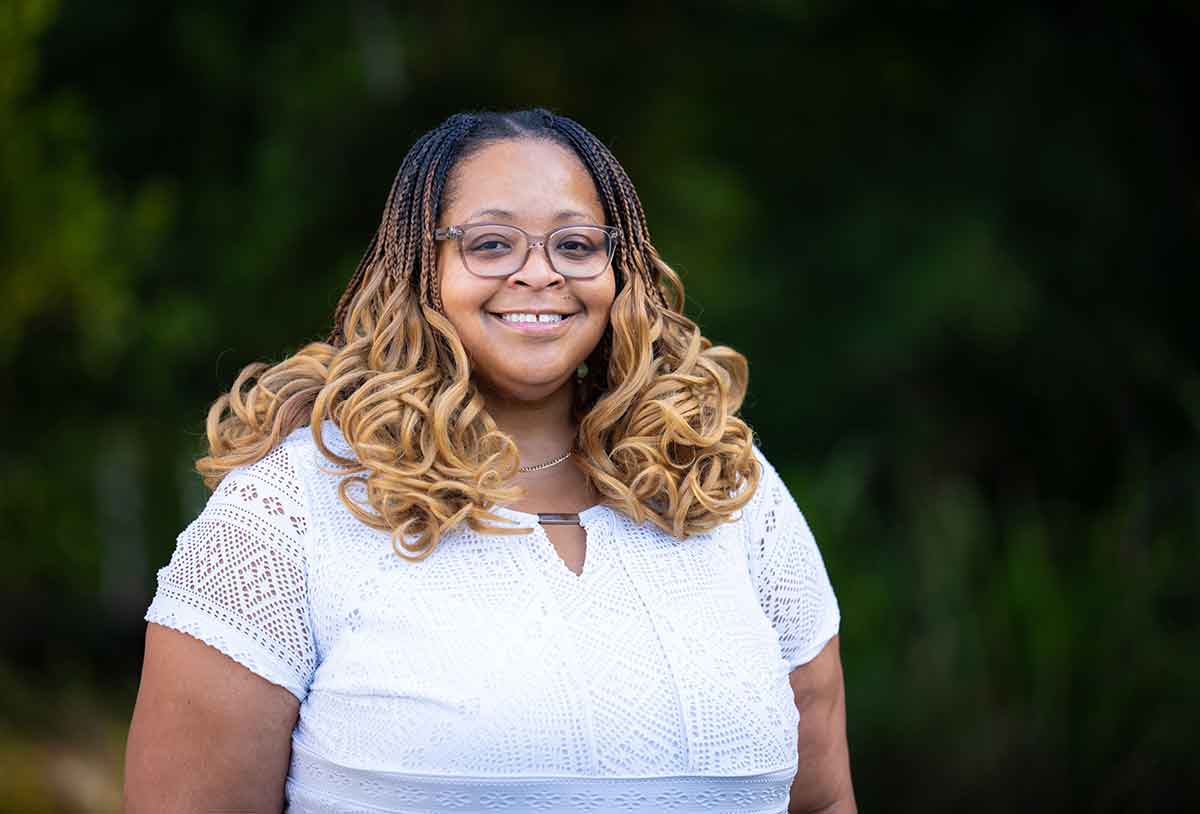
Starlette Sinclair.
“People may not realize that there are declines happening on a day-to-day basis until something major happens. We know that early detection and intervention for any health condition can increase the chances of better outcomes for patients and their quality of life,” said Sinclair. “For older adults, cognitive function screenings offer health information they can use in consultation with their healthcare providers. For my students, they provide training on how to assess different aspects of cognitive function in both research and health settings.”
Patty Duncan, vice president of the Neighbors Network of Lee County, co-organized the May 14 health seminar.
Screening the brain, like the rest of the body
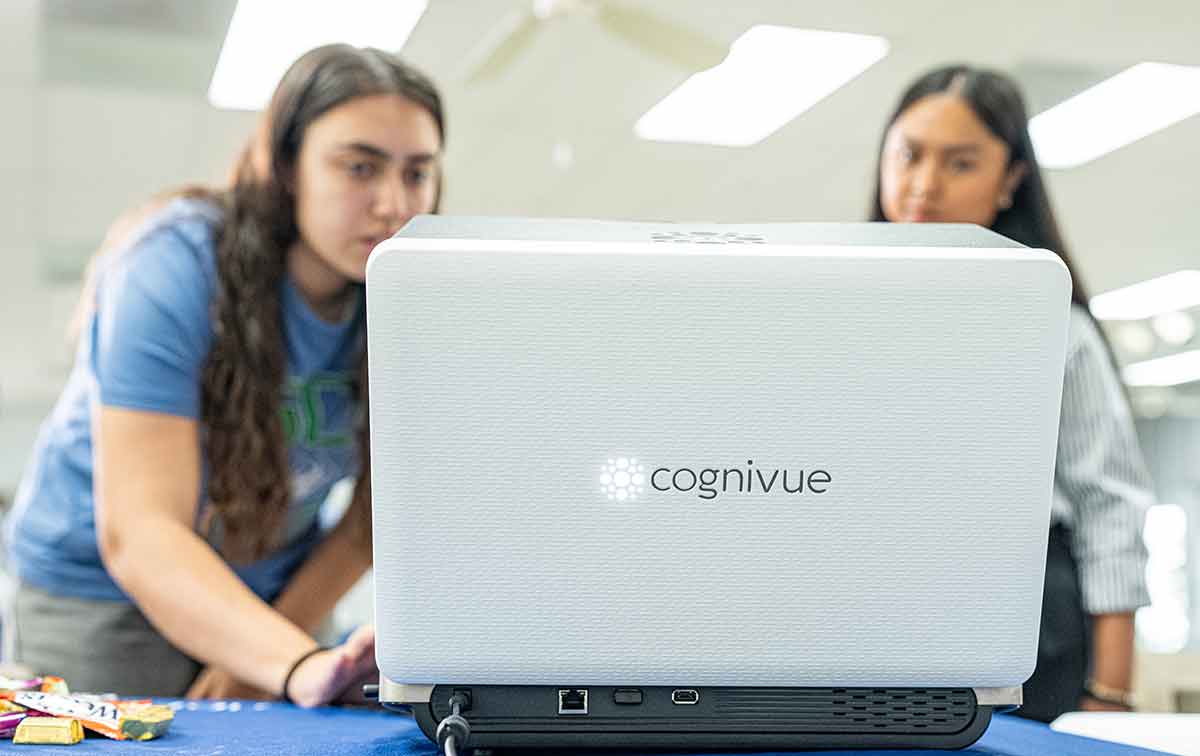
The Shady Rest Institute, part of Marieb College of Health & Human Services, maintains five Cognivue systems — an FDA-cleared, self-administered device used to test cognitive function — for training, outreach and applied research.
At the public health seminar, Patty Duncan sat in front of a Cognivue computer screen. The vice president of the Neighbors Network of Lee County had co-organized the event and wanted to take the assessment herself.
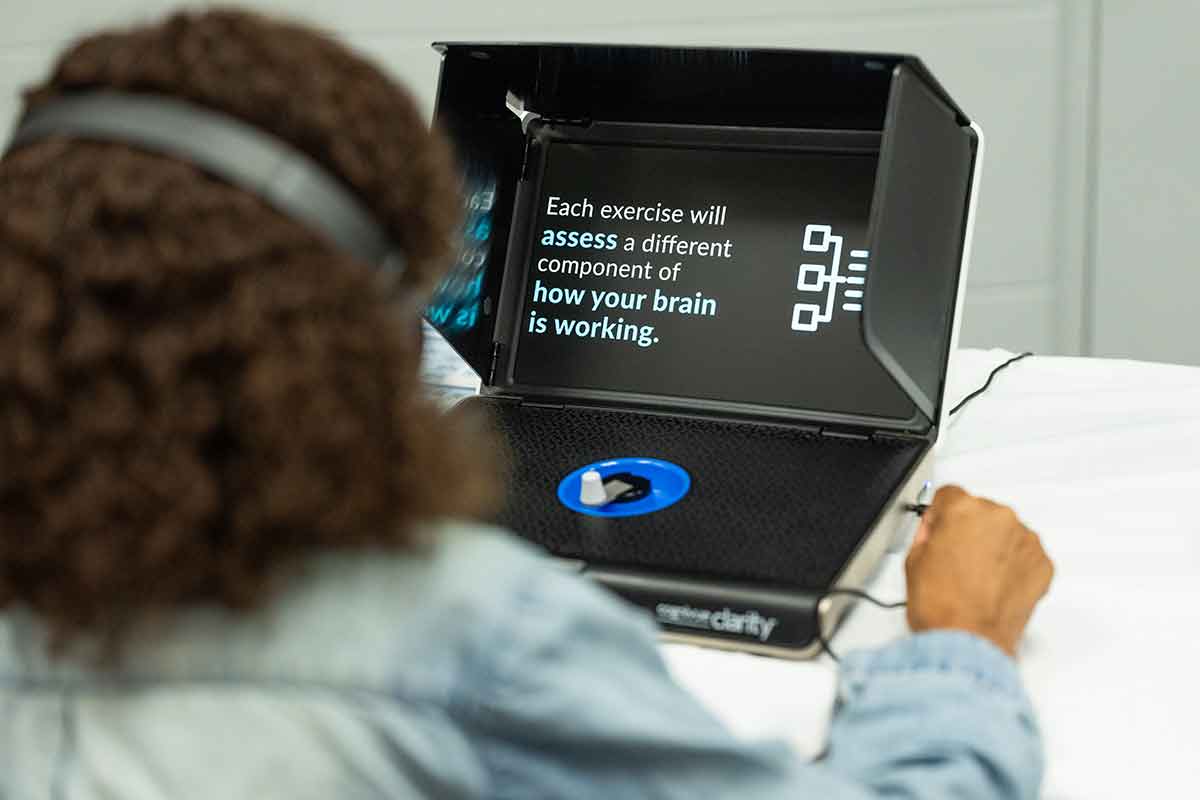
The self-administered assessment seemed less like a medical test and more like a simple game as Duncan closed her fingers around a spinning dial on the bottom half of the laptop-like device and followed the directions in large print on the screen. The system calibrated itself to her with quick visual and motor exercises that adjusted for eyesight and hand movement, ensuring the test measured the cognitive function — not the user’s reflexes or vision.
The Cognivue exam features large print to make it easier to read.
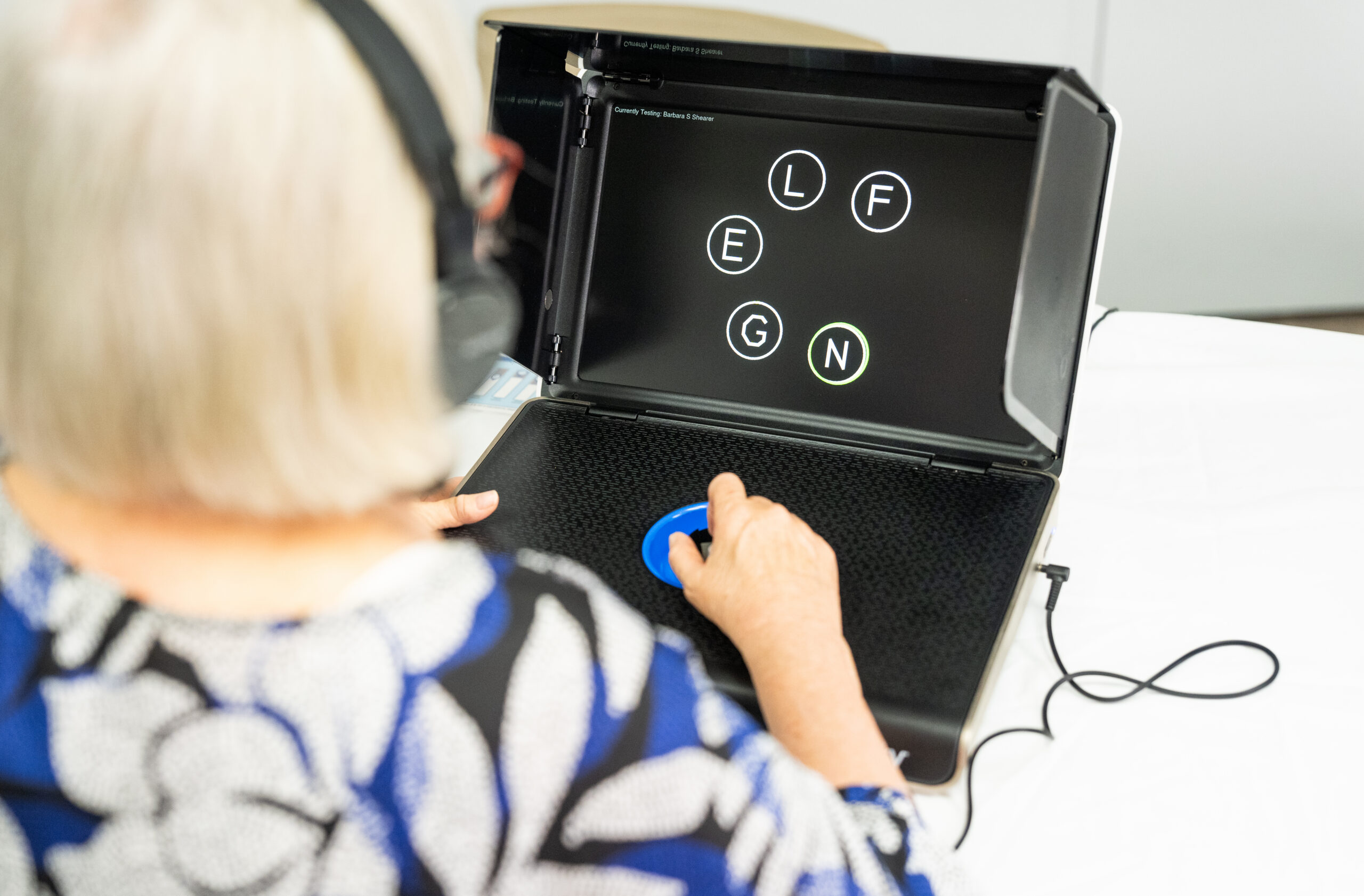
Barbara Shearer co-organized the health seminar with Duncan and also took the Cognivue exam.
Then the assessment began. Duncan turned the dial to match shapes, recall letters and words, recognize patterns, and react to changing images. Each task is designed to measure a different aspect of cognition — memory, attention, problem-solving, visual processing — while also tracking how quickly the brain interprets and body responds. The Cognivue system uses adaptive technology that adjusts in real time to each response, removing human bias and standardizing the evaluation.
The assessment took about 10 minutes. After finishing it, Duncan entered her email address to get her results and a snapshot of her cognitive performance, which she could use in future health conversations.
Importance of cognitive testing
According to the most recent U.S. Census data, more than 34% of Collier County residents and 28% of Lee County residents are 65 or older — making cognitive health an increasingly important concern.
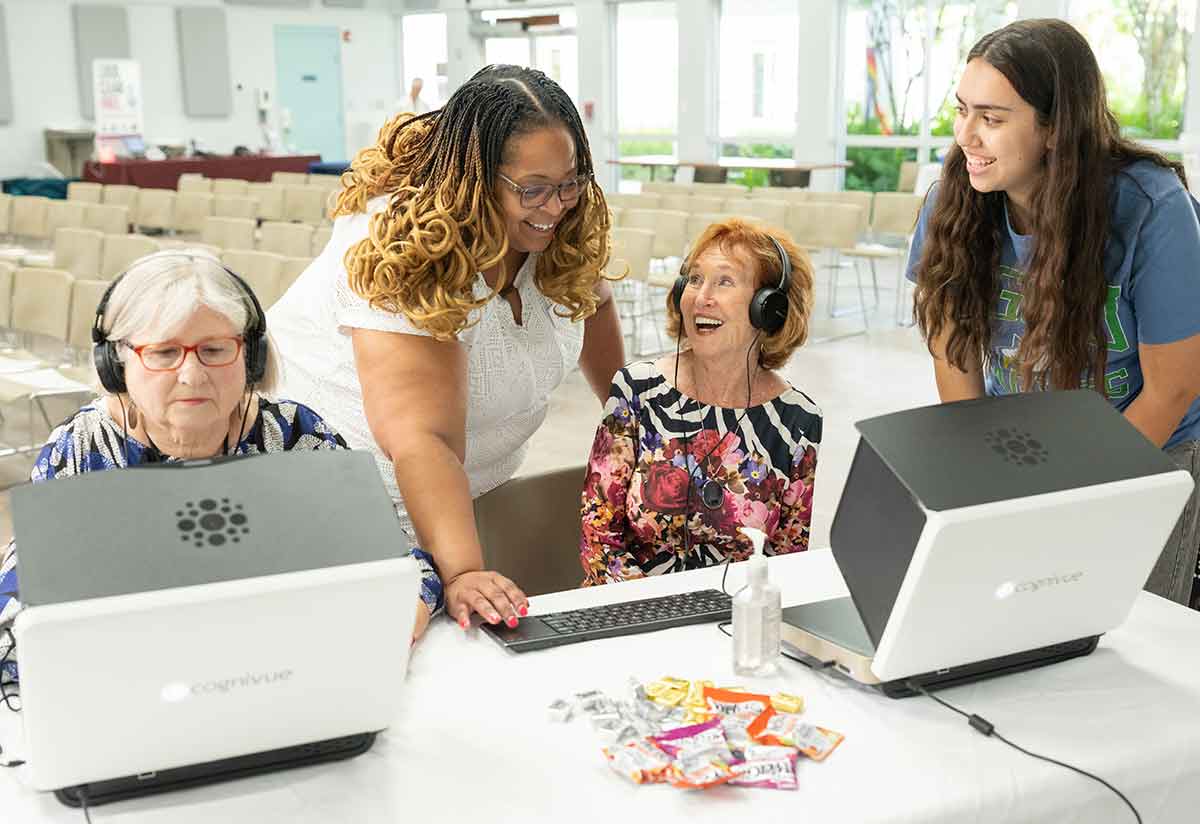
Barbara Shearer, Starlette Sinclair, Patty Duncan and Sophia Millunzi.
“I’d
like to see cognitive assessment tools be as commonplace as the blood pressure
check machines in our pharmacies,” Sinclair said. “This critical component of
overall health is consistently overlooked.”
She
emphasizes that while cognitive decline is often assumed, it’s not a foregone
conclusion.
“The
myth is that older adults are cognitively incapable,” she said. “But many
abilities remain stable, and expertise and knowledge can increase with age.
Aging is not decline alone — it’s a highly diverse stage. It’s important to
know what you know and what you don’t so you can manage your day-to-day.”
Under
Sinclair’s supervision, students gain hands-on experience with emerging
technology while working directly with older adults, benefiting both their learning
and the community. Bringing technology into a community setting helps reduce barriers
to access and can make participants feel more at ease.
At the seminar, Sophia Millunzi (’26, psychology) was among the students guiding individuals through the Cognivue process.
“It’s great to see the impact you can make,” Millunzi said. “We can give them that little push and make them feel comfortable. It feels like something you’re doing together.”
The Cognivue assessment is not a diagnostic tool on its own, according to Sinclair. “Some of the cognitive abilities tested can be improved with practice — ‘use it or lose it’ applies to your brain, too.”
Outreach efforts such as this align with the broader Healthspan initiative. Led by the Shady Rest Institute, the Southwest Florida Healthspan Partnership is a regional effort to extend healthy lifespans by seven years by 2040.
Sophia Millunzi and Erika Tarongay graduated in May but were on hand to help Sinclair at the health seminar.
At the seminar,
FGCU students also had the opportunity to network with service providers,
healthcare professionals and community members focused on helping older adults
remain independent and engaged. For Millunzi, the event was a stepping stone
toward her future. She plans to pursue a doctoral degree and believes opportunities
like this — not widely available to undergraduates — are part of what sets FGCU
apart from other schools.
“I want
to go into neuropsychology and get a Ph.D., so this is great, early
experience,” she said. Through Sinclair’s lab, Millunzi has also completed a
professional certification in the Montreal Cognitive Assessment, a tool widely used
in clinical settings and research for early detection of mild cognitive
impairment.
According
to Sinclair, earning such professional certifications and building credentials
while still in school are directly transferable to future careers, as is participating
in community health events like the Neighbors Network of Lee County seminar.
“It
allows our students to take what they are learning beyond the institution and
see up close the impact of their skills on the community. Community members are
excited to learn more about how our institution can be of service and a
valuable partner,” Sinclair said.
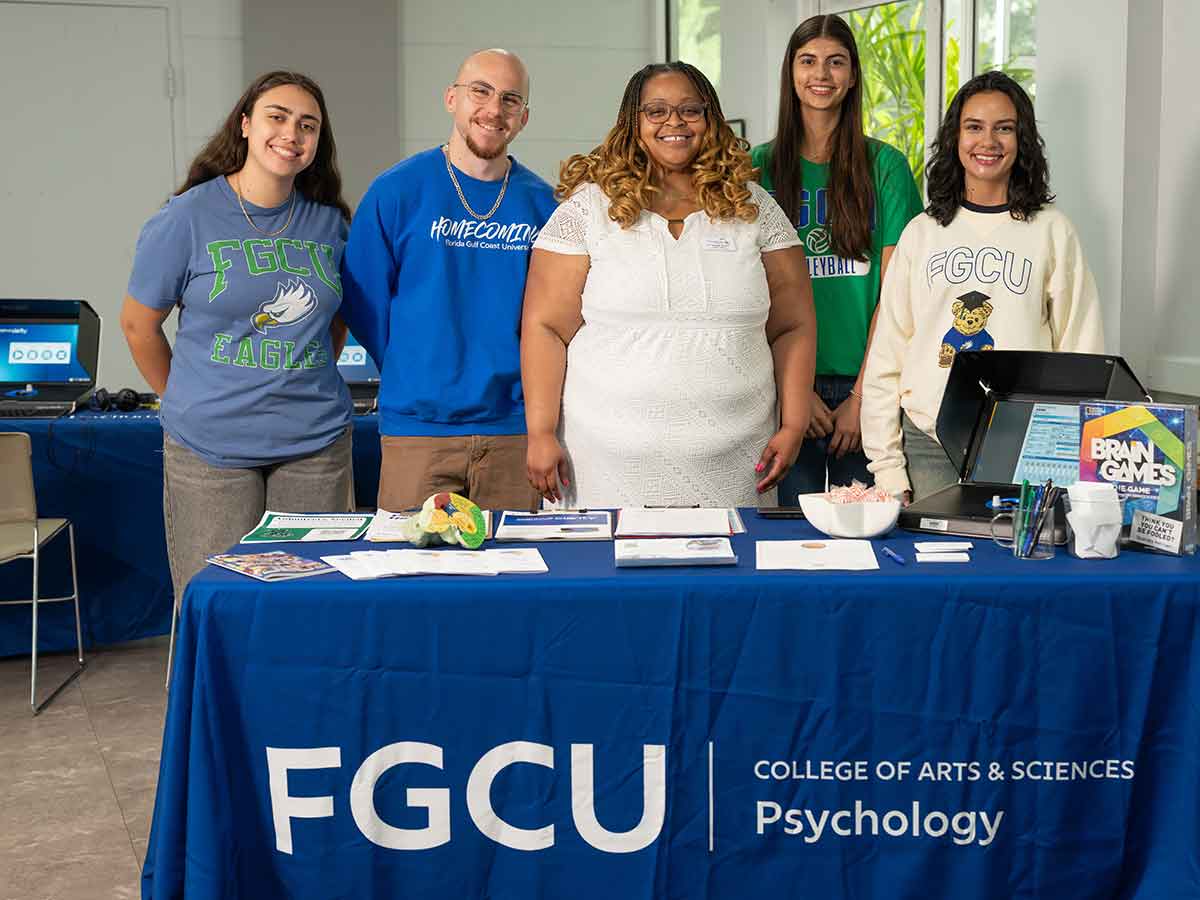
Starlette Sinclair (center) and some of her student researchers (from left), Sophia Millunzi, Kaleb Robertson, Jilian Thompson and Solange Gonzalez.