Faculty, staff and students at Florida Gulf Coast University know this
community is never one to take much of a summer break. Across the FGCU campus in
June and July, local teachers and students stepped into wetlands, tackled
real-world scientific questions and explored healthcare careers through
immersive programs designed to spark curiosity and expand opportunities.
Empowering teachers
At FGCU’s annual Schulze Summer STEM Institute, organized and supported by the Whitaker Institute, K-12 teachers from across Southwest Florida spend a week experiencing science the same way they hope their students will — through exploration, discovery and hands-on learning.
Molly Nation taught middle and high school students before joining FGCU as an associate professor of environmental education and director of the Summer STEM Institute through the Whitaker Institute. She said the program reflects FGCU’s role as a regional educational leader.
“Many of our participants went to FGCU, and it’s really great to be able to bring them back and participate in professional development.”
Funded by the Schulze Future Teacher Scholarships, and in cooperation with the Conservancy of Southwest Florida, the free professional development program offers educators from any subject area the opportunity to learn innovative strategies to bring STEM concepts into their classrooms.
“The goal is really to inspire teachers to use this ecosystem that we live in and the resources that we have available to us here in Southwest Florida and connect it to their classrooms,” Nation said.
For many educators, the experience transforms how they think about teaching. Kaylee Alvarez, a fourth-grade teacher at Oasis Elementary South in Cape Coral, attended the institute for the first time alongside five colleagues.
“Science is my favorite subject to teach,” Alvarez said. “I really want to elaborate on STEM — not just those science concepts but integrating all of those experiences across all subject areas.”
The hands-on approach left a lasting impression on the group as they measured sea turtle nests and created solar-powered cars.
“It’s been a phenomenal experience, and I feel like I will definitely come back,” Alvarez said.
One of the program’s highlights was a wet walk through a cypress dome — the quintessential “campus as living laboratory” experience. The teachers immersed themselves in a uniquely Southwest Florida ecosystem while learning to translate those experiences into meaningful classroom lessons.
Although Alvarez expected the swampy stroll to be “nasty and gross and muddy,” she discovered something different.
“I’m having so much fun,” she said. “You get to see all the different wildlife — the butterflies and the birds chirping. You can see the reflection of the water on the trees. It’s absolutely beautiful.”
She plans to bring those experiences back to her students through inquiry-based activities and storytelling.
“I feel really lucky that I came just because I feel like I have an extra experience,” Alvarez said.
For Nation, that ripple effect is exactly the point.
“Education is a foundation for society,” she said. “Teaching teachers in this region will ultimately impact the lives of thousands of students over the course of their career. We have the ability to impact lives and create folks that have interests in protecting these spaces for generations to come.”
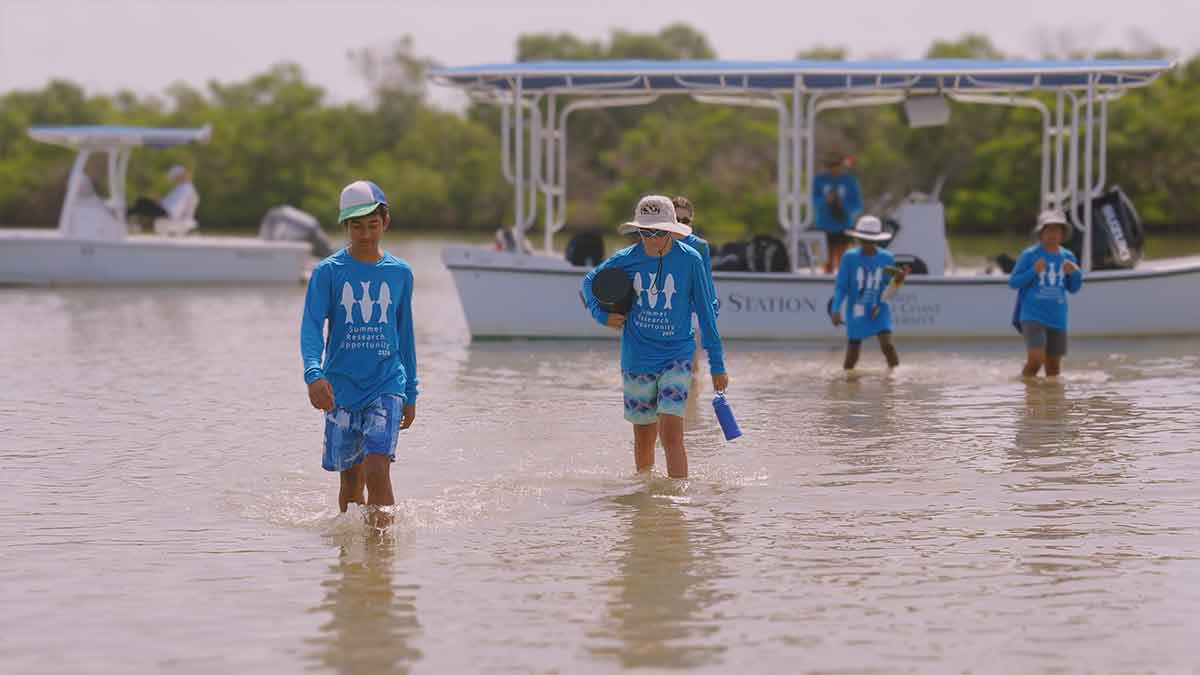
For more than a decade, the Whitaker Institute has also helped introduce middle school students to authentic scientific research through the Summer Research Opportunity program.
“The whole point of science is creating curiosity in the world and asking questions,” said Melissa May, an associate professor of marine biology in The Water School and faculty mentor of the research program. Questions about nature “are really what fuel growth in conservation in our local areas. It sparks curiosity for developing and building new things,” May said.
Students selected through a competitive application process spend two weeks collaborating with faculty and student assistants on genuine research projects. They move through every stage of the scientific process, from developing hypotheses and designing studies to collecting data in the field and analyzing results.
One of this summer’s student assistants was Naples native Ariana Gallegos. The biology major instructed middle schoolers in field methods in Estero Bay to create a science fair project.
“I actually was able to instruct a field trip that my school participated in, and so I was exactly in their shoes,” she said. “Being able to have that experience is not something that everybody gets, and it is extremely rewarding for me. The second I see a student’s eyes light up when they find out we’re going to the beach and working, it’s amazing. I love it.”
The Whitaker Institute helped introduce middle school students to authentic scientific research through the Summer Research Opportunity program.
The 2026 program, titled “Gulf Explorers: Marine Research Academy,” took place at FGCU’s Vester Field Station in Bonita Springs. The location marks an important milestone, as Vester has fully resumed operations following extensive damage from Hurricane Ian in 2022.
“We can’t have conservation without education,” Gallegos said, emphasizing the importance of “knowing these places, understanding them.” “If they’re then able to relay it to their friends, we’ve got an entire population that can know about this land and enjoy it and ultimately lead to them wanting to protect it for future generations.”
Supported through funding from the Daitch Family Foundation, this year’s academy highlighted the importance of Southwest Florida’s coastal ecosystems.
While the experience gave students an early introduction to scientific inquiry and critical thinking, May said, “I hope the students obviously have fun. In science, there’s something really for everybody, so I just hope it ignites a curiosity inside of them that they want to keep pursuing.”
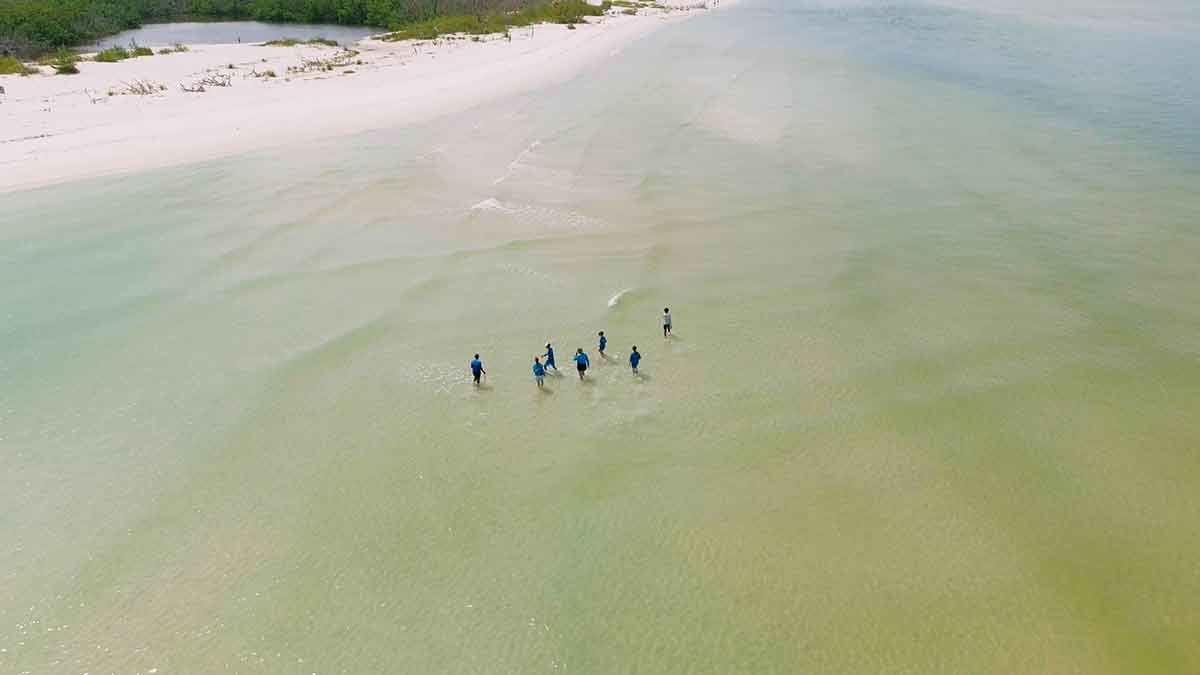
Young researchers explored Southwest Florida’s coastal ecosystems during FGCU’s Summer Research Opportunity program, a hands-on summer program that introduces middle school students to real-world marine science and conservation research.
Exploring healthcare careers
A group of students from The Immokalee Foundation’s Healthcare Career Pathways program also benefited from summer camp at FGCU. The high schoolers spent four weeks on campus as part of Marieb College of Health & Human Services’ Healthcare Camp, gaining firsthand exposure to careers in the industry.
The immersive day camp introduced students to the experiences that future healthcare professionals encounter during their education and training. Through hands-on activities led by faculty and staff, participants explored a variety of healthcare disciplines while building confidence in their ability to pursue college and career goals.
The impact has already been significant. Every college-eligible student from the Marieb program’s first cohort enrolled in a college or university and pursued a healthcare-related field of study. By providing early exposure to healthcare professions and higher education, the camp helps students envision futures they may not have previously considered possible.
With a wide array of summer camps, May said, FGCU is “engaging the public in [the work] that we do. We’re sharing the research [of] the great network of scientists that we have with the community. And I don’t know a lot of other places that do such a good job as FGCU. We’re really getting everybody connected with what the university is doing, so that we’re all part of the whole story.”