Fulbright recipient will conduct coastal research in Philippines

6 – minute read

Less than one week before graduation this spring, Destiny Lowe was still eagerly waiting to hear from the Fulbright Program. She applied to the prestigious scholarship program in the fall and learned in January that she was a semifinalist for a research grant, but months passed without further news.


Lowe had begun to resign herself to the possibility that the project she proposed in the Philippines would not happen. By the time she walked into the final exam of her FGCU career, she was ready to move on and plan her cross-country move to Washington for graduate school.


“When I turned my phone back on after the exam, I had an email that said ‘Fulbright’ at the top. I almost dropped everything,” Lowe said. “I ran up to my professor, and we opened the email together, and that was when I found out I got it. I was gobsmacked.”


With the grant, she will conduct research in the Philippines and create a coastal vulnerability index to map the region’s risk of erosion, flooding and sea-level rise.


“My biggest goal is to bridge community and scientific outreach,” she said. “In research, scientists are mostly writing and publishing for other scientists. I believe the community deserves to be aware of what scientists are discovering about where they live.”

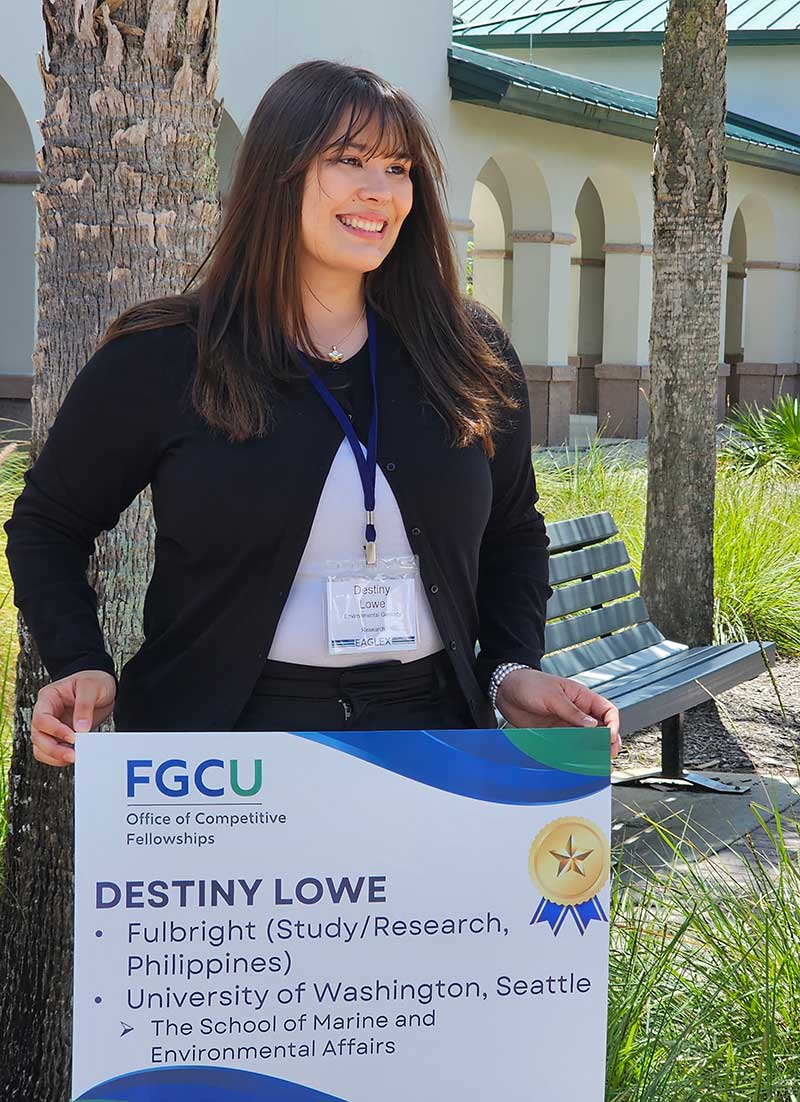
Woman standing outdoors holding a placard announcing her as a Fulbright recipient
Destiny Lowe says she is grateful for what she calls her “second family” at FGCU — friends, mentors and residents of the scholarship house where she served as a house manager. Photo submitted.

Conducting research with professors


While majoring in environmental geology with a climate change minor, Lowe gained invaluable hands-on experience working on research projects with two professors. Rachel Rotz, an associate professor in the Department of Marine & Earth Sciences, was the first to give Lowe an opportunity.


“Destiny’s very much a quiet, reserved student, but I started to notice in class that she demonstrated strong quantitative ability with the work,” Rotz said. “When I notice that in students, it catches my attention. It means they have the capacity to do research. So I invited her to work in the hydrogeology laboratory here at The Water School.”


Lowe worked as a lab technician alongside graduate students, helping monitor groundwater levels, collect water samples and track harmful algae blooms and red tide in the Peace River.


“Everything that we put in front of Destiny she did well,” Rotz said. “She always had a positive attitude, and she was a pleasure to have in the lab.”


Lowe even programmed a special tool to better track which wells the team had collected water samples from. Soon, she was ready for a new challenge. She reached out to Joanne Muller, eminent scholar and professor in the Whitaker Institute. Muller invited Lowe to work on a new project in collaboration with Woods Hole Oceanographic Institution in Massachusetts.


Muller had a sediment core — a solid sample taken from beneath a body of water — from Micronesia and wanted to use it to study how changing sea levels had affected the region. Lowe spent up to 30 hours a week studying the sample and the individual microfossils she extracted from it.


“To the naked eye, it looks like a bunch of dust on a tray because the microfossils are so tiny. I would spend hours in the lab looking through a microscope, then adjusting my chair, then looking through the microscope again,” she said with a laugh.

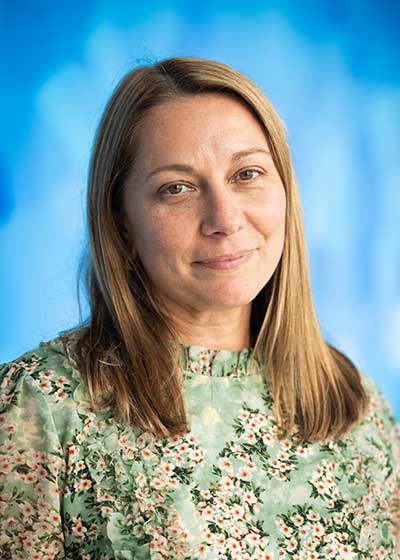
Woman in multicolored top against blue background
Rachel Rotz. Photo: James Greco.

Preparing for competitive scholarships


Clarisse Halpern, a postdoctoral fellow who works in FGCU’s Office of Competitive Fellowships, believes Lowe’s experiences made her a strong candidate for the Fulbright grant.


“I think the fact that she already had research experience made her stand out,” Halpern said. “She was very intentional and strategic when producing this proposal.”


Lowe’s professors also helped refine her application. When Lowe shared her initial idea with Muller, they discussed the logistics and costs involved, and Lowe realized she needed to completely rethink the proposal. She was considering throwing in the towel, but Halpern encouraged her to keep working to make the deadline. Realizing she had an opportunity to fill a gap in existing research, she persisted.

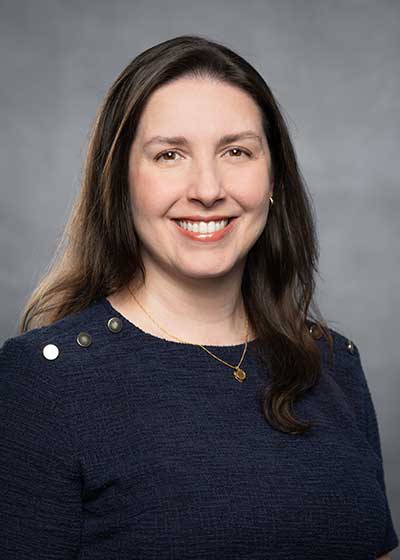
Woman in dark top against gray background
Clarisse Halpern. Photo: James Greco.

As the new graduate makes final preparations for her project, which is set to begin in January 2027 and continue for nine months at the University of the Philippines Diliman, she has found herself reflecting on her time at FGCU.


“I have such a sentimental connection for everything that surrounds The Water School. Like coming in at 7 a.m. for a field day and coming back completely drenched in sweat, rain and river water and unloading the equipment in silence because you just had a big day,” she said. “Those memories I’ve gained through conducting research and working with my fellow interns and my professors are something I would never exchange for anything else.”


Lowe is also grateful for what she calls her “second family” at FGCU — friends, mentors and residents of the scholarship house where she served as a house manager.


“I grew so much as a person. I developed so many close and incredible friendships that I will carry with me throughout the rest of my life,” she said.


Setting an example for other students


Her mentors at FGCU hope Lowe’s story inspires current students to get involved in what they’re passionate about and apply for big opportunities.


“These scholarships are internationally competitive, so it really puts FGCU on the map,” Halpern said. “It makes us very proud because it shows the potential that our students have to reach these higher levels for their careers.”


Halpern encourages students to come to the Office of Competitive Fellowships early in their college career, even if they don’t feel that they have enough experience to apply for a research grant right away. The staff can help students determine what kinds of internships and research opportunities they should pursue to help make their applications stand out, and can connect them with faculty who can help students fine-tune applications.


“We’re over the moon that she made this opportunity happen for herself,” Rotz said about Lowe. “Destiny has a lot of potential and natural curiosity in natural sciences, and she is going to go far with her research.”

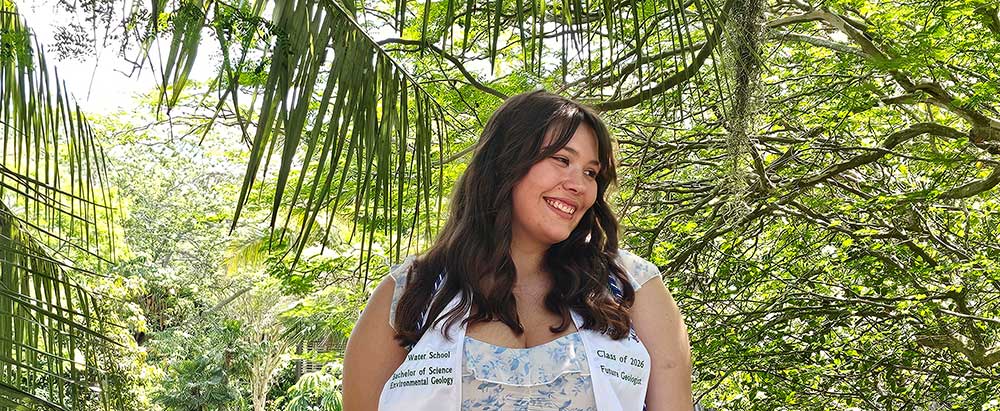
Woman standing under trees wearing The Water School stole.
“My biggest goal is to bridge community and scientific outreach,” Destiny Lowe says.
Subscribe to 360
Tweet
Share
Share