Contributors: James Greco, Photos | Chris Noonan, Video
6 – minute read
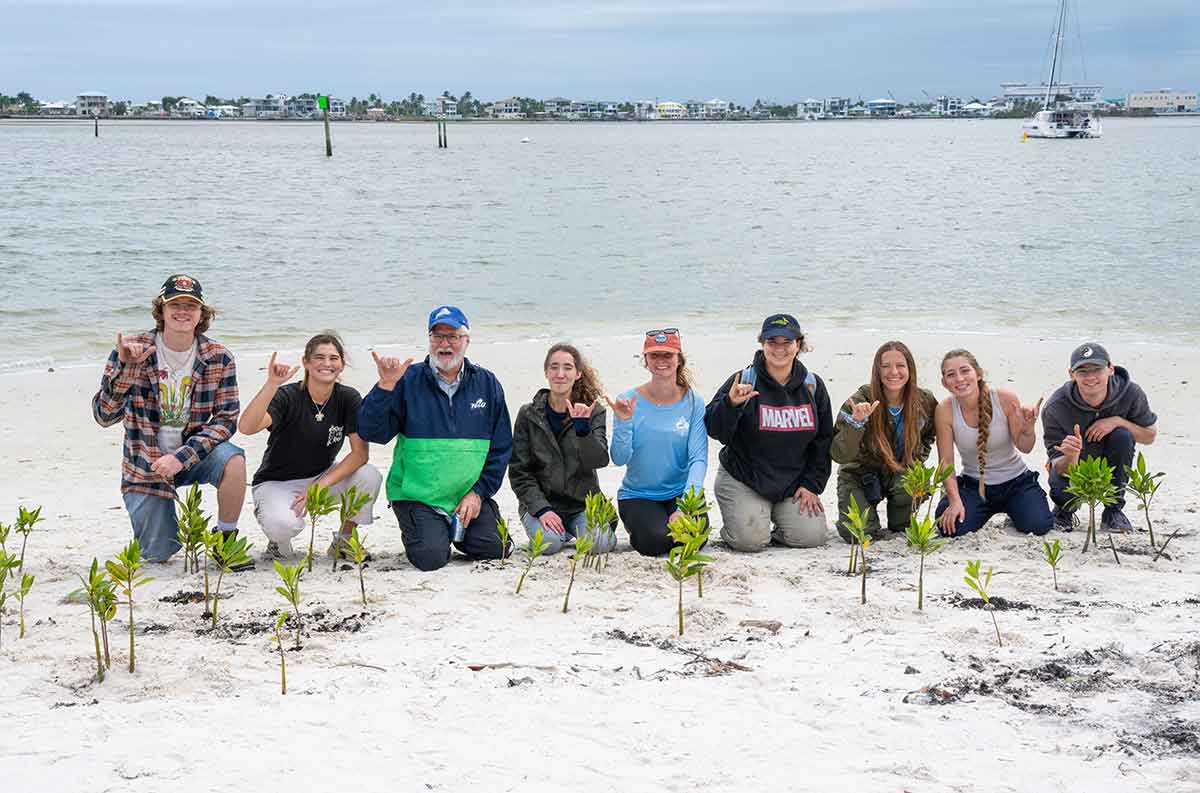
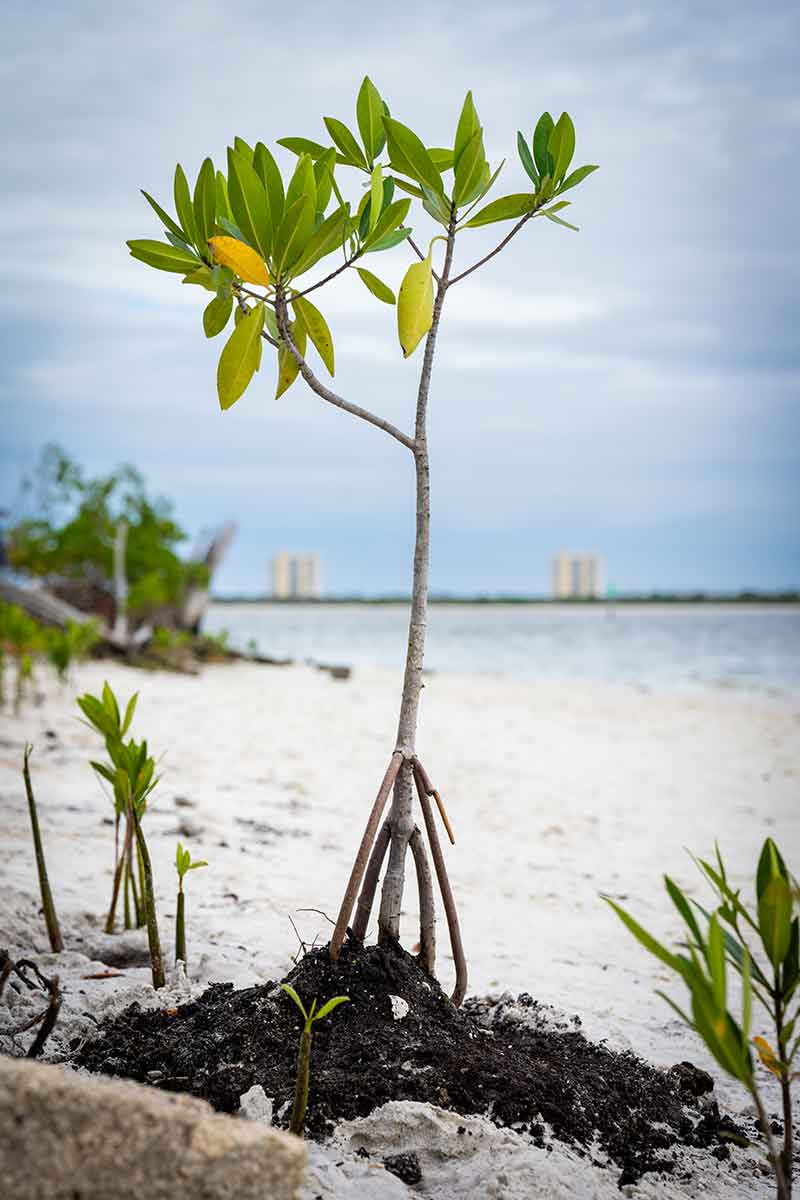
In December, Florida Gulf Coast University faculty and students teamed up with Island Coast High School to plant hundreds of mangroves at Bowditch Point Park on Fort Myers Beach. They replaced trees wiped out by Hurricane Ian in 2022 — an effort to restore a vital stretch of the San Carlos Bay shoreline.
The project brought together The Water School at FGCU, the School District of Lee County’s Environmental Education program, Lee County Parks & Recreation, Naples Botanical Garden and MANG Apparel, a coastal‑lifestyle company run by an FGCU grad that’s known for its “buy one, plant one” conservation mission.
This multigenerational crew planted four species — red, white, black and a single buttonwood — totaling 465 mangroves over 90 meters of shoreline.
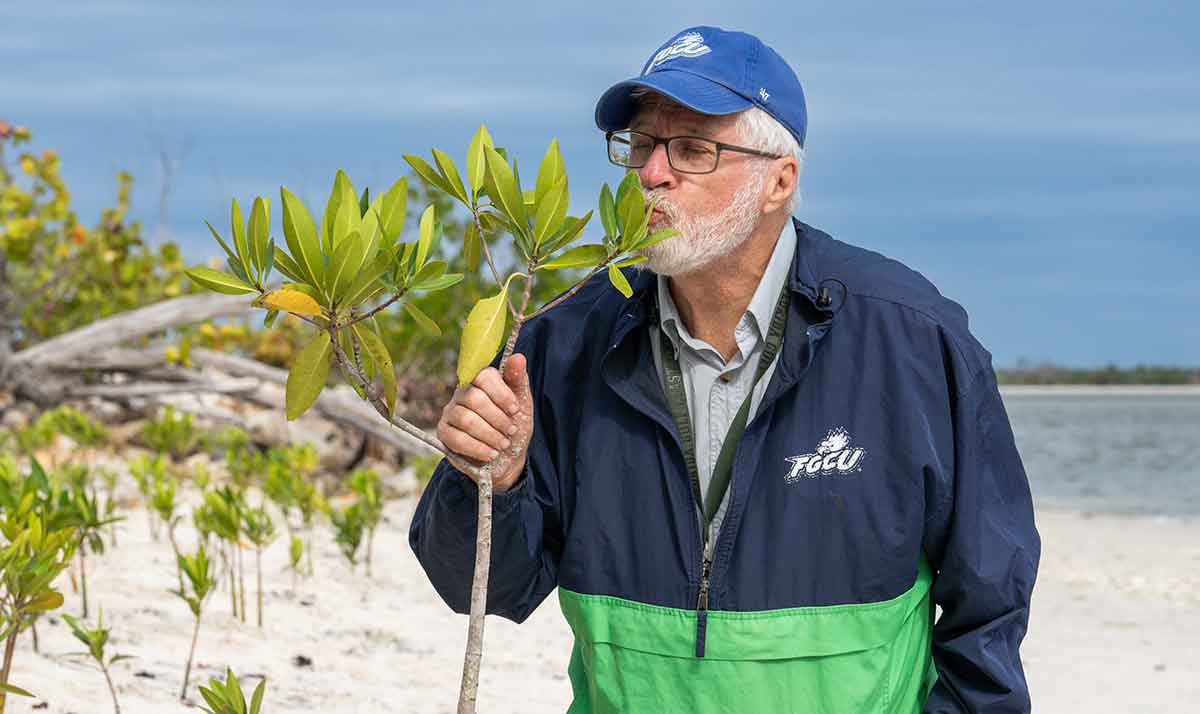
“This was just a very cool collaboration, and we need more of that,” said Win Everham, professor of ecology and environmental studies in The Water School. “We need more people thinking about how to make a better future, one tree at a time.”
FGCU faculty and students teamed up with Island Coast High School to plant hundreds of mangroves at Bowditch Point Park on Fort Myers Beach.
His message resonated strongly with the high schoolers.
“Students were motivated to grow the mangroves to contribute to the effort already in progress at FGCU,” said Susan Hassett, environmental education resource teacher for the School District of Lee County. “They learned about resilience and the benefits of perseverance in the process.”
Joseph Mallon, who leads the Academy of Natural Resources at Island Coast High School in Cape Coral, sees the project as a full‑circle moment. He earned his master’s degree in secondary education at FGCU in 2004 — and Everham was one of the faculty members who shaped his career.
“I got my whole sustainable focus from Win and a few other folks at FGCU,” Mallon said.
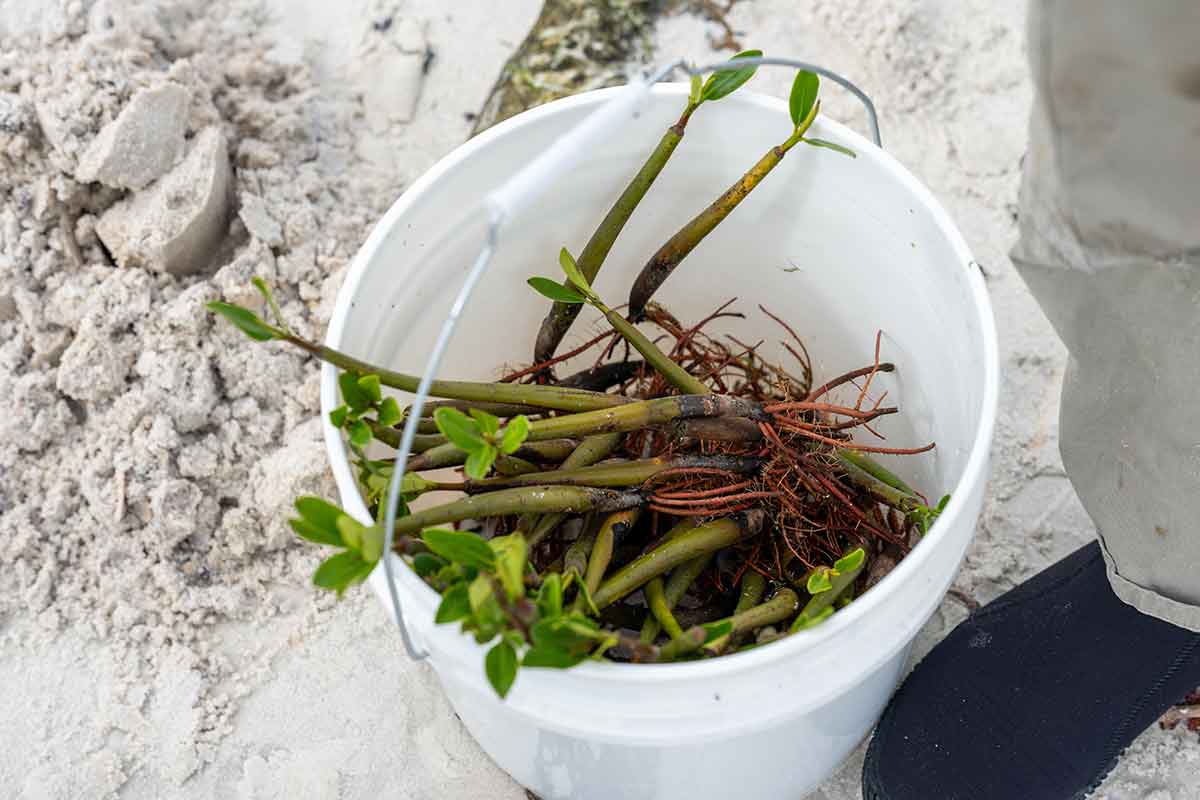
His students experimented with various ways of growing mangrove propagules — they wrapped roots, suspended them in water or planted them in pots, and they tested different salinities. Few trees tolerate saltwater at all, making mangroves uniquely suited to Florida’s dynamic coastlines.
“I teach to get dirty,” Mallon said. “It’s a world of difference when you’re doing it instead of just talking about it. They own what they’re doing.”
For some of his students, this restoration day was their first‑ever trip to the beach.
“I hope this touches their soul,” Mallon said. “Getting to see the older students, giving them direction, even just a couple conversations — you collaborate and grow as a human.”
“Connecting the high school students with the college students just feels right,” Everham said.
“Little acts of kindness”
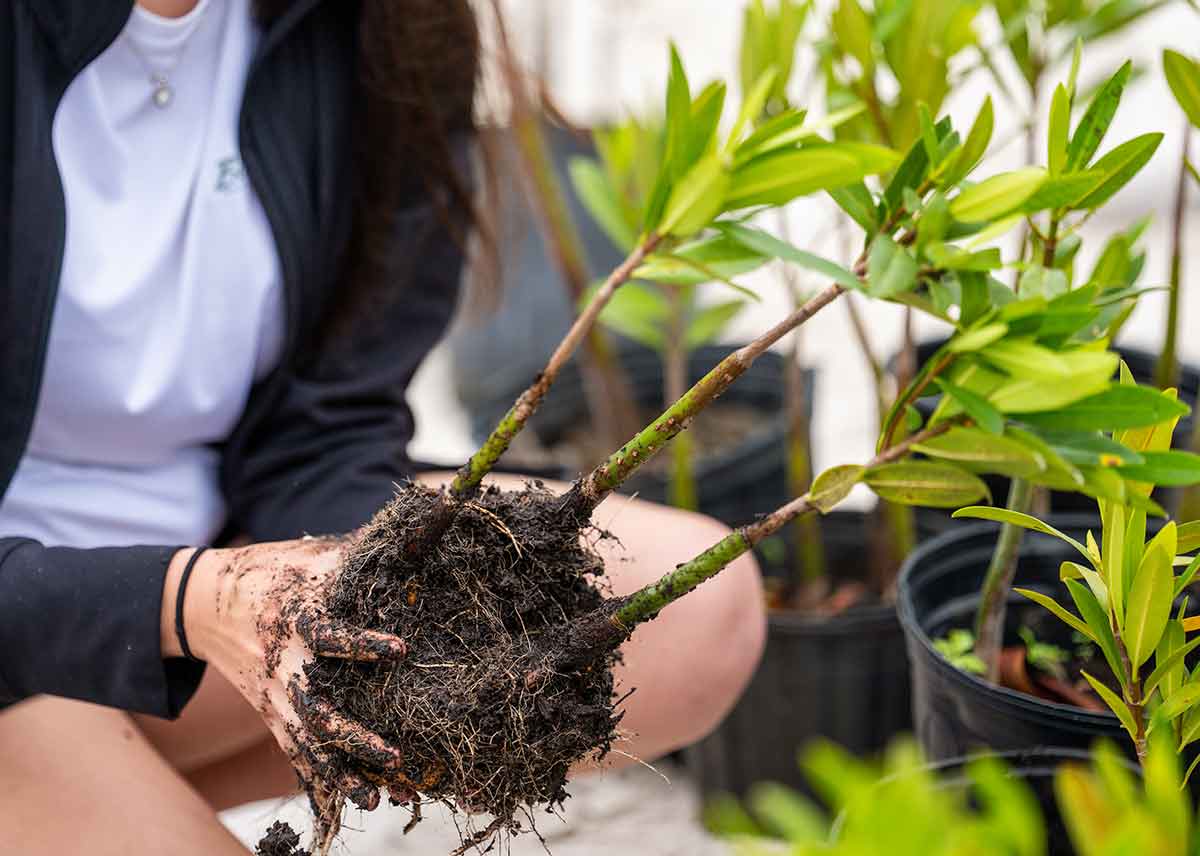
FGCU junior Nina Lipka, an environmental studies major, had been caring for many of the mangroves transplanted at Bowditch Point. The propagules were collected from beaches across Southwest Florida years ago, then grown in containers and tended by FGCU students. Many now stand 3 to 4 feet tall at nearly a decade old.
“It’s such a fulfilling feeling to put them in the ground,” Lipka said. “They’re finally where they’re supposed to be and helping the community.”
Lipka appreciated working alongside younger students.
“Speaking to this younger audience can spark their interest,” she said. “You connect with them on a personal level. I love being able to partner with the schools — it’s a great experience on all sides.”
She called mangroves “little acts of kindness.” They serve as a buffer against storm surge and as a home for many species.
Nina Lipka.
“They help stabilize the soil and the sand, helping prevent beach erosion,” Lipka said. “In addition, they provide habitat for numerous fish and insects. About 90% of the fish that are commercially fished start their lives in mangrove roots, so it is a critical habitat for them.”
Ten to 15 feet of storm surge battered Fort Myers Beach during Ian, according to the National Hurricane Center, destroying nearly all young vegetation.
“It’s important to help this area reestablish itself so if there’s another storm, the beach has a better chance,” Lipka said. “We’re helping keep this barrier island a barrier.”
Mangroves don’t just survive on the coastline — they strengthen it.
“If you protect mangroves, they’ll protect you,” Everham said.
In addition to buffering storm surge and sustaining fish populations, mangroves improve water quality by trapping sediments and nutrients rather than allowing them to drift into the Gulf where they can fuel harmful algal blooms. And when it comes to storing carbon, mangroves outperform many other ecosystems. Forests capture carbon in trunks and branches, but wetlands — mangrove forests included — bury it deep in soil, keeping it out of the atmosphere and helping mitigate human‑driven climate change.
“If we had more mangroves, we’d pull more carbon out of the atmosphere,” Everham said.
“An act of hope for the future”
Planting young trees offers few immediate rewards — but it’s no less meaningful for restoration volunteers.
“Planting a tree that may not provide all its services for 10, 20 or even 30 years — that’s a big act of hope,” Everham said. “I hope we come back in 10 years and this is a forest that restabilizes this beach.”
But he’s quick to acknowledge that mangrove restoration requires a long view.
“I’ll probably be dead before the forest is really here. But I’m okay with that. We all need to learn to think further ahead than just react to what happened yesterday.”
His advice is simple: “If you’ve never planted a tree, you should try it. It’s an act of hope for the future.”