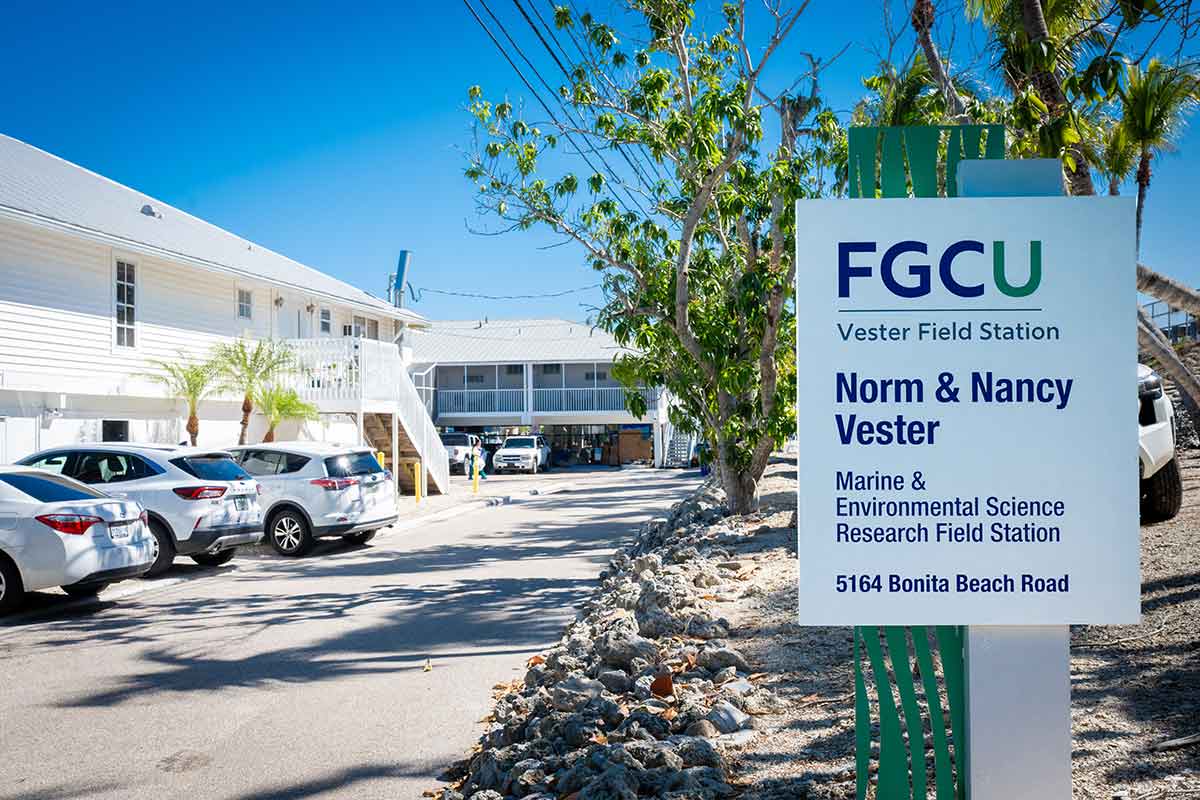
For the first time since Hurricane Ian devastated Southwest Florida in 2022, Florida Gulf Coast University’s Vester Field Station is fully operational again — a milestone made possible through a combination of significant investments from FGCU and multiple grant partners. A generous $150,000 grant from the Collier Community Foundation played a crucial role in helping bring the project across the finish line.
The funding supported final equipment purchases needed to restore the station’s core research and teaching capabilities, allowing scientists, students and community partners to return to full capacity.
“Much of our research effort focuses on ecosystem health — water quality, oyster reefs, seagrass meadows and mangroves,” says Mike Parsons, professor in The Water School and Vester’s director. “By having a fully functional facility, we can continue our research and education activities, including advancing our studies of ecosystem health and our restoration activities.”
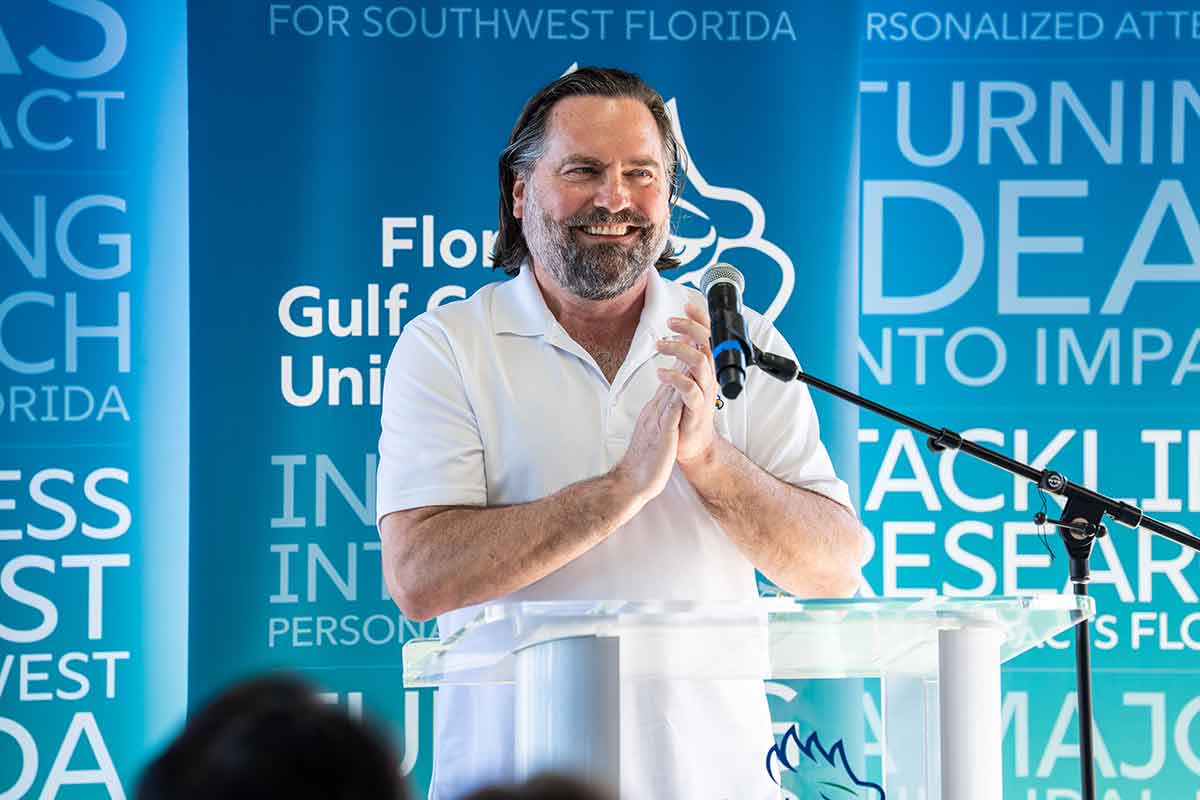
Mike Parsons, professor in The Water School and Vester’s director, speaks at a Feb. 16 celebration at the field station.
“It puts a smile on my face to be able to say ‘Vester is back,’ knowing full well the tremendous good that the work conducted here does for our students and our community,” says Greg Tolley, The Water School dean.
Recovery after a major setback
The waterfront site in Bonita Springs was severely damaged by Ian, which hit Southwest Florida as a strong category 4 storm with sustained winds of 150 mph. Ian’s 11‑foot storm surge at Vester destroyed the first floors of all buildings, halting long-term data collection, aquaculture research and student projects. Though staff kept modified programs running, the loss of operational labs created obstacles.
“It’s one thing to look at worms and clams in a classroom, but it adds so much more when the students are digging them up in the field and observing how they live,” says Melissa May, associate professor in The Water School and the marine science program coordinator. “It was logistically more difficult when the lab wasn’t set up.”
Now, indoor and outdoor wet labs, the analysis lab and classroom space are all back online. Projects that were slowed — including oyster monitoring, stone crab studies and aquaculture work — are resuming and expanding. The aquaculture facility, specifically, will support restoration efforts involving fish, seagrass, mangroves, oysters and other marine life.
“I’m really excited for the aquaculture research to begin,” May says. “Just having things in place and functional will allow us to focus on helping train the next generation of marine science students. I’m excited for what I think Vester can become.”
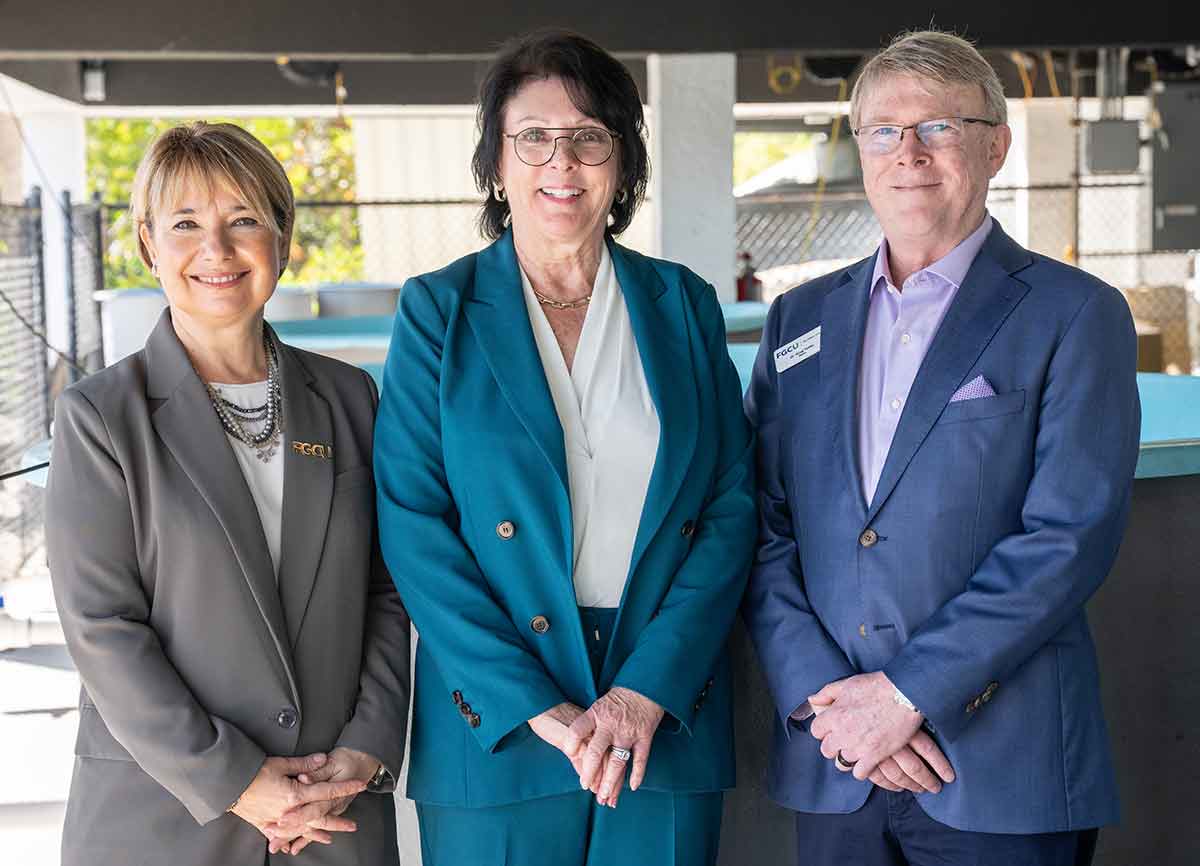
FGCU President Aysegul Timur, Collier Community Foundation CEO and President Eileen Connolly-Keesler and Greg Tolley, The Water School dean, at the Vester celebration.
Research and programs with regional impact
Located along the Lee and Collier counties border, where the Imperial River empties north into Estero Bay and south into Little Hickory Bay, Vester serves as a base for studying a variety of coastal and watershed habitats. It also supports K‑12 programs, community partnerships and regional environmental monitoring.
“Trying to understand and find solutions for coastal issues is important for Collier, Lee and Charlotte counties. A county line doesn’t divide a community,” says May. “Vester is driven to do research serving the local community. Water quality monitoring, red tide research, oyster and seagrass restoration — all of this is relevant to Southwest Florida. I don’t know of any other marine labs that have such a strong community outreach component.”
The Collier Community Foundation’s support reflects a shared commitment to protecting and understanding the ecosystems that define Southwest Florida. Community members rank environmental issues as a high priority — especially water quality and coastal damage from hurricanes, according to Eileen Connolly-Keesler, the foundation’s president and CEO.
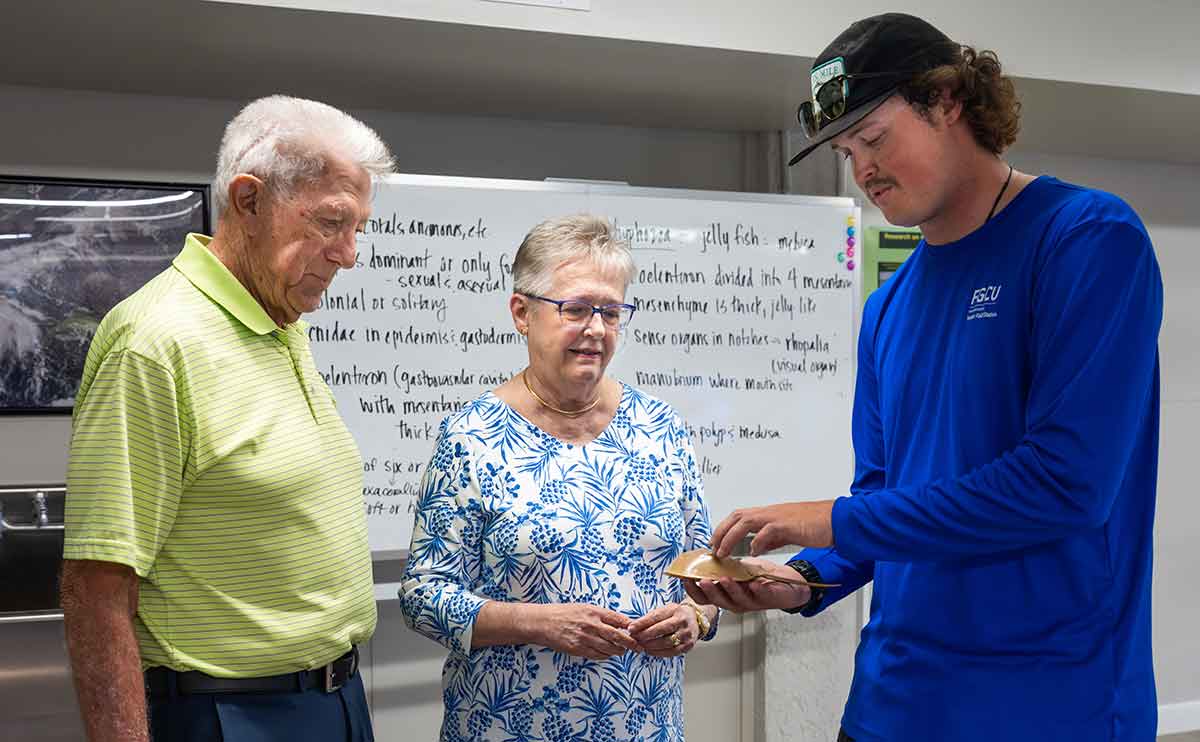
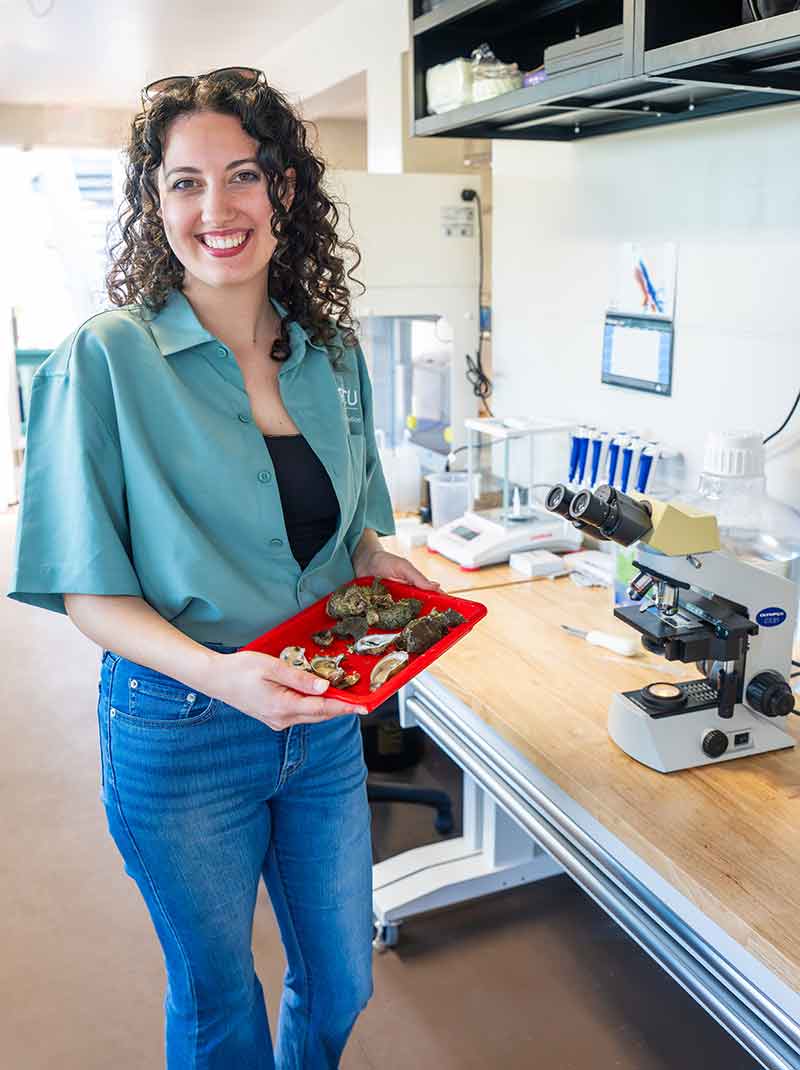
FGCU alum and research assistant Michael Ryan (right) gives a tour of Vester to two community members.
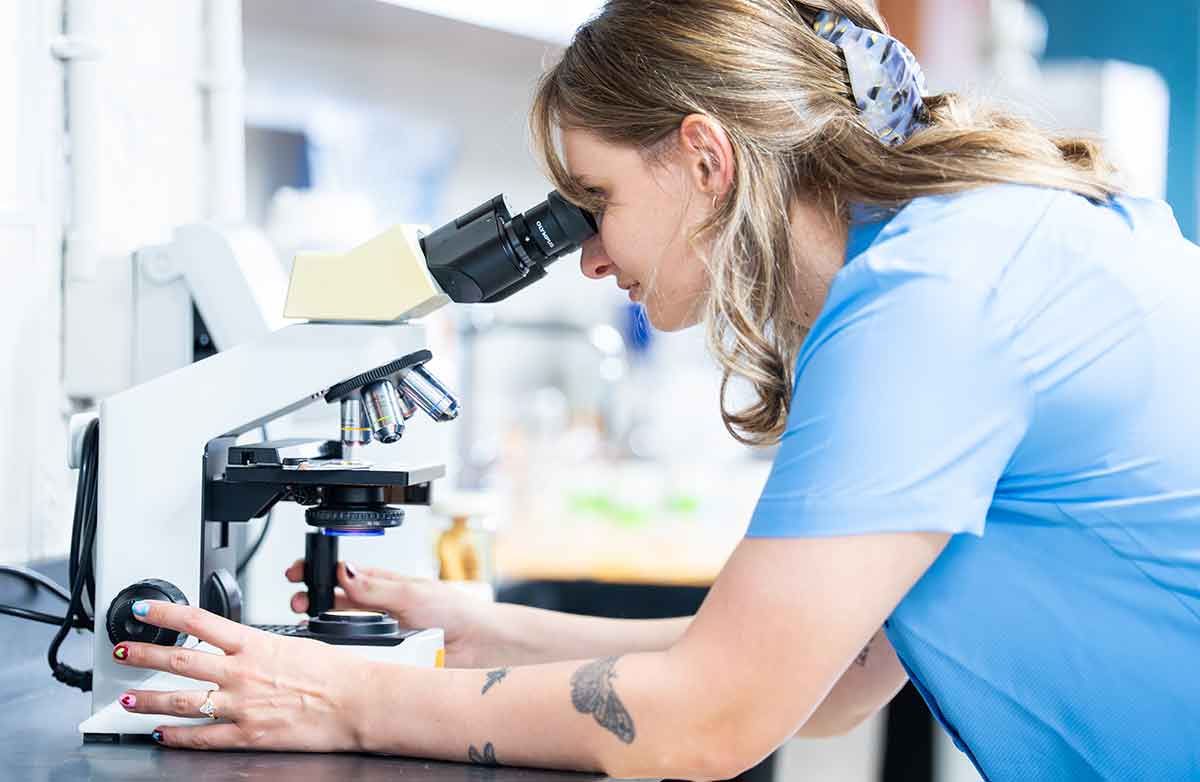
Jenna Knutson, undergraduate student in The Water School.
“Vester’s research directly impacts coastal resilience, water quality and habitat restoration,” she said. “This equipment replacement was exactly the type of project we were excited to fund.”
Students return to hands-on training
FGCU students were among the hardest hit by the disruption. Many saw thesis work paused or samples lost.
“Students who work at Vester gain valuable experience and skills that prepare them for careers in natural resource management, environmental consulting, education, ecotourism and environmental engineering,” says Parsons.
Over the years, his students have participated in research on ciguatera poisoning, red tide and artificial reefs, among other projects. They gain real-world skills that better prepare them for entering the workforce, including driving boats and doing scientific research underwater.
“Part of the value proposition for students in The Water School is the emphasis our programs place on experiential learning,” says Tolley. “There is no better way to learn science than to do science, and Vester provides The Water School and its students with a gateway to the coastal world around us.”
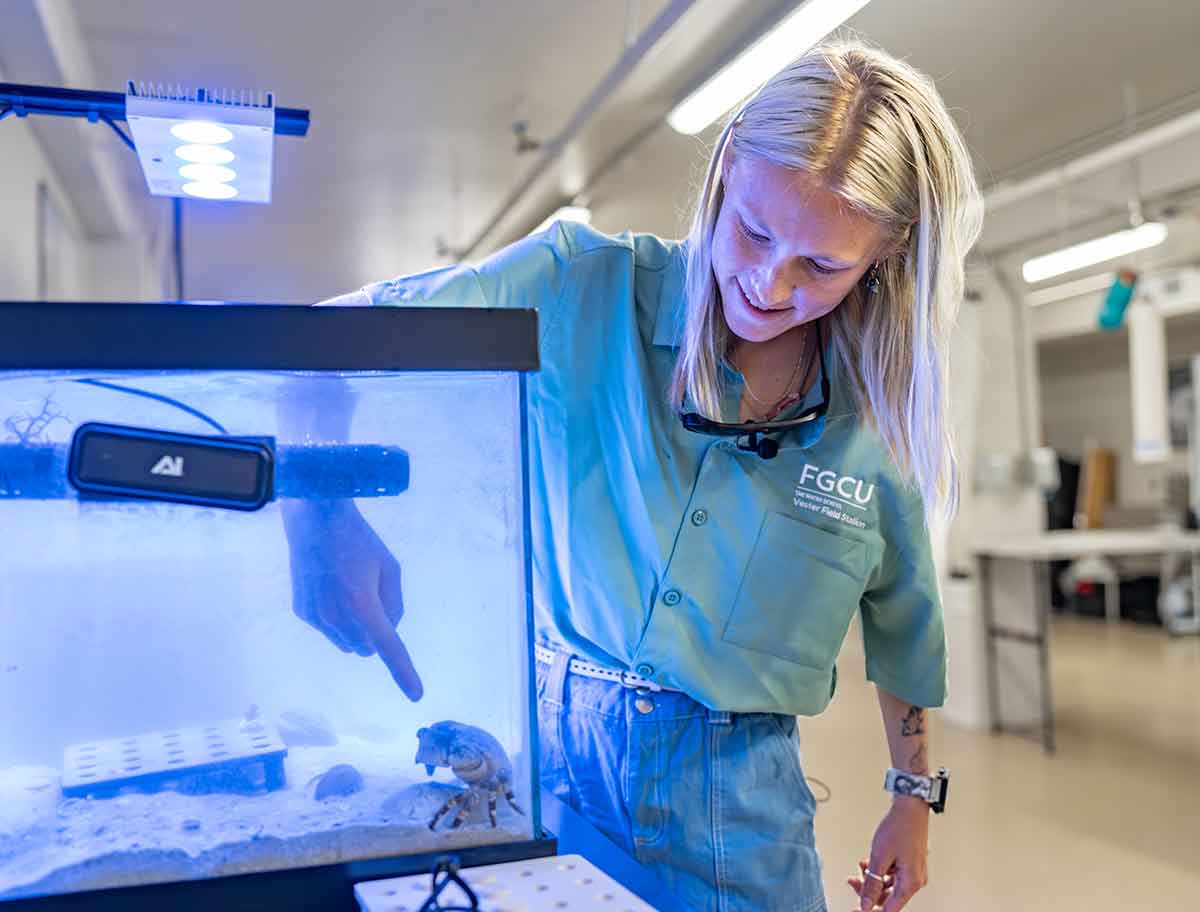
Kenzie Pruitt, graduate student in The Water School.
Now, Vester scientists are eager to resume interrupted datasets, launch new projects and welcome local school groups, visiting researchers and community organizations.
“It’s a great feeling to have the support of FGCU, The Water School, the Collier Community Foundation and others to help get Vester back up better than ever,” says Parsons.