Gulf Scholars Program prepares students to research a more resilient Gulf Coast

7 – minute read

The Florida bonneted bat announces itself at an acoustic frequency that older adults may not be able to hear. Fortunately for Florida Gulf Coast University, Allison Goodwin was listening.


“I am so excited to say that we have an endangered species of bat living on FGCU’s campus,” says the FGCU senior and environmental studies major. “My heart started pounding when I recognized the call frequency of the bonneted bat.”


Thanks in part to funding from FGCU’s new Gulf Scholars Program, Goodwin was able to purchase recording devices and software to capture and analyze bat calls across campus. She’s part of the university’s first cohort of Gulf Scholars, a program supported by the National Academies of Sciences, Engineering and Medicine and funded through settlement dollars from the 2010 Deepwater Horizon oil spill.


The initiative prepares undergraduates to address pressing issues of resilience, including problems related to environmental protection and community health, through research and experiential learning along the Gulf Coast. FGCU joined the program as part of the fourth national cohort and began the planning phase of its five‑year participation in 2024.


Passion plays a part in research


Goodwin’s interest in bats stems from a childhood spent outdoors in Georgia, surrounded by Appalachian flora and fauna. FGCU’s campus green spaces and commitment to the environment appealed to her. 


Currently, she’s working on her Gulf Scholars project with Win Everham, a professor of ecology and environmental studies in The Water School. Goodwin’s work on bat activity, which is also partially funded by the Everglades Foundation, represents more than just a campus nature study. 

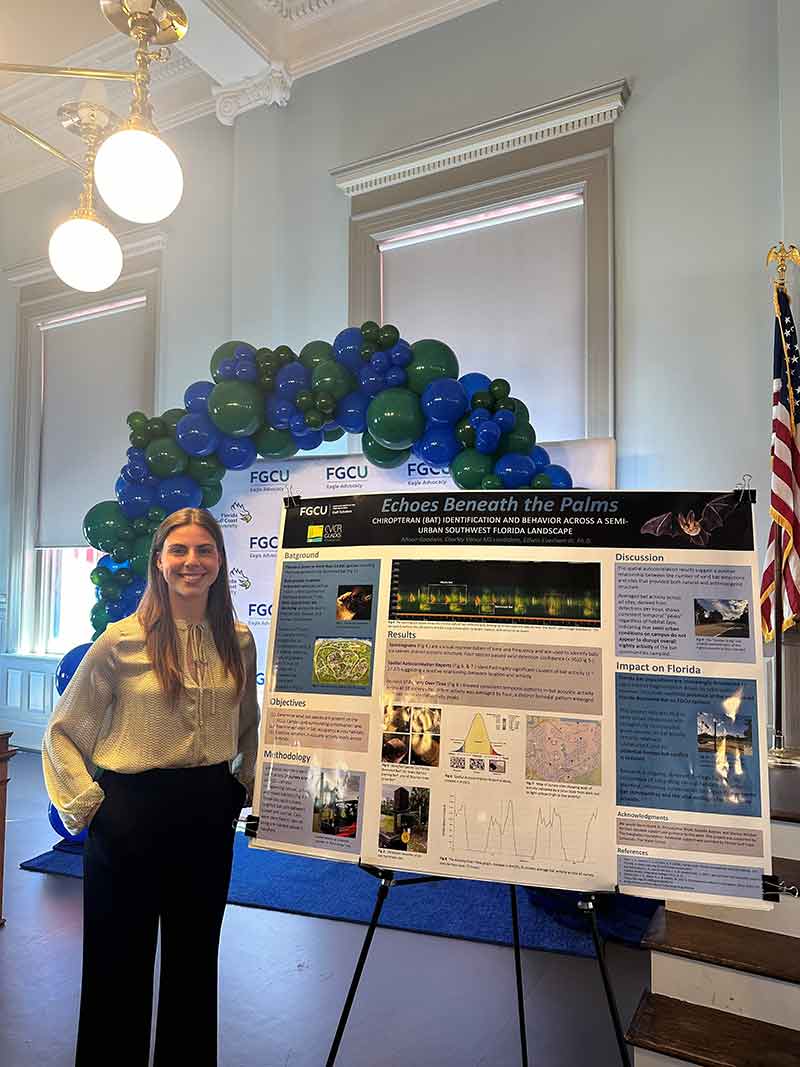
A smiling young woman stands next to a large poster that reads, in part, Echoes Beneath the Palms. She is in a room with tall windows and ceiling and there is a blue and green balloon arch behind her on the left and the American flag on the right
Allison Goodwin presented her research at FGCU Day in Tallahassee. Photo provided.

Bats are key indicator species — animals whose presence or absence reflects the overall health of an ecosystem. Thus, detecting an endangered bat on campus demonstrates how FGCU’s natural areas function within the larger Southwest Florida environment, where biodiversity loss carries significant consequences for sustainability and community well‑being. Opportunities like this underscore how hands‑on research shapes FGCU students, often from their early semesters. 


“Gulf Scholars highlights really promising students who are engaged in their community and want to solve problems in Southwest Florida,” says Heather Skaza-Acosta, the Whitaker Institute director, an associate professor of environmental education and co-director of the FGCU Gulf Scholars Program.

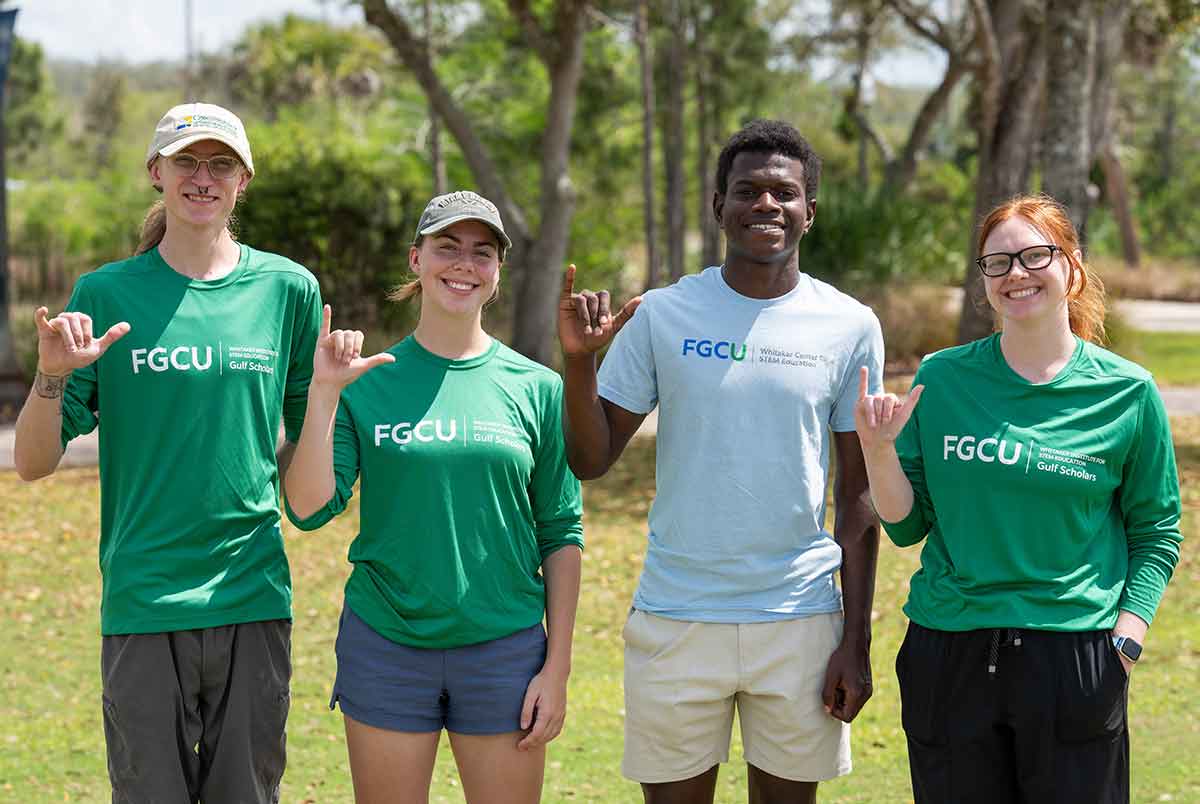
Four young people stand outdoors making the Wings Up gesture
Gulf Scholars Bea Olson, Allison Goodwin, Jelon Thomas and Madeline Aadnes.
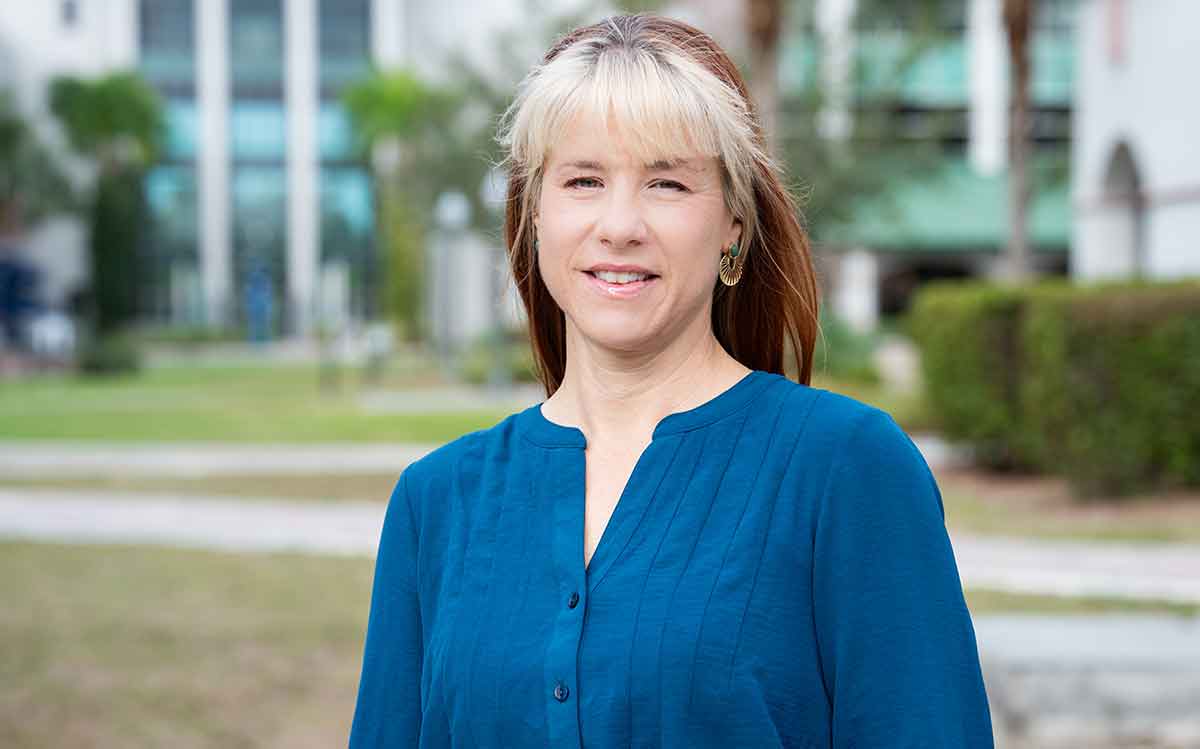
A woman with pale blonde bangs and red hair wearing a blue blouse and smiling outdoors
Heather Skaza-Acosta.
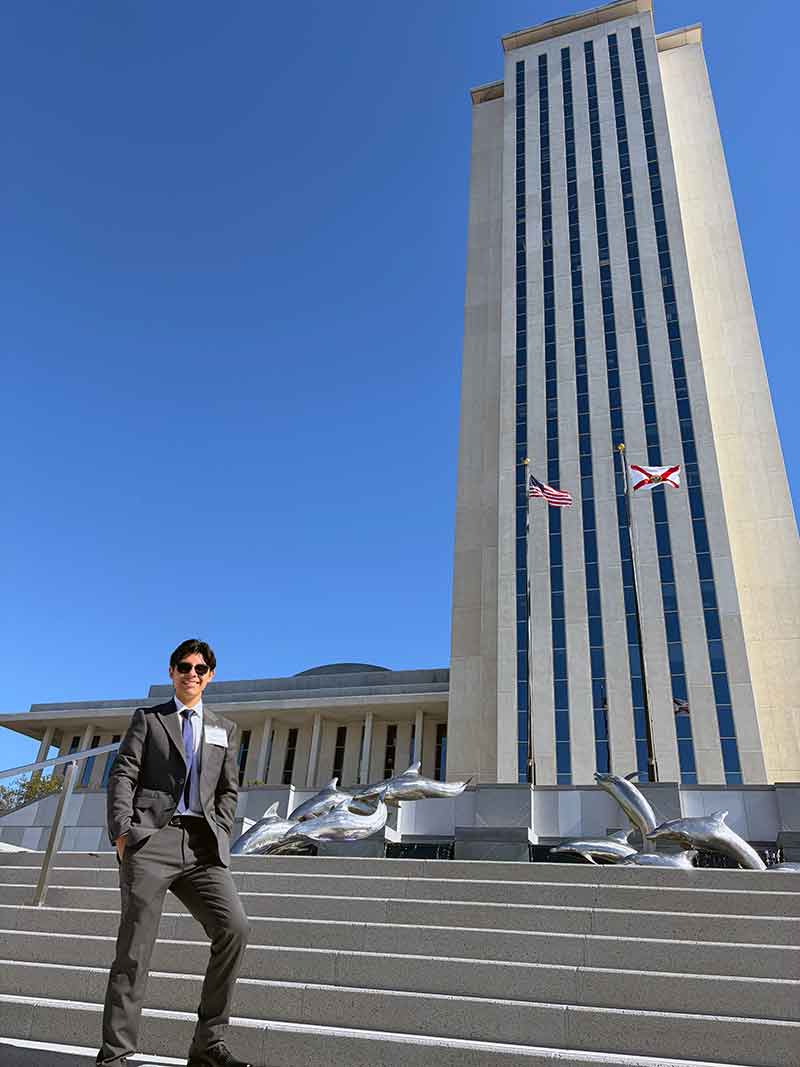
A smiling young man in a gray suit stands on the steps of a tall building with dolphin statues and flying American and Florida flags
Juan Cortes presented his research at FGCU Day in Tallahassee. Photo provided.

Designing solutions for real-world application


Like Goodwin, Juan Cortes is a member of the first FGCU Gulf Scholars cohort. A bioengineering student, he’s developing a wearable arm exoskeleton controlled entirely by the user. He works with Derek Lura, a professor in the U.A. Whitaker College of Engineering, on the biomechanics of his prosthetic design.


“The project focuses on making the device strong, stable and safe to use, as well as aiming to support your movement and help reduce strain while you move naturally,” Cortes says. “The exoskeleton has potential uses in medicine, agriculture and the military by helping people work longer with less injury.”


Each participant in Gulf Scholars completes a community‑based project with a Southwest Florida partner, such as a local nonprofit or commercial business, by the time they graduate. They also become part of a network that spans 30 institutions across the Gulf Coast states.


Students from any major can apply for the program, and each cohort receives full grant funding.


“As an undergraduate you learn who you are, what you care about and the mark you want to leave,” says Melodie Eichbauer, a history professor specializing in legal history and co-director of the FGCU Gulf Scholars Program. “Our cohort program is the most immersive, and it helps highlight what we’re doing in the community.”


A new stage for presenting research 


For Gulf Scholars, learning how to effect change also means learning how to speak for it. That lesson came into focus when they brought their research to FGCU Day at the Capitol, an annual advocacy event in Tallahassee. In January, three students stepped into the role of advocates by sharing their work with state leaders.

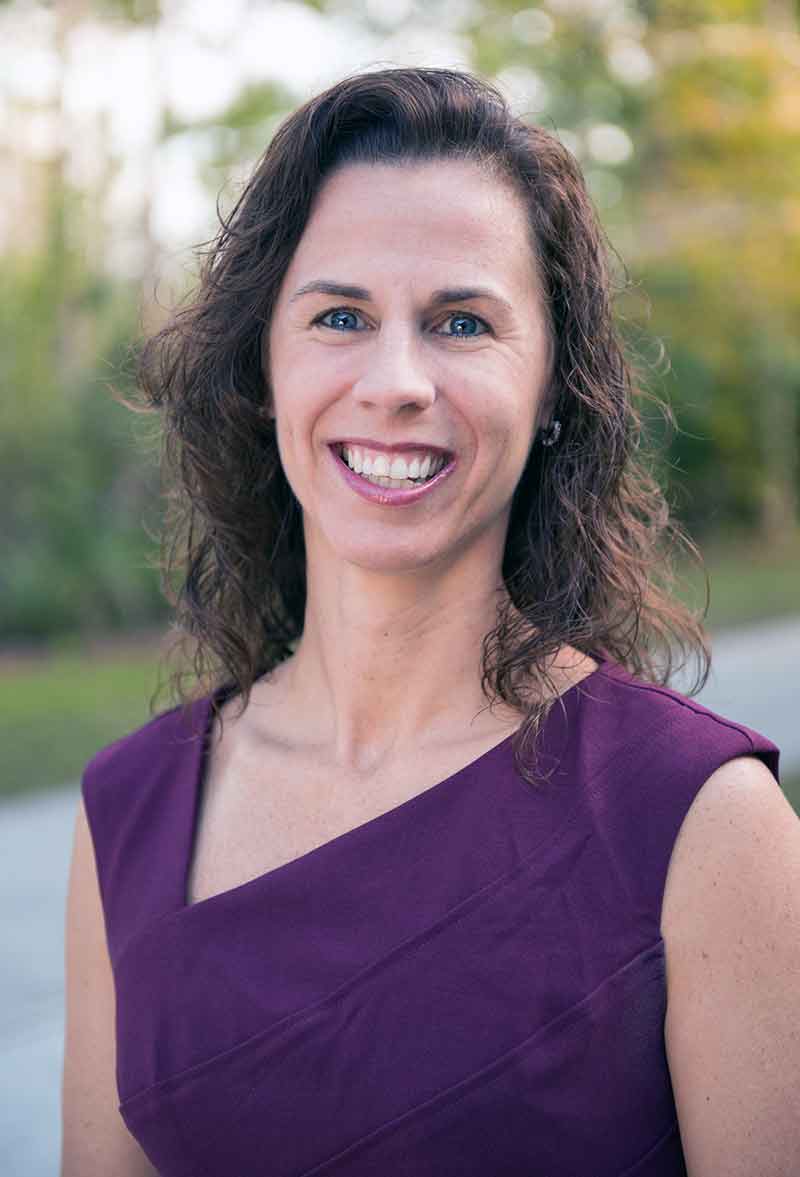
A smiling woman with curly, dark hair in an asymmetrical purple top
Melodie Eichbauer.

“We told (the students), ‘You are the expert in this topic. No one else is studying this topic the way you are.’ They take a lot of pride in that,” says Skaza-Acosta.


Goodwin presented her bat behavior study, while Cortes showcased his biomechanics research.


“The event showcased the important work that undergrads are doing all over Florida, that undergraduate research is meaningful and produces real results,” says Goodwin. 


Another student hoping to join Gulf Scholars next year also participated in FGCU Day. Software engineering major Dylan Benzi shared research on fatalities directly caused by hurricanes across the continental United States from 1963 to 2024. He collaborated on the study with his faculty advisor, Jo Muller, eminent scholar and professor in the Whitaker Institute in the College of Arts & Sciences

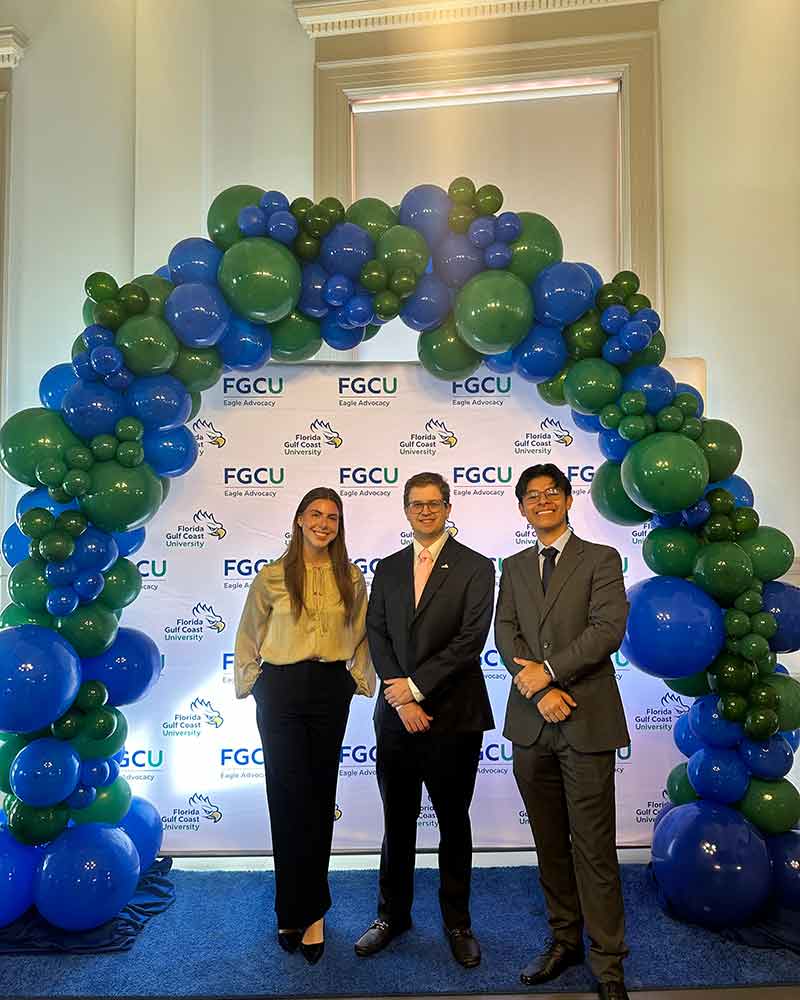
Three smiling young adults stand under a blue and green balloon arch with an FGCU step-and-repeat behind them
FGCU students presented their research at FGCU Day (Lto R): Allison Goodwin, Dylan Benzi, Juan Cortes. Photo provided.

“This was the first time that student researchers have been a part of FGCU Day,” says Eichbauer. “Having the opportunity to showcase their work, showcase their passion and how both will directly impact our region — and seeing others engage with the students — was so special.”


Typically, students present research to peers or faculty or at events like Eagle X or discipline‑specific conferences. FGCU Day provided them the rare opportunity to learn how to communicate their work to non‑academics — a powerful skill‑building experience.


“It’s pride, right, but it’s also wonder,” says Skaza-Acosta, reflecting on seeing the first student researchers present in Tallahassee. “They rise to the occasion and speak to their work with confidence and expertise at a young age and at this early stage in their career.” 


Gulf Scholars is seeking organizations and employers in Southwest Florida interested in partnering with students to fulfill the community collaboration aspect of their projects. Funding for internships is available, according to Skaza-Acosta. See the program website for more information. 

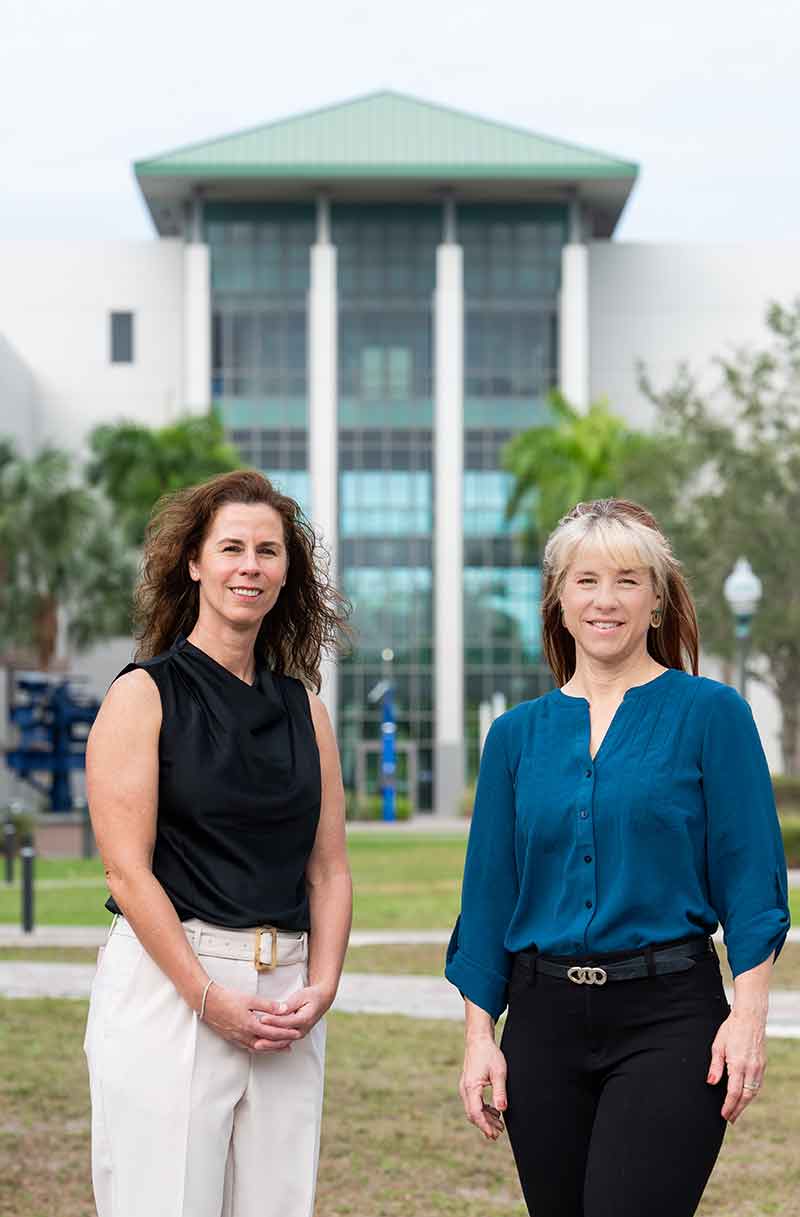
A woman with curly, dark hair, a black shirt and white pants stands with a woman with pale blonde bangs and red hair wearing a blue blouse, in front of a two-story, green-roofed building
Melodie Eichbauer and Heather Skaza-Acosta.
Subscribe to 360
Tweet
Share
Share