Contributors: James Greco and Ava Schimitsch, Photos | Rob Salazar, Video
6 – minute read
Ten years after its launch, Florida Gulf Coast University’s music therapy program is striking a proper chord, with alumni singing the praises of a profession that helps people improve their lives through the healing power of music.
Housed in the Bower School of Music & the Arts, the program has grown dramatically since 2015. It has produced 61 graduates as of December and enrolls an average of 45 students each semester, according to Kimberly Sena Moore, associate professor and program coordinator.
Students gain hands-on experience through practicums and internships with more than 60 community partners across the region and the United States, completing a minimum of 1,200 hours of clinical training.
Those experiences often lead directly to employment. Hannah Eaton, a December 2024 graduate, is a board-certified music therapist at her former internship site, Florida Music Therapy in Lee County.
“The music therapy program at FGCU fantastically prepared me for the workforce both in the skills I obtained and the reality of what the field looks like,” Eaton said. “Not only were my musical skills emphasized and honed throughout my time in the program, but there were also so many intentional assignments and projects that directly modeled real-life tasks and documentation that I complete on a regular basis in the professional world.”
Prelude to a successful degree program
Bower’s music therapy program traces its origins to the late philanthropist Alan Korest, whose $2.5 million gift to FGCU helped establish the Bower School of Music in 2006 and included a request to develop a music therapy program as soon as feasible. His late wife, Marilyn Bower Korest, recognized the value of music therapy, Sena Moore said, and he later established a music therapy scholarship fund in her name.
An endowment from Southwest Florida Children’s Charities enabled the school to hire Michael Rohrbacher as music therapy program coordinator in 2013. Besides developing the curriculum, he conducted a needs assessment to demonstrate the rationale for the program.
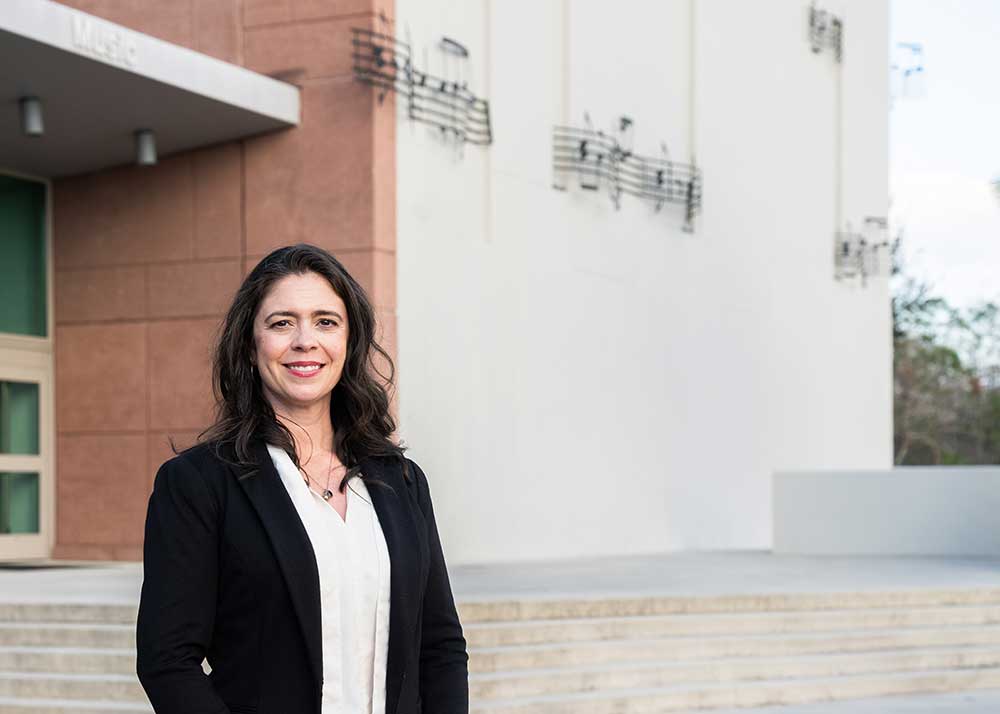
Kimberly Sena Moore has served as music therapy program coordinator since 2021. James Greco photo.
“He found that employment opportunities existed in area hospice and palliative care facilities, VA medical facilities, private practices, state institutions, medical facilities and public school districts,” Sena Moore said. “This meant federal, state and local government agencies in Florida had already invested in music therapy services for its citizens.”
At the time, Florida State University was the only state institution offering music therapy, she said. “Establishing a music therapy degree program at FGCU would carry forward the state’s existing investment but in an area that was underserved and had limited access to music therapy services,” Sena Moore said.
FGCU offered the program’s initial course in 2014 and, after approvals from FGCU, the state of Florida, the American Music Therapy Association and the National Association for Schools of Music, formally accepted its first bachelor of music therapy students in August 2015.
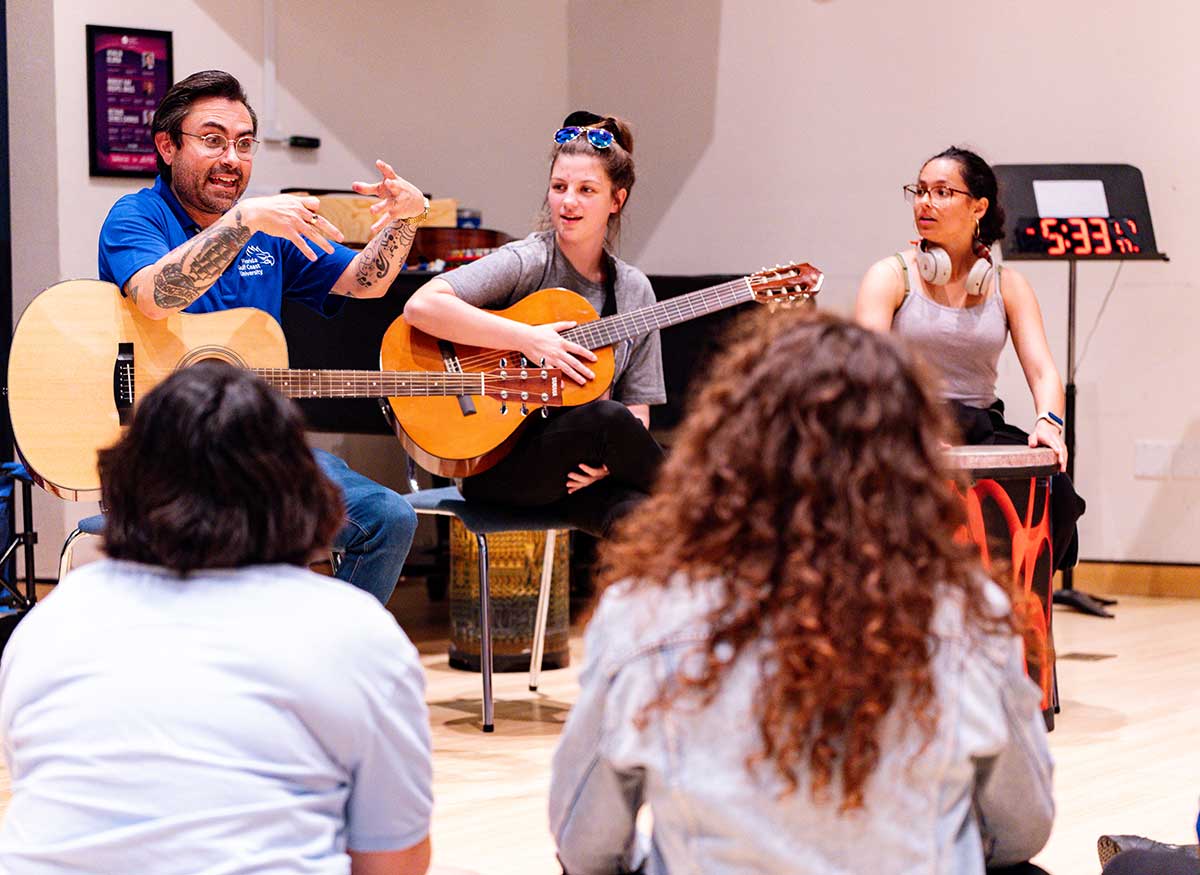
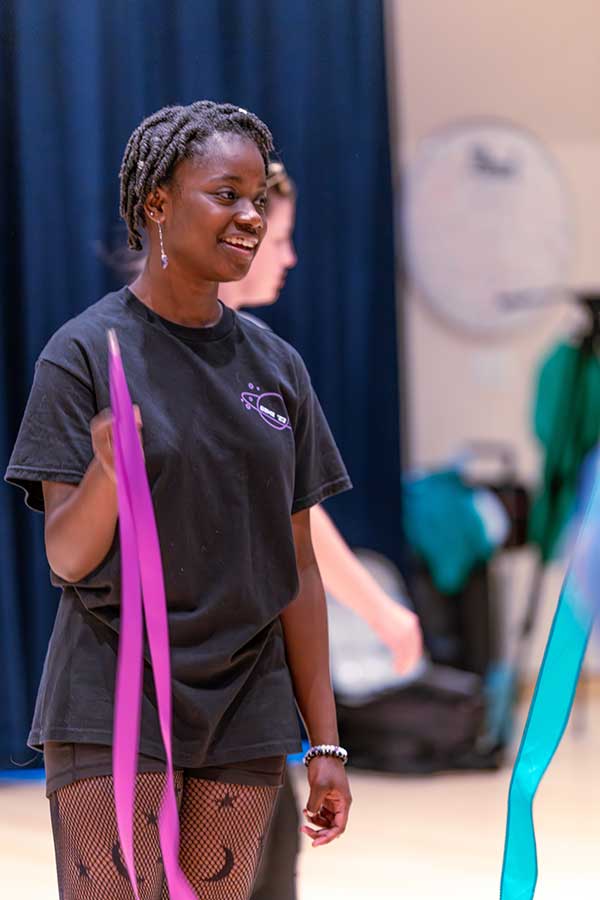
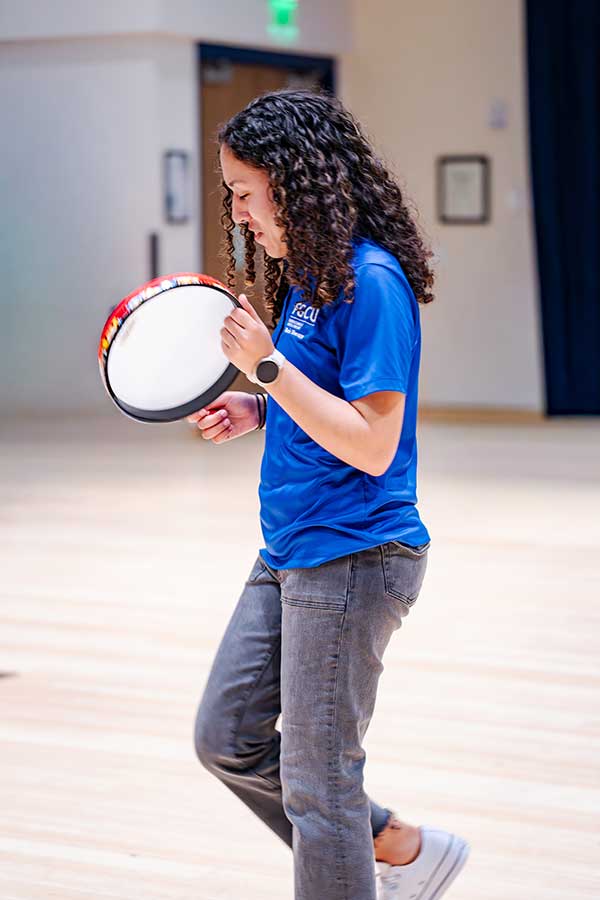
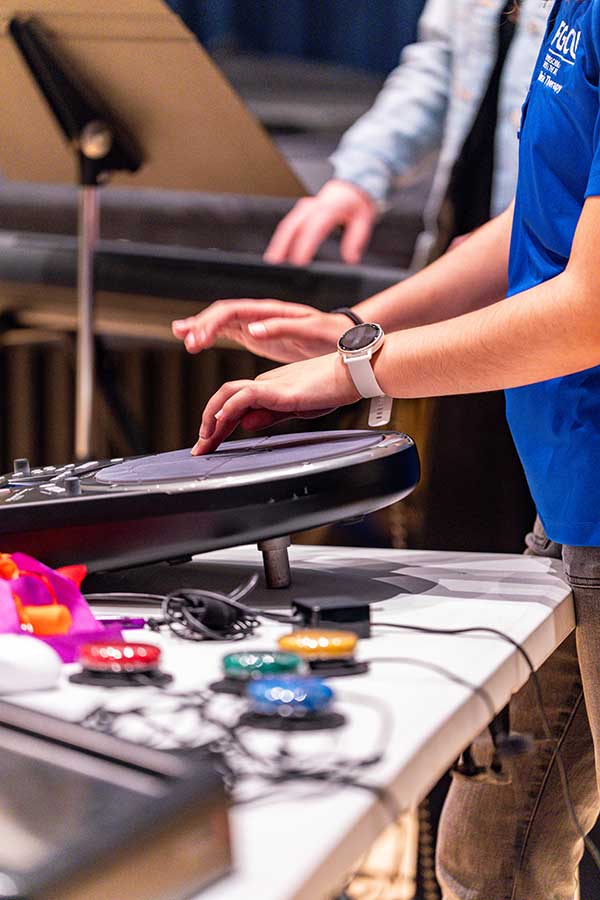
Music therapy students learn to match activities with a therapeutic goal. Ava Schimitsch photo.
Growing as an evidence-based practice
A decade later, FGCU boasts graduates who are professionals designing, implementing and evaluating music interventions for therapeutic rather than artistic purposes. As undergraduates, they are trained in voice, piano and guitar, at minimum, and develop the knowledge and skills to design experiences encompassing music composition, improvisation, singing, instrument playing, moving to music and intentional listening.
“Students learn how to do this in a way that is client-focused and has therapeutic intent,” said Sena Moore, who has served as program coordinator since 2021. “Regardless of the type of music experience — singing, playing instruments, improvising — there should be an underlying therapeutic goal the client is focusing on.”
For example, graduates working in a hospital setting may design a music and relaxation listening experience to assist patients with pain management. Those working in hospice and end-of-life care may engage in singing with patients and loved ones, using music to help them recall key life experiences and strengthen connections.
The field is still growing, as research increasingly recognizes how music stimulates the brain, impacts cognition and aids motor control. Even recent grad Eaton said she was unaware of music therapy as a professional path until encountering it on a career aptitude test before transferring to FGCU.
“As someone who has been a musician my entire life, I had always had a dream to incorporate music into my profession. But I didn’t find it realistic since I decided to not go the music performance or teaching route,” she said.
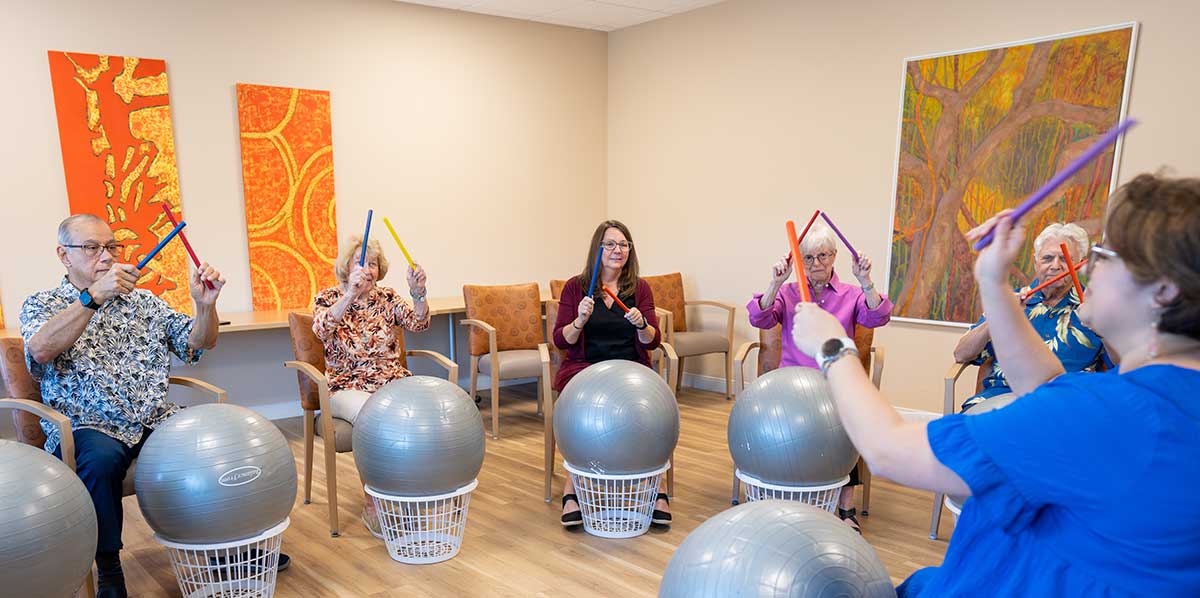
Music therapy is practiced in a variety of settings. James Greco photo.
“I didn’t think I had the boundless drive for those specific music-related careers that would be necessary to truly succeed in them.”
The music therapy program also appealed to Eaton’s desire for a career where she could serve people in need.
“I have always had a heart to work with children with autism and similar disabilities, delays and disorders, which is what I specialize in now. Once I read the term ‘music therapist,’ I was hooked,” Eaton said.
From therapist to chief program officer
Marisa Luizzi, a 2020 graduate, has a story similar to Eaton’s. Now chief program officer at Baker Senior Center in Naples, she credits a high school band teacher with introducing her to music therapy.
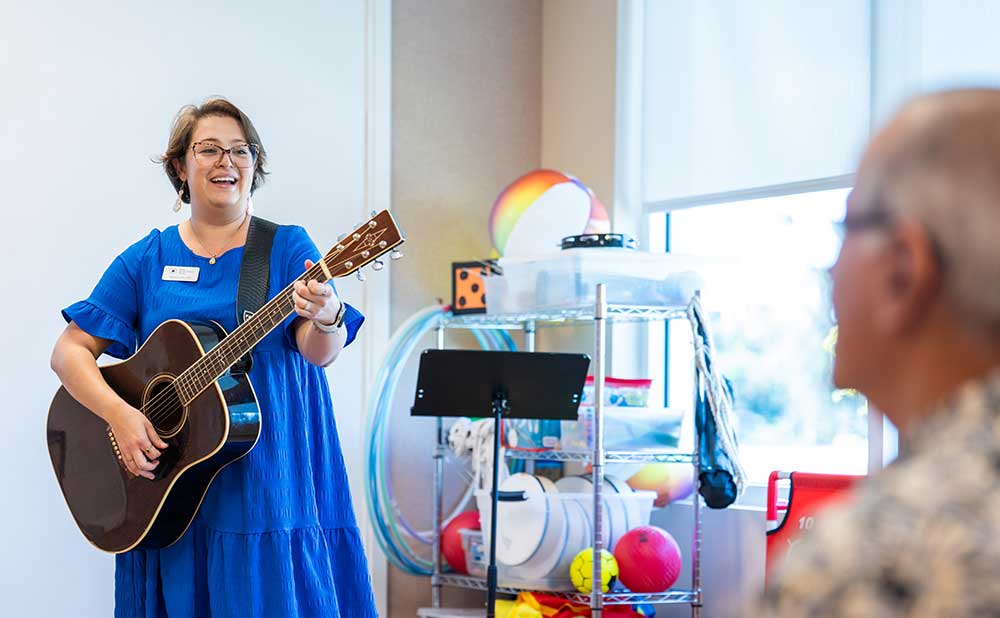
Music therapy alum Marisa Luizzi is chief program officer at Baker Senior Center Naples, a key community partner for FGCU's program.
“We spoke of the pros and cons of being a music teacher or professional musician, and we both recognized I wasn’t passionate about either of those routes,” Luizzi said. “He mentioned to me the field of music therapy and that I should do more research. From that moment, I never looked back and knew music therapy was what I wanted to do.”
“My time at FGCU guided me to understand that I will be the best professional I can be if I dedicate time to my craft,” she said. “That dedication carries over to everything I do in my career and shaping me into the professional I am happy to be. Although I am not providing therapy services in my position, the degree and experience have given me the opportunity to grow as a professional and grow within our agency.”
FGCU recently added a post-baccalaureate music therapy equivalency certificate program, which will admit its first students next fall.