How is higher education harnessing artificial intelligence? What do frog populations tell us about ecosystem health in Southwest Florida? Can deinfluencers help people become more mindful consumers?
Florida Gulf Coast University explores such timely topics and much more in “Your University: The FGCU Podcast,” available now on Apple Podcasts, Spotify and the FGCU website. You can also watch it on YouTube.
This new production of University Marketing & Communications highlights the work that connects campus to community, including research, athletics, the arts and student and alumni success. Each episode offers a closer look at the ideas, impact and progress generated at FGCU — “Your University.”
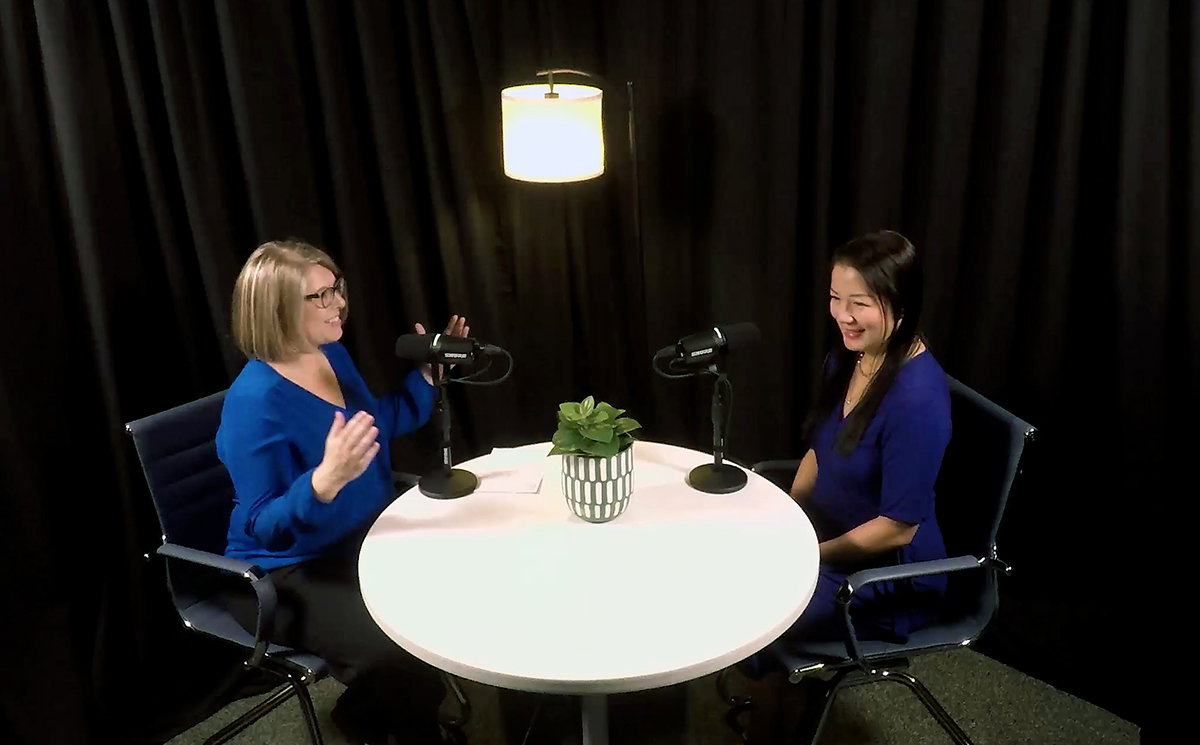
Katie Cribbs chats with guest Gina Tran, an associate professor of marketing at FGCU, for "Your University: The FGCU Podcast."
The initial 10-episode podcast is part of a strategic campaign to elevate FGCU’s profile, locally and across the state, through TV and radio spots, print and digital advertising, billboards and social media that spotlight the university’s ties with the community that built and shaped FGCU.
“We have so much expertise on campus and a real impact on the region, and the podcast gives us another way to share those stories,” says Larry Bender, associate vice president, University Marketing & Communications.
“It’s part of a larger, multi-channel approach, but the podcast allows us to have real conversations and spotlight our faculty, students and partners in a more personal and accessible way, reinforcing FGCU as an important voice in Southwest Florida and beyond.”
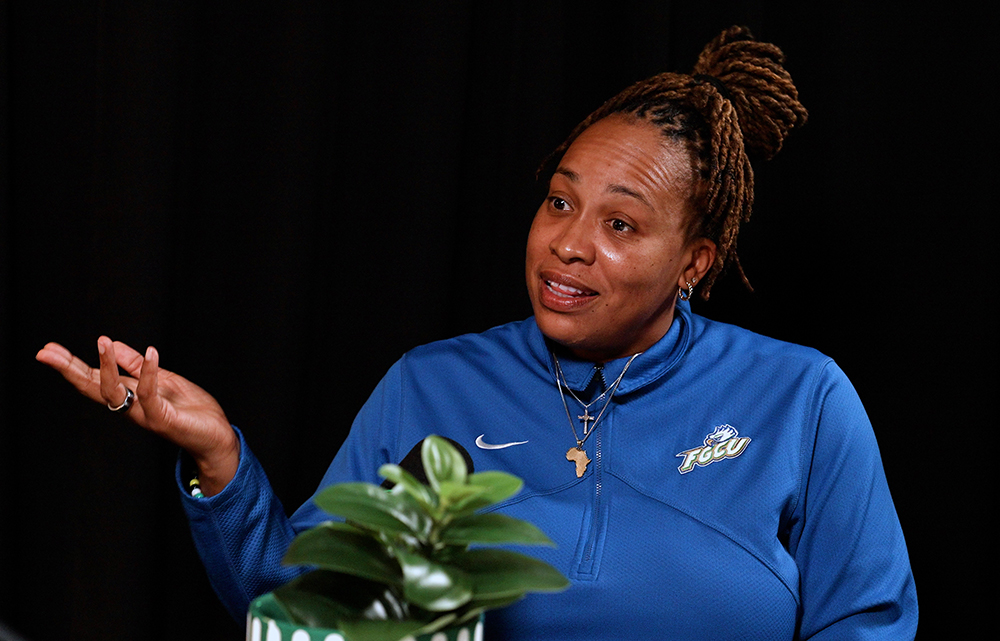
Raina Harmon is head coach of the FGCU women’s basketball team.
Many universities now harness the podcast medium in different ways, he says, including keeping alumni informed, adding to the on-campus experience and building overall brand credibility.
Initial guests in the series cover a wide spectrum of interests: Raina Harmon, head coach of the FGCU women’s basketball team and a former coach of WNBA star Caitlin Clark; Gina Tran, an associate professor of marketing and expert on consumer behavior; and Heather Walsh-Haney, a professor of forensic studies who’s consulted on cases around the world. They join in conversation with host Katie Cribbs, assistant vice president of communications, who has nearly two decades of experience as a journalist in television news.
“I think we have a really interesting lineup of guests,” Bender says. “Our hope is that listeners come away knowing a little more about FGCU and the great things happening on campus, in the region and beyond. Just as importantly, we hope it inspires people in our community to share their own FGCU stories.”
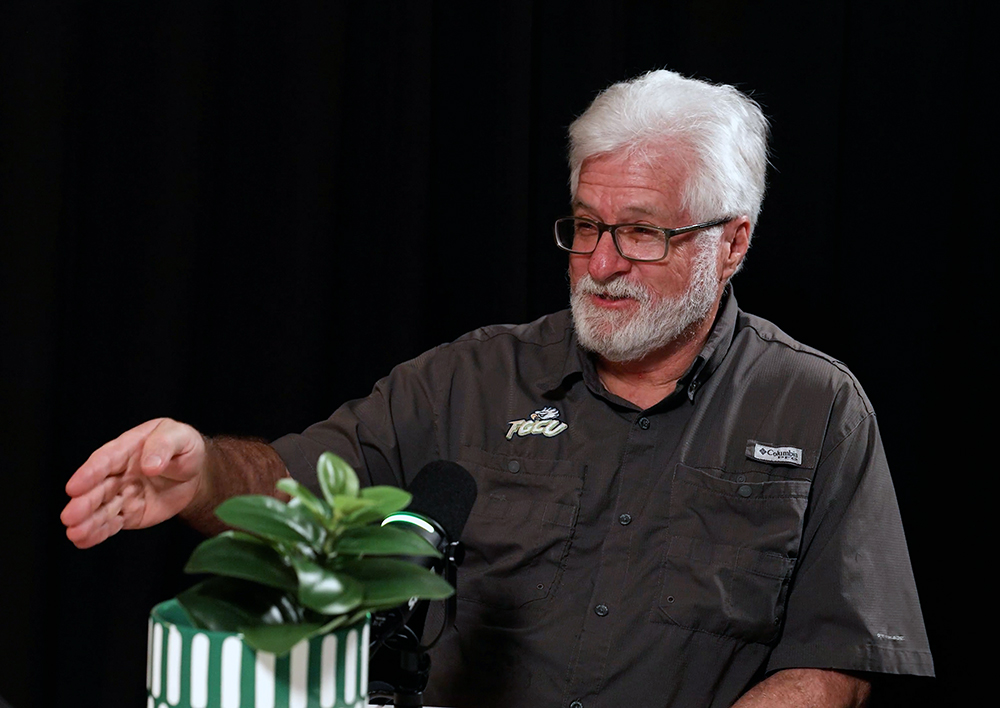
Win Everham is a founding faculty member and professor of ecology and environmental studies in The Water School at FGCU.
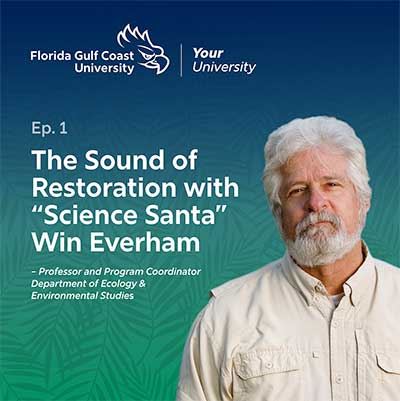
The podcast launched with a lively conversation between Cribbs and Win Everham, a founding faculty member and professor of ecology and environmental studies in The Water School at FGCU. Along with sharing colorful memories of FGCU’s early days, he talks about the history of Frog Watch, a student and citizen science research project that started monitoring local frog populations 25 years ago.
“Coming out of the 1990s, we were discovering frogs that were manifesting these weird mutations morphologically,” Everham says in the podcast. “If you go online, you’ll find plenty of pictures from the end of the last century of frogs with eight legs, frogs with all kinds of weird body mutations that were really an indication of something weird happening to the chemistry of their environment. We were offloading pesticides into our water systems. We were offloading other kinds of toxins running off of our landscape. And the frogs were showing us that.”
Although planned as a single season, the podcast could continue beyond its original run based on audience engagement, according to Bender.
“I hope listeners walk away with a real sense of what our university, faculty and students are accomplishing. There are so many people here doing interesting and important work, and the podcast is a great way to surface those stories,” he says. “When I listen to podcasts, I am always looking for that one takeaway that makes me pause and say, ‘Ah, that’s interesting.’ If we can deliver that kind of moment through these stories, I would consider the podcast a success.”