Contributors: James Greco, Photos | Christopher Noonan & Rob Salazar, Video
4 – minute read
Florida Gulf Coast University’s commitment to community engagement has been recognized by the American Council on Education and the Carnegie Foundation for the Advancement of Teaching.
FGCU’s achievement of the 2026 Carnegie Community Engagement Classification reflects its longstanding and continually growing connections to the five-county region it serves.
Beyond the university’s dedication to civic engagement and student service-learning as a founding principle, the designation acknowledges extensive community involvement through collegiate athletics, arts and cultural events, individual college and school programming, locally based research, business partnerships and philanthropy.
Service-learning is so vital to the FGCU experience that the university doesn’t stop at simply including engagement in its mission and vision statements. It’s one of the only public institutions in the country to make service a graduation requirement, according to Justin Fitzgerald, director of Community Engagement.
“FGCU lives out its commitment to the community through a unique service-learning graduation requirement of all undergraduates, through community-based research initiatives to enhance life in Southwest Florida and beyond, through over 300 classes that require students to apply their course content to real issues and needs in the community and much more,” Fitzgerald said.
“We are proud to serve the community that rallied to create FGCU in ways that educate students while filling true needs across the region — and we’re excited to be recognized once again by the Carnegie Foundation.”
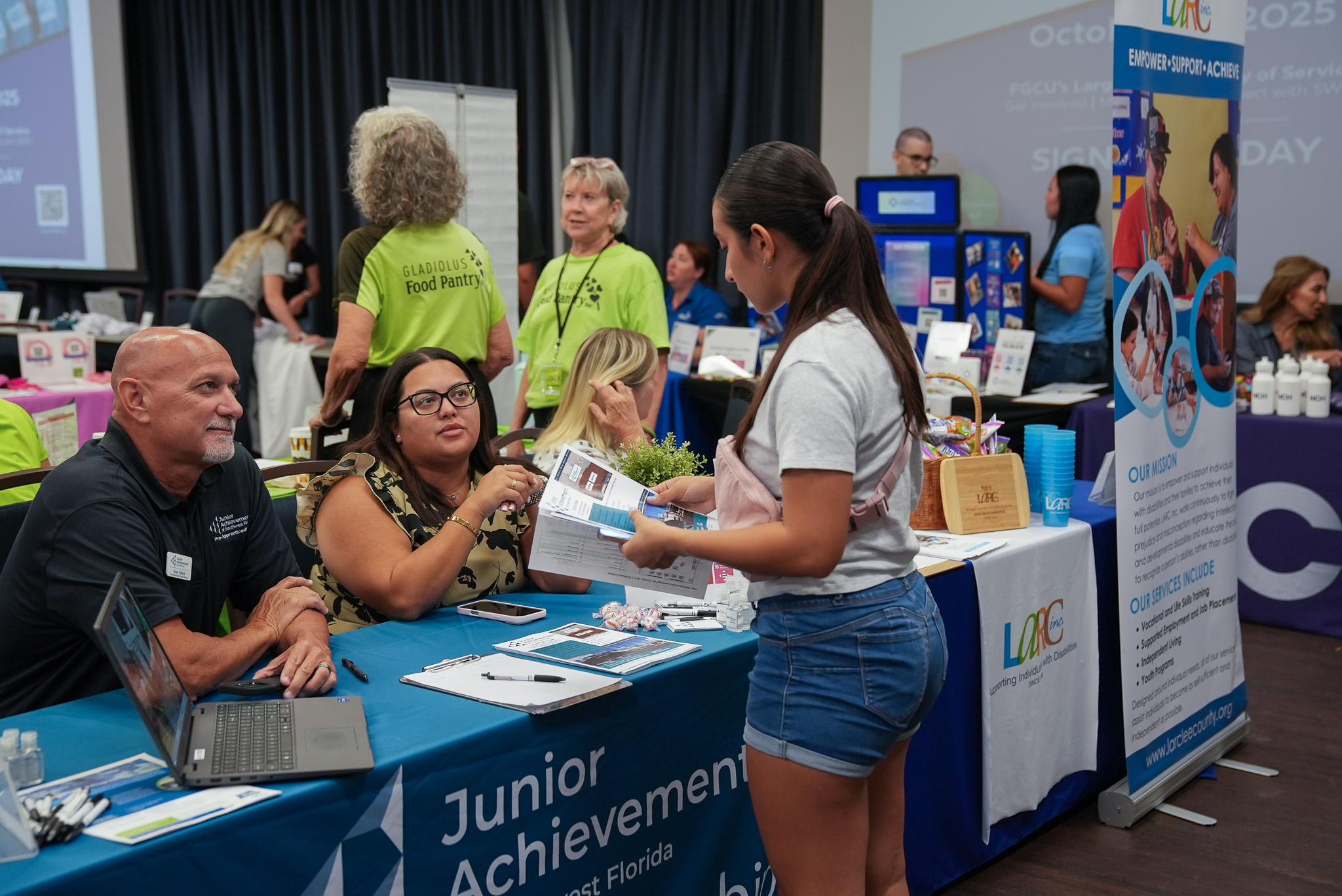
Students learn about volunteer opportunities in the community through the Service-Learning Fair.
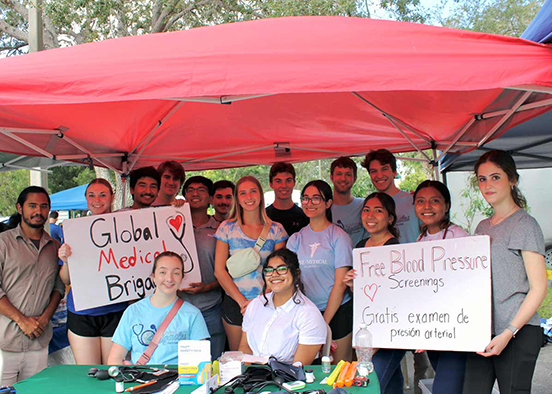
FGCU students bring healthcare services and education to underserved communities.
Timothy F.C. Knowles, president of the Carnegie Foundation, noted that colleges and universities not only fuel science and innovation, but they are also economic engines in their communities.
“We celebrate each of these institutions, particularly their dedication to partnering with their neighbors — fostering civic engagement, building useable knowledge and catalyzing real world learning experiences for students,” Knowles said.
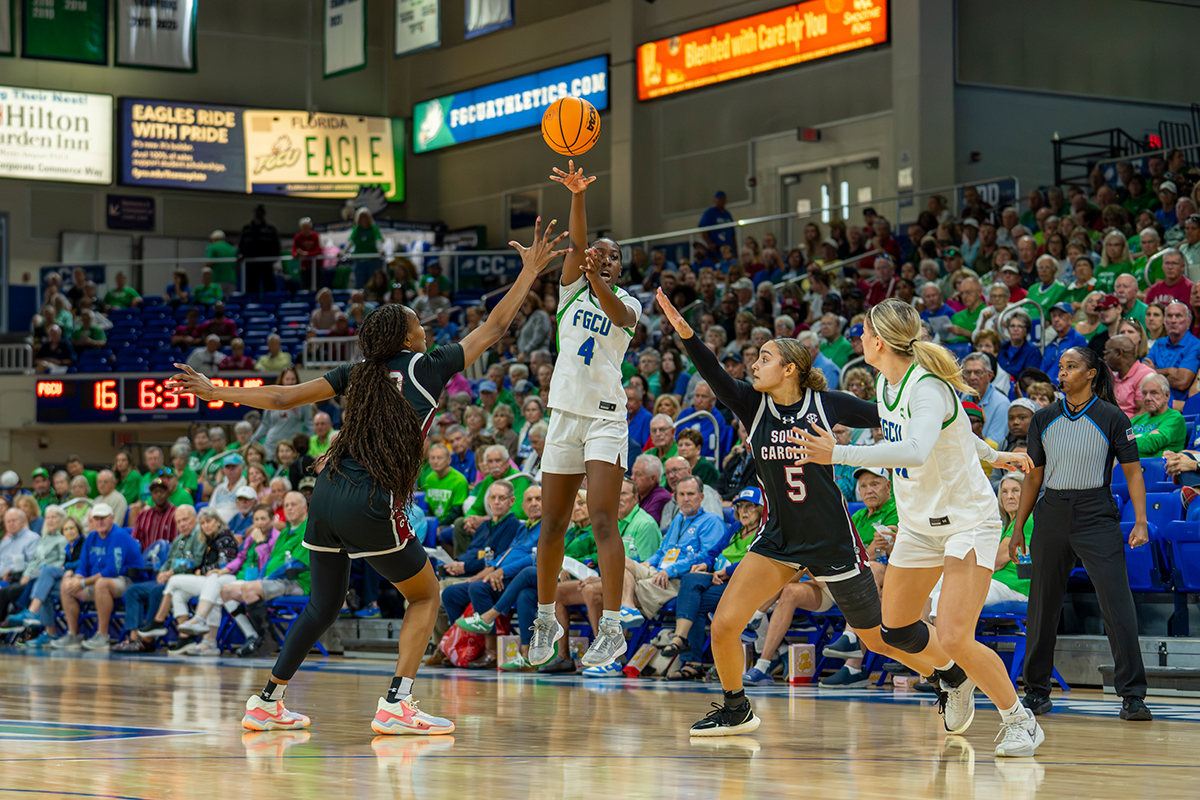
More than 250 arts events bring the community to the FGCU campus.
The Carnegie classification is awarded following a process of self-study by each institution and is the leading framework for institutional assessment and recognition of community engagement in U.S. higher education. The foundation requires documentation that an institution’s community engagement is “deep, pervasive and integrated through all of its systems and structures,” and that all partnerships are “reciprocal and mutually beneficial.”
FGCU has instituted a number of initiatives to enhance its engagement efforts since the last classification cycle, according to Fitzgerald. These include:
• Increasing the number of classes integrating service-learning and community-based research
• Escalating recruitment and training of faculty in service-learning and community-based research methods as teaching practices.
• Expanding the number and depth of partnerships with businesses, nonprofits, government agencies, alumni, athletics and more.
• Enhancing tracking and data management of all community engagement efforts.
These initiatives strengthen FGCU’s longtime connections with the community that initiated the university’s founding and shaped its development. Since FGCU opened in 1997, students have volunteered more than 5.3 million service-learning hours in Southwest Florida. Many also gain hands-on experience through internships with local businesses or research collaborations with partner agencies.
The community, in turn, rallies around FGCU Athletics’ 15 Division I teams, finds cultural enrichment in more than 250 campus arts events each year and contributes to scholarships that make higher education possible for generations of students.
“The institutions receiving the 2026 Community Engagement Classification exemplify American higher education’s commitment to the greater good,” said Ted Mitchell, president of the American Council on Education. “The beneficiaries of this unflagging dedication to public purpose missions are their students, their teaching and research enterprises, and their wider communities.”