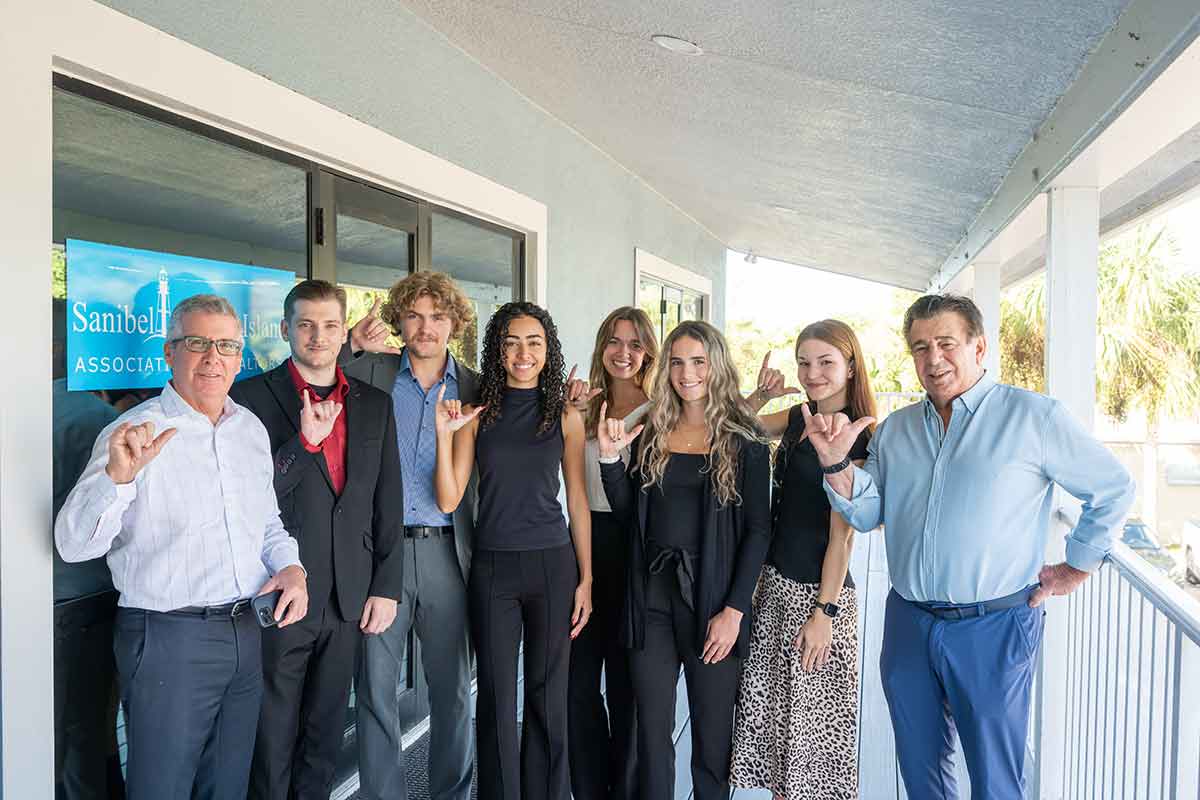
Three years after Hurricane Ian devastated Sanibel Island, the community’s business leaders approached the Daveler & Kauanui School of Entrepreneurship at Florida Gulf Coast University with a unique problem.
“They couldn’t track recovery very well after Ian and the other hurricanes. They were making decisions without good data, and they were concerned about that,” says Mark Bole, faculty fellow for FGCU’s Ain Technology & Design Hub and an entrepreneurship instructor.
He and a team of six students consolidated post-Ian recovery data that was once scattered across multiple sources. They created the “Sanibel Solutions” dashboard, a new artificial intelligence-powered tool to help track the island’s recovery.
Helping Sanibel’s recovery
With the dashboard, FGCU’s Ain Hub is supplying Sanibel’s civic leaders, residents and businesses with data and analysis of key indicators to support the city’s strategic planning for housing, infrastructure, tourism and the economy. They collected and verified the data and then used AI to transform it into an interactive online platform.
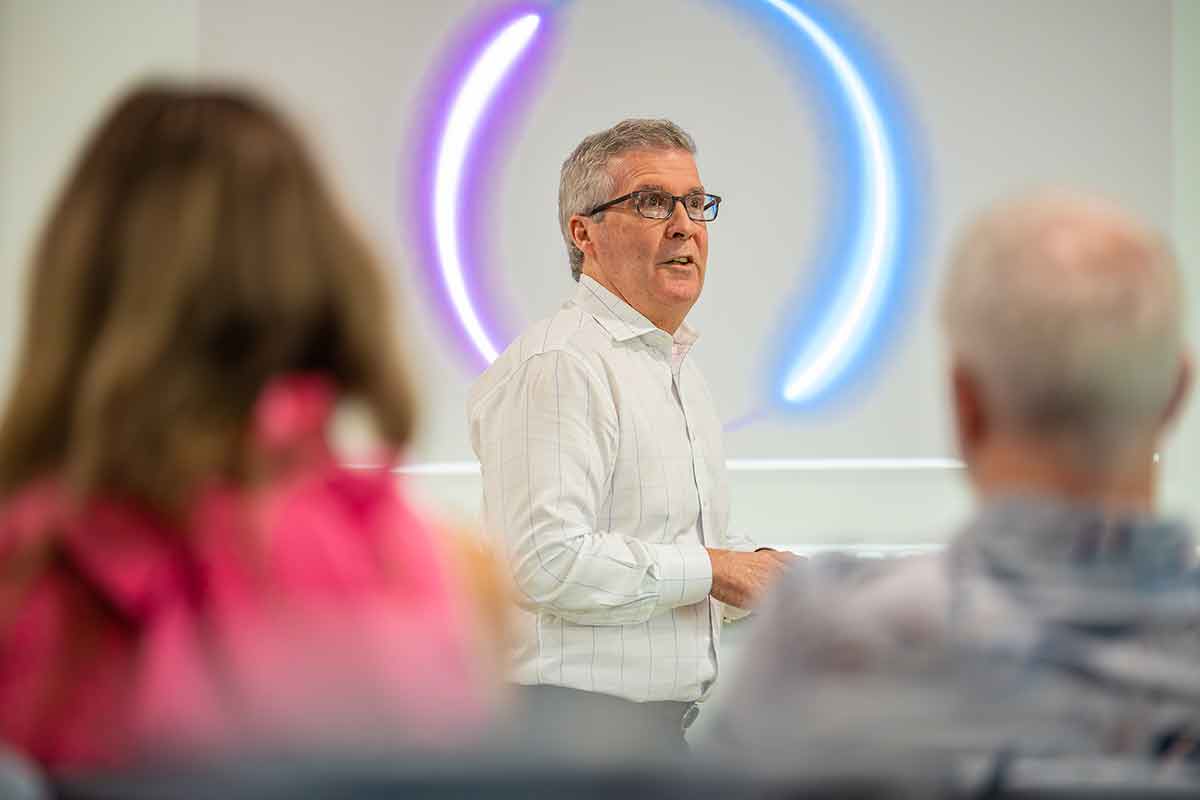
Mark Bole is faculty fellow for FGCU’s Ain Technology & Design Hub and an instructor in the Daveler & Kauanui School of Entrepreneurship.
“It took us about a weekend to build it, prototype it, and then another month and a half to collect all the data from all the different sources,” Bole says.
The goal is to help post-hurricane rebuilding efforts by providing measurable, data-driven tools that reflect the barrier island’s unique challenges.
“We’re teaching our students how to solve problems — and there’s plenty of problems to solve in Southwest Florida,” Bole says.
Students like Ain Hub team leader Stella Kane, a digital media design major, took their knowledge of AI one step further to help Sanibel business leaders learn to use the technology to simplify their operations and grow. She used “deep research mode” on ChatGPT to find out everything she could on each company assigned to her. Within 20 minutes, ChatGPT provided Kane with a plethora of research on each.
“I felt far more prepared to go into the first meeting because I could tell them about their own company instead of asking questions,” Kane says.
Bole says that while traditional marketing agencies charge hefty fees to spend weeks learning a client’s business, his team arrived at the first meeting with Sanibel business leaders armed with extensive online research and AI-driven insights.
“Starting on day one, we had a marketing strategy that we had the businesses review. Then we built a social media strategy, and they could just react to it and tweak it,” Kane says.
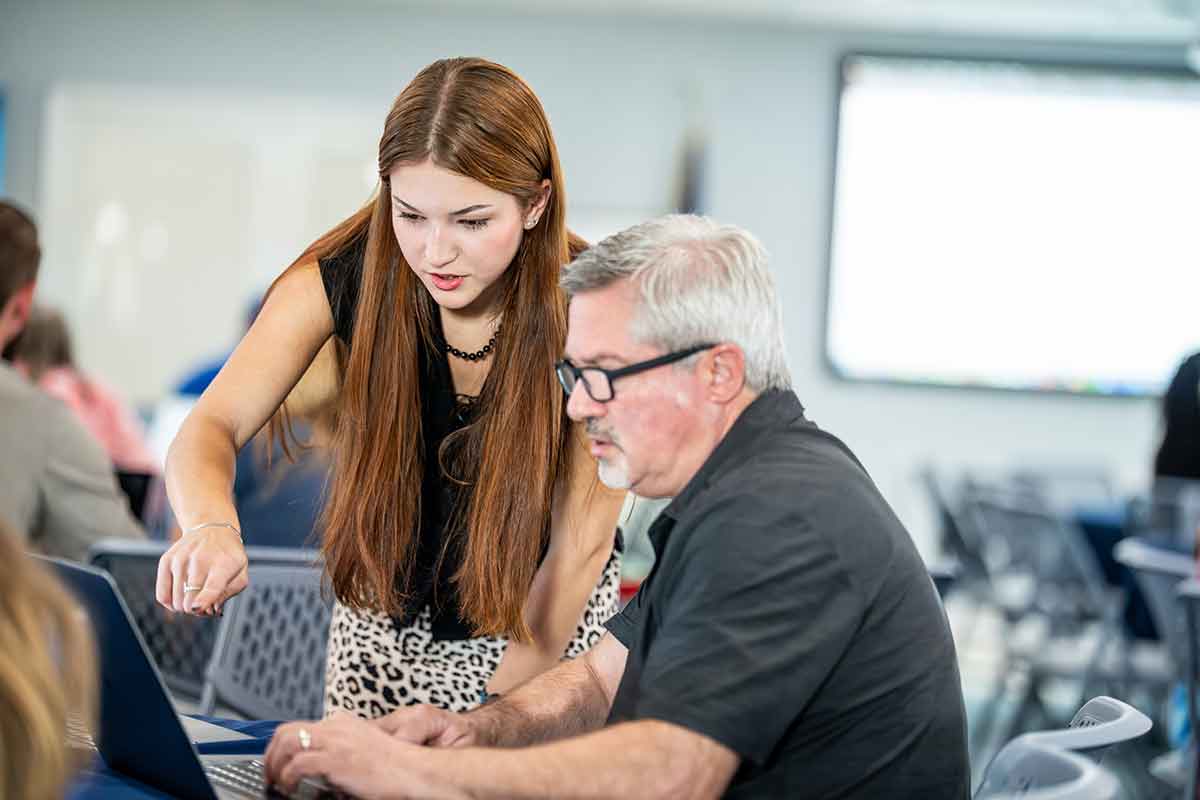
FGCU student and Ain Hub team leader Stella Kane was one of the Ain Hub interns offering AI workshops to help Sanibel business leaders.
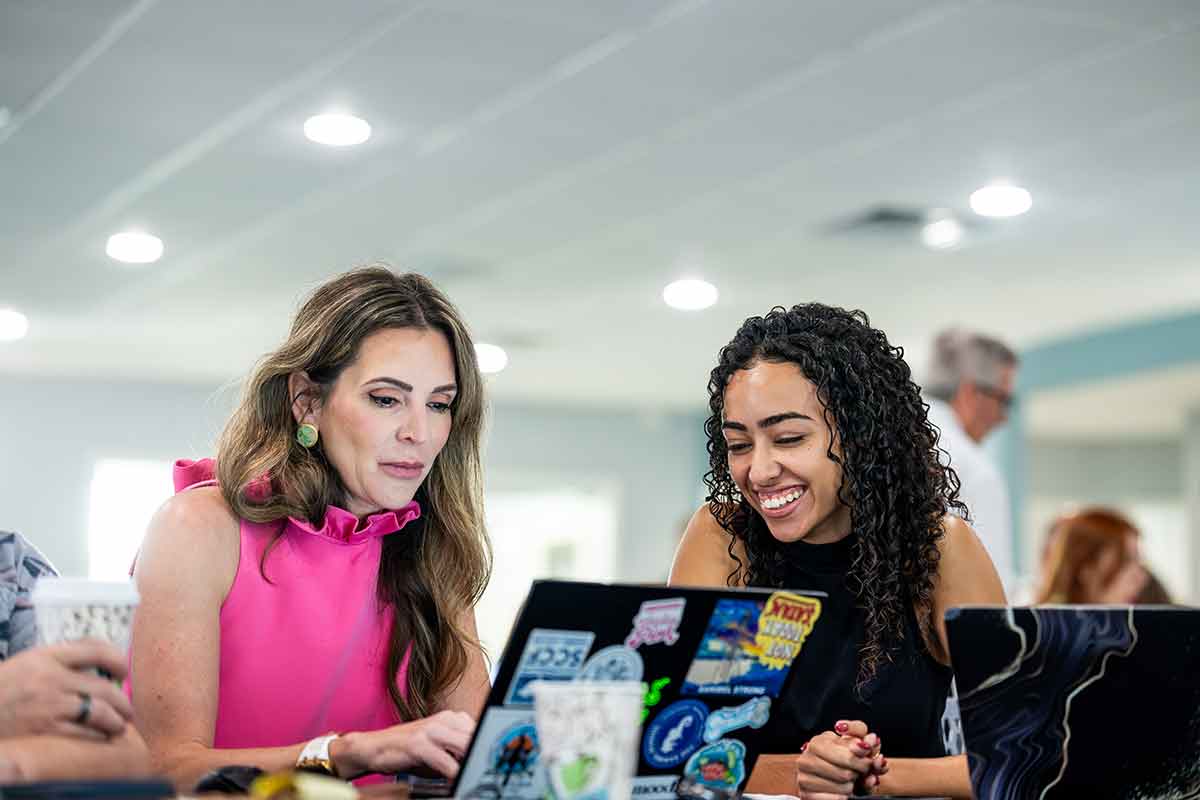
Kane worked with Sanibel realtor Valerie Tutor at a recent AI workshop.
“No one knows what they don’t know after a disaster. We needed professional help,” says Eric Pfeifer, a broker and owner of Pfeifer Realty Group on Sanibel.
He noticed that some businesses were waiting for more visitors to return before reopening — while some visitors were waiting for more businesses to reopen before they returned. The Sanibel Solutions dashboard bridges that gap, offering reassurance that Sanibel moves closer to its pre-Ian vitality every day. Now, Pfeifer and others can monitor the island’s economic recovery with meaningful, accessible data.
The dashboard’s level of detail shifts as new information becomes available, but Pfeifer says it remains the most reliable tool for understanding the island’s progress.
“It is the best — and only — way to track progress,” he says.
The FGCU team identified 40 key metrics — current and pre-Ian — to create a clearer picture of progress.
The dashboard showed that the community had rebounded more than many realized, but it also confirmed that limited lodging capacity remains the biggest barrier.
“We were able to quantify not just what that capacity is, but the trickle-down effect on tourism, tax revenue and businesses,” Bole says. Sanibel leaders also adopted processes to improve the construction permitting process — and the data “helped them get clarity on the issue,” Bole says.
Dolly Farrell, Charitable Foundation of the Islands executive director, and Eric Pfeifer, broker and owner of Pfeifer Realty Group. Photo by Mark Bole.
“I think everything we showed here, they knew intuitively. But getting agreement on what the real problems are becomes harder when you don’t have a dashboard.”
By quantifying those impacts and visualizing them through AI-driven analysis, “the dashboard and the workshops are taking a community that was pretty beat up and giving them some hope.”
Rachel Pierce, owner of three Sanibel businesses, and Ain Hub intern Francesca Cumins.
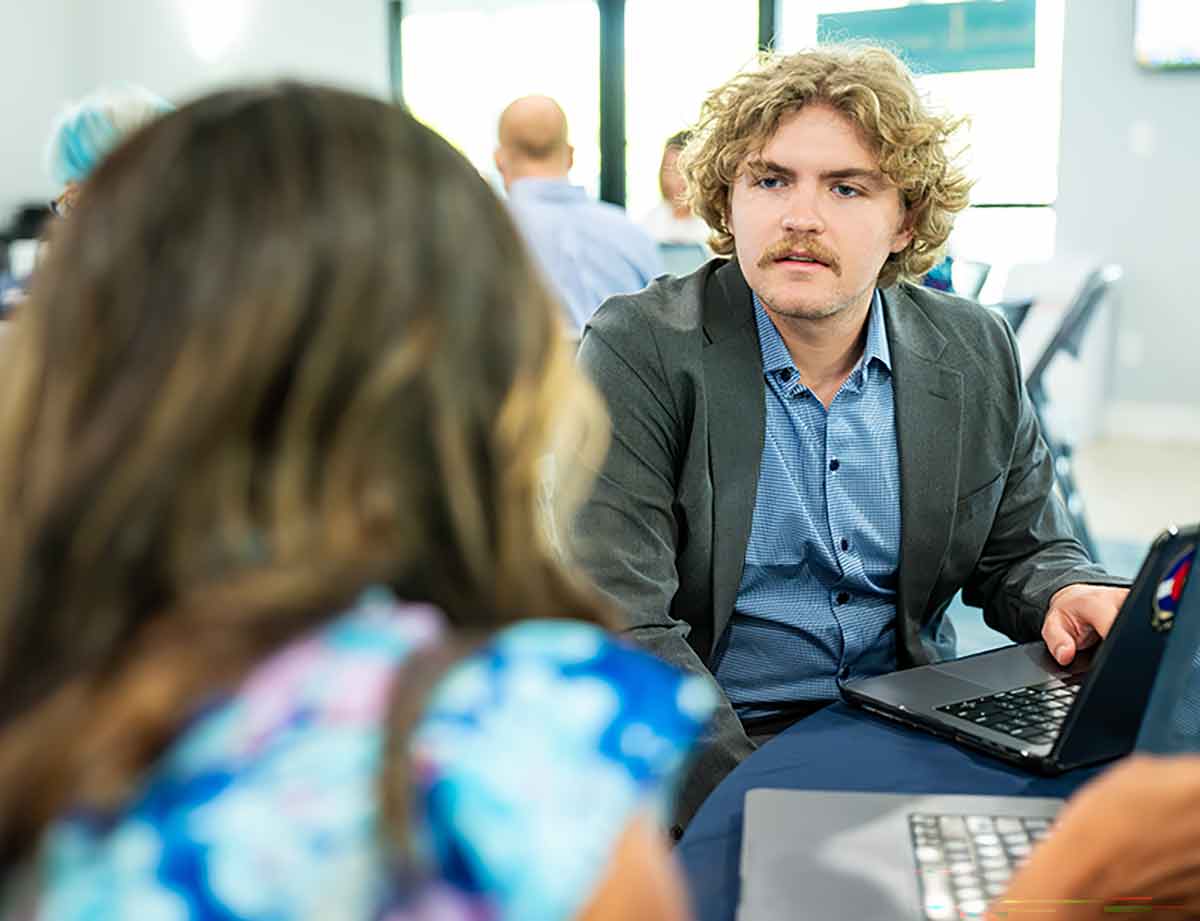
Ain Hub intern Jackson Hood.
Ain Hub intern Makenzi Mickley and Pasquale Russo, owner of Tutti Pazzi Italian Kitchen on Sanibel.
Ain gift keeps on giving to SW Florida
Mark Ain, the late founder and former CEO of Kronos Incorporated, donated $2 million to FGCU in 2023 to create the Ain Technology and Design Hub. Through projects like the Sanibel Solutions dashboard, the hub helps FGCU elevate community partnerships.
“Mark knew that when students tackle real problems in partnership with the business community, they rise to the challenge, learn more deeply and create real change. I see that every day in the projects my students take on and in the confidence they gain,” Bole says. “Our students are getting real world experience and they’re making a difference.”
Pfeifer agrees: “We could not have made the same progress without [the Ain Hub students]. The city of Sanibel and all of its residents are just so thankful that FGCU understood how devastating this event was, and we feel they acknowledged that we are all one big community,” he says. “Feeling that FGCU is a partner with us and aiding in our recovery is very comforting.”
From left: Mark Bole with Ain Hub student staff members Brennen Bohannan, Jackson Hood, Francesca Cumins, Stella Kane, Ari Wilson (alum), Makenzi Mickley, and Brian Rist, Ain Hub advisor and Sanibel resident.