“We
have a number of sea turtle species here that all require our protection,” Ware
says. “That gives us a tremendous responsibility to appropriately manage those
ecosystems that they rely on and that we use every day.”
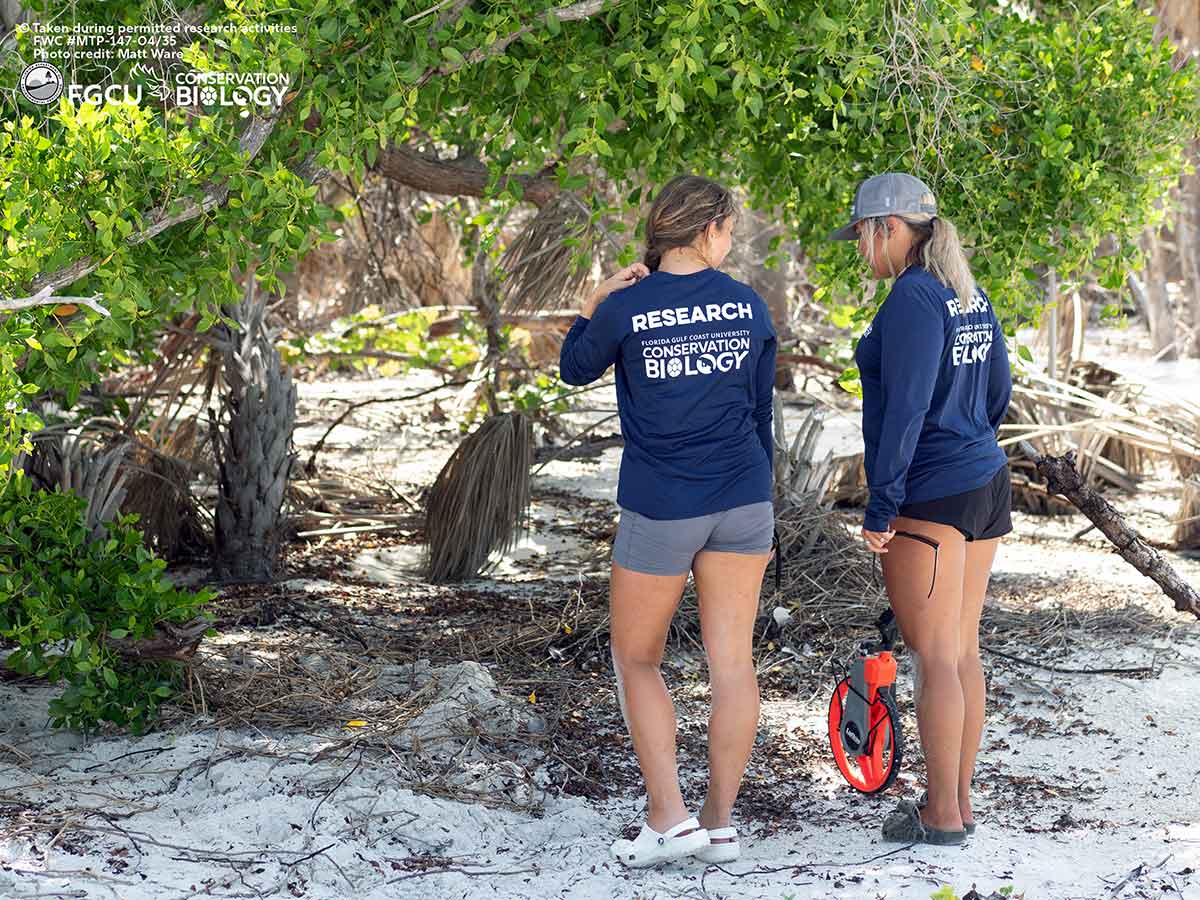
While
wrapping up research on Cayo Costa for the season, he called the island’s state
park “a great example” of a sea turtle habitat that humans also enjoy for
recreation and tourism. The 9-mile-long barrier island is a popular spot for
boaters, paddlers and beachgoers.
“We
like these nice pristine beaches. So do sea turtles. We like fishing offshore
for fun and for food. The sea turtles use those same resources for a lot of the
same purposes,” Ware says.
“Having
healthy ecosystems provides a lot of services to us as a society that we
generally take for granted — clean air, clean water, recreational
opportunities. When we can provide a healthy system for turtles, we’re also
providing a healthy system for ourselves.”
Their
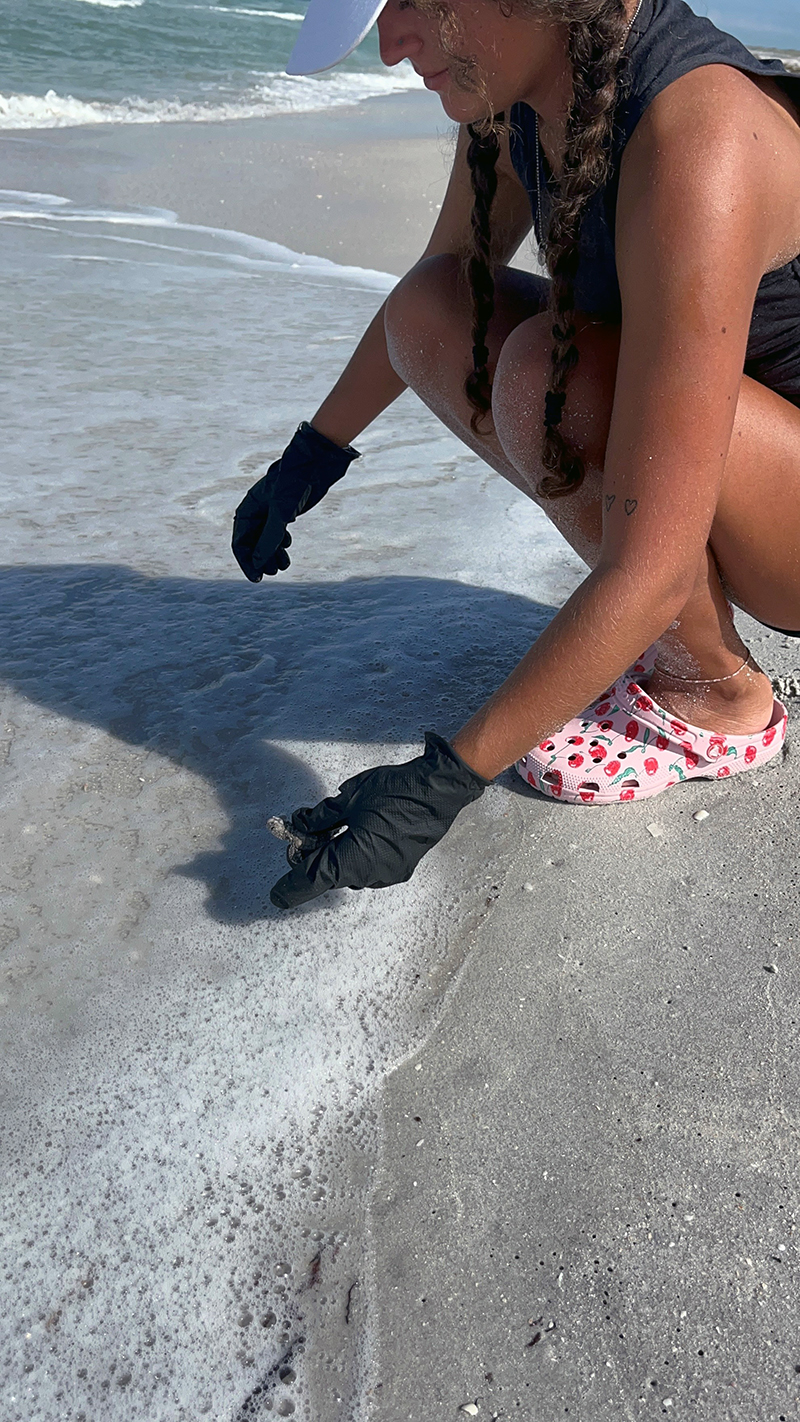
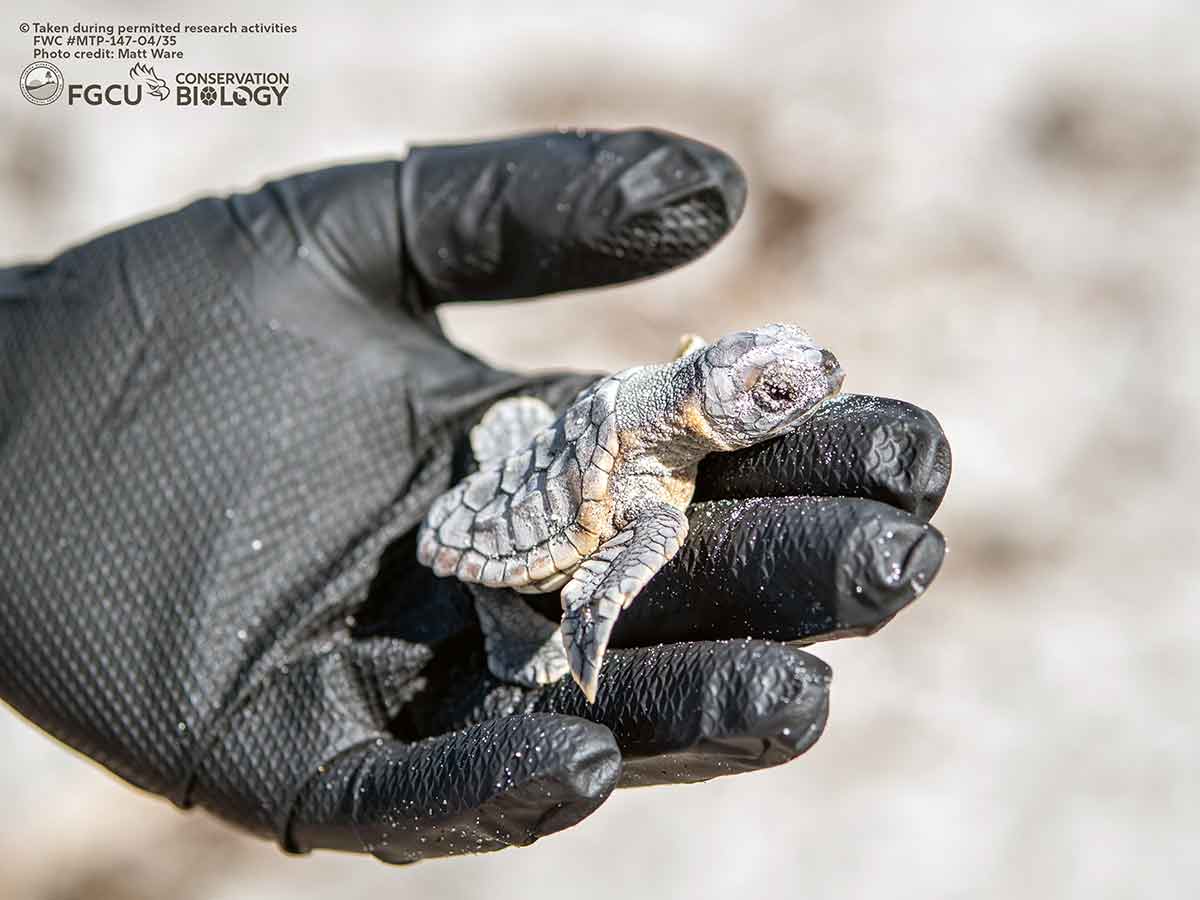
breeding strategy is a numbers game, Ware says. “Optimistically, about one in 1,000
hatchlings survives to adulthood. Pessimistically, one in 10,000.”
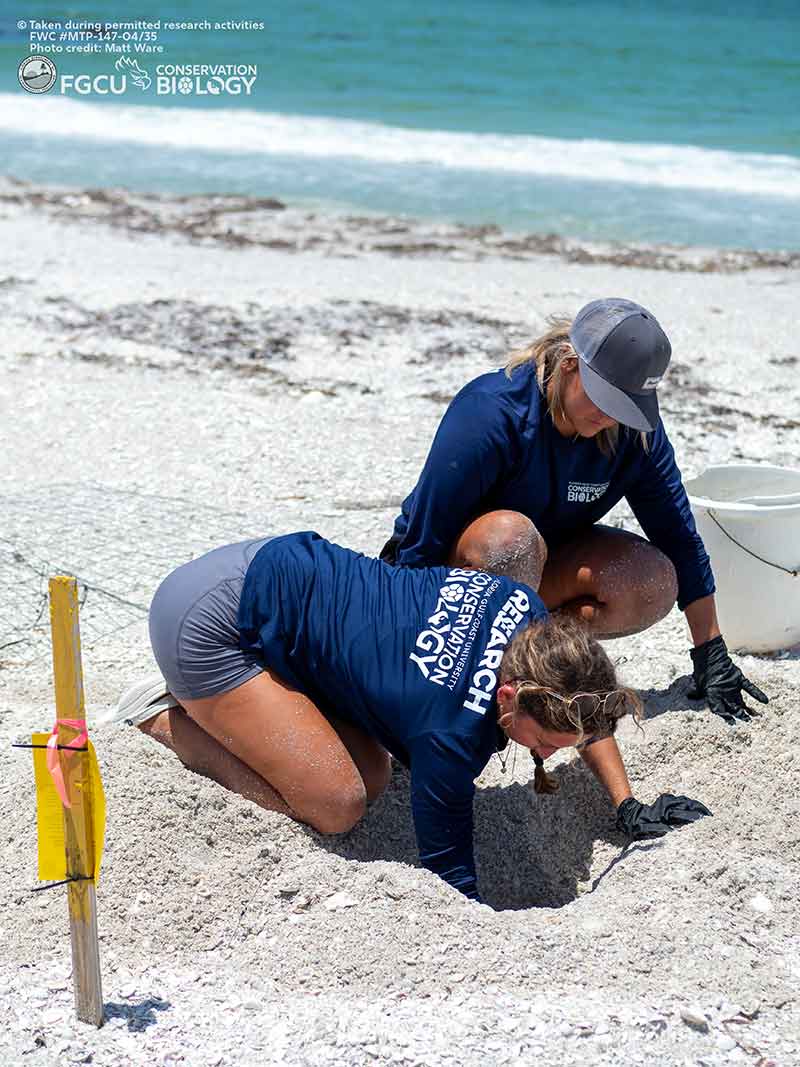
According
to a 2025 NOAA review, most sea turtle populations are rebounding worldwide,
thanks to decades of conservation efforts. The study found more turtles nesting
at beaches with stronger protections in place — like those the FGCU team
engaged in.
“We
want to continue that trend. We want to keep that stewardship, that
sustainability, keep that motivation going to keep providing these services —
to the sea turtles, to our beach environments, to conservation management as a
whole,” Ware says.
“FGCU
is greatly positioned both in physical location and the opportunities that we
provide through the faculty and the staff and the students to get hands-on with
that conservation, to help keep that motivation going.”